Pitch Deck
How to Create a Use of Funds Slide Investors Trust (2026 Edition)
Learn what a use of funds slide is, the 5-category framework top founders use, typical allocations by fundraising stage, real-world examples, and how to build your entire pitch deck fast.


Decktopus Content Team
There’s no question that a well-presented funding slide can make or break a pitch. Even if you have the most amazing product or service in the world, if you can’t convince your audience that you’re worth investing in, you won’t get very far.
In this blog post, we’ll take a look at some best practices for creating and delivering a successful use of funds slide. We’ll also provide some examples to help illustrate these concepts. Let’s get starting slide can make or break a pitch.
What Is a Use of Funds Slide?
A use of funds slide is the slide in a pitch deck that shows investors exactly how their capital will be allocated across specific spending categories: product development, hiring, marketing, operations, and runway. It converts a fundraising ask into a concrete plan. The main benefit is that it builds trust and transparency, because it shows investors you’ve already thought through how you’ll turn their money into measurable business milestones.
According to CB Insights research on startup failure, running out of cash and inability to raise new capital together account for roughly 38% of all startup failures. That’s why the use of funds slide (once considered a minor detail near the end of a pitch deck) has become one of the most scrutinized slides in any modern investor presentation. Investors want proof you can turn their money into milestones, not just show them a chart with percentages.
For related pitch deck fundamentals, see our guides on what is a pitch deck, pitch deck examples, and how to make the best startup pitch.
What is a Pitch Deck ?
A pitch deck is a short presentation (typically 10 to 15 slides) that founders use to communicate their startup story, market opportunity, product, team, traction, and financials to potential investors. The deck’s job is to earn a follow-up meeting or a check.
A great pitch deck is clear, concise, compelling, and visual. The best decks tell a complete story: what problem you’re solving, why now, why you, how big the market is, how you make money, what you’ve achieved so far, and what you’ll do with new capital. That last question is where the use of funds slide earns its place.
For more on pitch deck structure, see our guides on the 10/20/30 rule and the best pitch deck generators for founders.

Why the Use of Funds Slide Matters More Than Ever
Investor scrutiny on capital efficiency has increased dramatically since the 2022 to 2024 correction in venture funding. Post-correction, VCs and angel investors ask harder questions about runway, burn rate, and unit economics before writing checks.
That shift changed how the use of funds slide gets read. Ten years ago, a vague pie chart labeled “product development / marketing / operations” was often enough. Today, investors want to see specific hires, specific channel investments, specific product milestones, and specific outcomes attached to each dollar.
Three big reasons the slide matters now:
1. Trust signal. A clear, specific use of funds slide signals that you actually know what you’re doing. A vague one signals that you’re pitching for money before you have a plan.
2. Milestone alignment. Investors want to see that this round of funding gets you to the next fundable milestone. If they can’t tell whether their money buys 12 months of runway to a Series A or 6 months of vague spending, they’ll pass.
3. Team credibility. How you allocate capital reveals how you think as an operator. Investors read the slide as a proxy for your judgment across the whole business.
For related fundraising context, see our guides on bootstrapping a startup, the Airbnb pitch deck breakdown, and pitch deck mistakes.
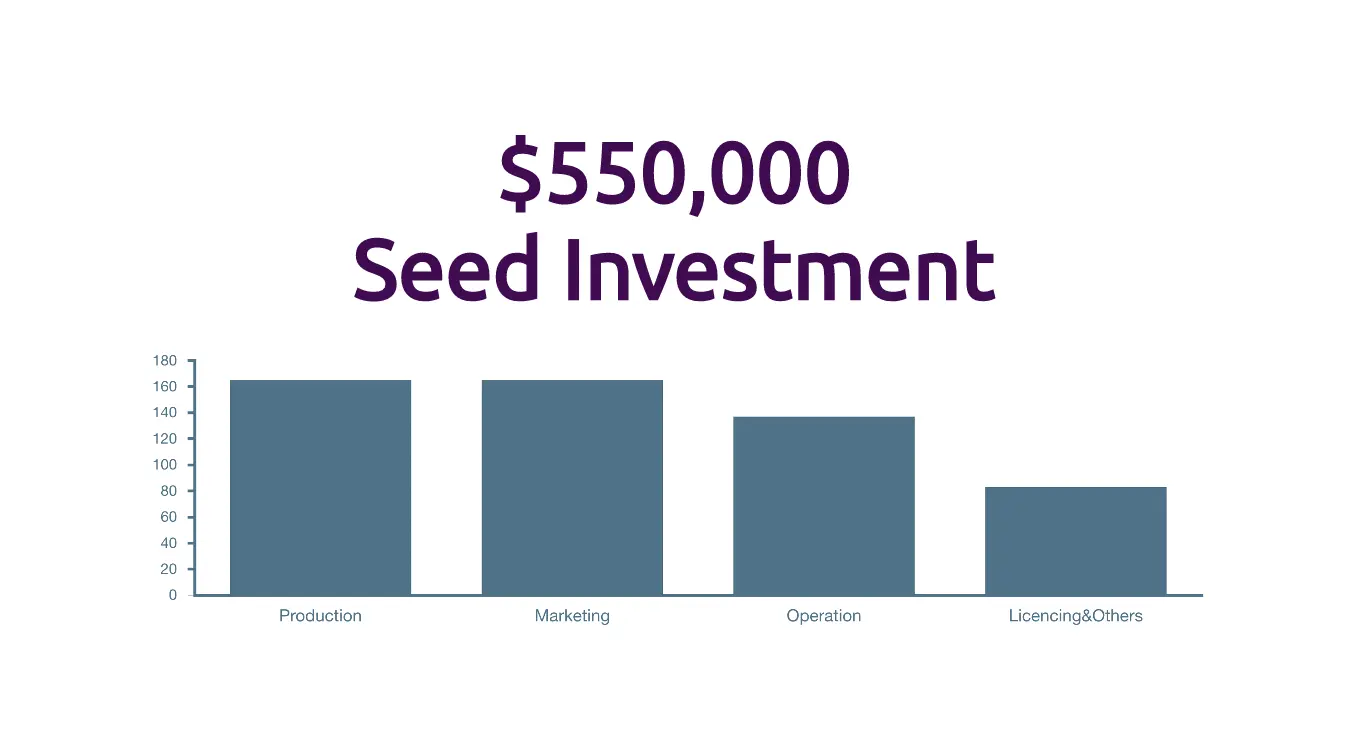
Types of Use of Funds Slides
There are three main visual formats for the use of funds slide. Each has strengths and weaknesses. The right choice depends on your data and audience.
[[EMBED:PGRpdiBzdHlsZT0ib3ZlcmZsb3cteDphdXRvO21hcmdpbjoyMHB4IDAiPjx0YWJsZSBzdHlsZT0id2lkdGg6MTAwJTtib3JkZXItY29sbGFwc2U6Y29sbGFwc2U7Zm9udC1zaXplOjE1cHg7bWFyZ2luOjhweCAwIj48dGggc3R5bGU9ImJvcmRlcjoxcHggc29saWQgI2UzZTZlYTtwYWRkaW5nOjEwcHggMTRweDt0ZXh0LWFsaWduOmxlZnQ7YmFja2dyb3VuZDojZjRmNmY4O2ZvbnQtd2VpZ2h0OjYwMCI+PHRyPjx0aCBzdHlsZT0iYm9yZGVyOjFweCBzb2xpZCAjZTNlNmVhO3BhZGRpbmc6MTBweCAxNHB4O3RleHQtYWxpZ246bGVmdDtiYWNrZ3JvdW5kOiNmNGY2Zjg7Zm9udC13ZWlnaHQ6NjAwIj5Gb3JtYXQ8L3RoPjx0aCBzdHlsZT0iYm9yZGVyOjFweCBzb2xpZCAjZTNlNmVhO3BhZGRpbmc6MTBweCAxNHB4O3RleHQtYWxpZ246bGVmdDtiYWNrZ3JvdW5kOiNmNGY2Zjg7Zm9udC13ZWlnaHQ6NjAwIj5CZXN0IEZvcjwvdGg+PHRoIHN0eWxlPSJib3JkZXI6MXB4IHNvbGlkICNlM2U2ZWE7cGFkZGluZzoxMHB4IDE0cHg7dGV4dC1hbGlnbjpsZWZ0O2JhY2tncm91bmQ6I2Y0ZjZmODtmb250LXdlaWdodDo2MDAiPlN0cmVuZ3RoczwvdGg+PHRoIHN0eWxlPSJib3JkZXI6MXB4IHNvbGlkICNlM2U2ZWE7cGFkZGluZzoxMHB4IDE0cHg7dGV4dC1hbGlnbjpsZWZ0O2JhY2tncm91bmQ6I2Y0ZjZmODtmb250LXdlaWdodDo2MDAiPldlYWtuZXNzZXM8L3RoPjwvdHI+PC90aGVhZD48dGJvZHk+PHRyPjx0ZCBzdHlsZT0iYm9yZGVyOjFweCBzb2xpZCAjZTNlNmVhO3BhZGRpbmc6MTBweCAxNHB4O3RleHQtYWxpZ246bGVmdDt2ZXJ0aWNhbC1hbGlnbjp0b3AiPlBpZSBjaGFydDwvdGQ+PHRkIHN0eWxlPSJib3JkZXI6MXB4IHNvbGlkICNlM2U2ZWE7cGFkZGluZzoxMHB4IDE0cHg7dGV4dC1hbGlnbjpsZWZ0O3ZlcnRpY2FsLWFsaWduOnRvcCI+U2ltcGxlIGFsbG9jYXRpb24gYWNyb3NzIDQgdG8gNiBjYXRlZ29yaWVzPC90ZD48dGQgc3R5bGU9ImJvcmRlcjoxcHggc29saWQgI2UzZTZlYTtwYWRkaW5nOjEwcHggMTRweDt0ZXh0LWFsaWduOmxlZnQ7dmVydGljYWwtYWxpZ246dG9wIj5FYXN5IHRvIHJlYWQgYXQgYSBnbGFuY2UgYW5kIGNsZWFybHkgc2hvd3MgcHJvcG9ydGlvbnM8L3RkPjx0ZCBzdHlsZT0iYm9yZGVyOjFweCBzb2xpZCAjZTNlNmVhO3BhZGRpbmc6MTBweCAxNHB4O3RleHQtYWxpZ246bGVmdDt2ZXJ0aWNhbC1hbGlnbjp0b3AiPkRvZXNuJ3Qgc2hvdyBleGFjdCBkb2xsYXIgYW1vdW50cyB1bmxlc3MgbGFiZWxlZCBhbmQgYmVjb21lcyBoYXJkZXIgdG8gcmVhZCB3aXRoIG1vcmUgdGhhbiBzaXggc2xpY2VzPC90ZD48L3RyPjx0cj48dGQgc3R5bGU9ImJvcmRlcjoxcHggc29saWQgI2UzZTZlYTtwYWRkaW5nOjEwcHggMTRweDt0ZXh0LWFsaWduOmxlZnQ7dmVydGljYWwtYWxpZ246dG9wIj5CYXIgY2hhcnQ8L3RkPjx0ZCBzdHlsZT0iYm9yZGVyOjFweCBzb2xpZCAjZTNlNmVhO3BhZGRpbmc6MTBweCAxNHB4O3RleHQtYWxpZ246bGVmdDt2ZXJ0aWNhbC1hbGlnbjp0b3AiPkNvbXBhcmluZyBjYXRlZ29yaWVzIG9yIHByZXNlbnRpbmcgYSB0aW1lbGluZTwvdGQ+PHRkIHN0eWxlPSJib3JkZXI6MXB4IHNvbGlkICNlM2U2ZWE7cGFkZGluZzoxMHB4IDE0cHg7dGV4dC1hbGlnbjpsZWZ0O3ZlcnRpY2FsLWFsaWduOnRvcCI+QWNjdXJhdGVseSBjb21wYXJlcyB2YWx1ZXMgYW5kIHdvcmtzIHdlbGwgd2l0aCB0aW1lLWJhc2VkIGRhdGE8L3RkPjx0ZCBzdHlsZT0iYm9yZGVyOjFweCBzb2xpZCAjZTNlNmVhO3BhZGRpbmc6MTBweCAxNHB4O3RleHQtYWxpZ246bGVmdDt2ZXJ0aWNhbC1hbGlnbjp0b3AiPlJlcXVpcmVzIG1vcmUgc3BhY2UgYW5kIGlzIGxlc3MgaW1tZWRpYXRlbHkgdmlzdWFsIHRoYW4gYSBwaWUgY2hhcnQ8L3RkPjwvdHI+PHRyPjx0ZCBzdHlsZT0iYm9yZGVyOjFweCBzb2xpZCAjZTNlNmVhO3BhZGRpbmc6MTBweCAxNHB4O3RleHQtYWxpZ246bGVmdDt2ZXJ0aWNhbC1hbGlnbjp0b3AiPlRhYmxlIHdpdGggZG9sbGFyIGJyZWFrZG93bjwvdGQ+PHRkIHN0eWxlPSJib3JkZXI6MXB4IHNvbGlkICNlM2U2ZWE7cGFkZGluZzoxMHB4IDE0cHg7dGV4dC1hbGlnbjpsZWZ0O3ZlcnRpY2FsLWFsaWduOnRvcCI+RGV0YWlsZWQgZm91bmRlciBwcmVzZW50YXRpb25zIGFuZCBsYXRlci1zdGFnZSBmdW5kaW5nIHJvdW5kczwvdGQ+PHRkIHN0eWxlPSJib3JkZXI6MXB4IHNvbGlkICNlM2U2ZWE7cGFkZGluZzoxMHB4IDE0cHg7dGV4dC1hbGlnbjpsZWZ0O3ZlcnRpY2FsLWFsaWduOnRvcCI+RGlzcGxheXMgZXhhY3QgYW1vdW50cywgY2F0ZWdvcmllcywgYW5kIGFsbG9jYXRpb25zIHNpZGUgYnkgc2lkZTwvdGQ+PHRkIHN0eWxlPSJib3JkZXI6MXB4IHNvbGlkICNlM2U2ZWE7cGFkZGluZzoxMHB4IDE0cHg7dGV4dC1hbGlnbjpsZWZ0O3ZlcnRpY2FsLWFsaWduOnRvcCI+TW9yZSB0ZXh0LWhlYXZ5IGFuZCByZXF1aXJlcyB0aGUgYXVkaWVuY2UgdG8gcmVhZCByYXRoZXIgdGhhbiBzY2FuPC90ZD48L3RyPjx0cj48dGQgc3R5bGU9ImJvcmRlcjoxcHggc29saWQgI2UzZTZlYTtwYWRkaW5nOjEwcHggMTRweDt0ZXh0LWFsaWduOmxlZnQ7dmVydGljYWwtYWxpZ246dG9wIj5IeWJyaWQgKGNoYXJ0ICsgdGFibGUpPC90ZD48dGQgc3R5bGU9ImJvcmRlcjoxcHggc29saWQgI2UzZTZlYTtwYWRkaW5nOjEwcHggMTRweDt0ZXh0LWFsaWduOmxlZnQ7dmVydGljYWwtYWxpZ246dG9wIj5TZXJpZXMgQSBhbmQgbGF0ZXIgZnVuZHJhaXNpbmcgcHJlc2VudGF0aW9uczwvdGQ+PHRkIHN0eWxlPSJib3JkZXI6MXB4IHNvbGlkICNlM2U2ZWE7cGFkZGluZzoxMHB4IDE0cHg7dGV4dC1hbGlnbjpsZWZ0O3ZlcnRpY2FsLWFsaWduOnRvcCI+Q29tYmluZXMgYSBxdWljayB2aXN1YWwgb3ZlcnZpZXcgd2l0aCBwcmVjaXNlIGZpbmFuY2lhbCBkZXRhaWxzPC90ZD48dGQgc3R5bGU9ImJvcmRlcjoxcHggc29saWQgI2UzZTZlYTtwYWRkaW5nOjEwcHggMTRweDt0ZXh0LWFsaWduOmxlZnQ7dmVydGljYWwtYWxpZ246dG9wIj5Vc2VzIG1vcmUgc2xpZGUgc3BhY2UgYW5kIGNhbiBiZWNvbWUgY3Jvd2RlZCBpZiBub3QgZGVzaWduZWQgY2FyZWZ1bGx5PC90ZD48L3RyPjwvdGJvZHk+PC90YWJsZT48L2Rpdj4=]]
For deeper guidance on chart selection, see our guides on the pie chart and bar graph.
The 5-Category Use of Funds Framework
Most successful use of funds slides fit their spending into 5 categories. This framework works across seed, Series A, and Series B rounds, with the mix shifting as the company matures.
[[EMBED:PGRpdiBzdHlsZT0ib3ZlcmZsb3cteDphdXRvO21hcmdpbjoyMHB4IDAiPjx0YWJsZSBzdHlsZT0id2lkdGg6MTAwJTtib3JkZXItY29sbGFwc2U6Y29sbGFwc2U7Zm9udC1zaXplOjE1cHg7bWFyZ2luOjhweCAwIj48dGggc3R5bGU9ImJvcmRlcjoxcHggc29saWQgI2UzZTZlYTtwYWRkaW5nOjEwcHggMTRweDt0ZXh0LWFsaWduOmxlZnQ7YmFja2dyb3VuZDojZjRmNmY4O2ZvbnQtd2VpZ2h0OjYwMCI+PHRyPjx0aCBzdHlsZT0iYm9yZGVyOjFweCBzb2xpZCAjZTNlNmVhO3BhZGRpbmc6MTBweCAxNHB4O3RleHQtYWxpZ246bGVmdDtiYWNrZ3JvdW5kOiNmNGY2Zjg7Zm9udC13ZWlnaHQ6NjAwIj5DYXRlZ29yeTwvdGg+PHRoIHN0eWxlPSJib3JkZXI6MXB4IHNvbGlkICNlM2U2ZWE7cGFkZGluZzoxMHB4IDE0cHg7dGV4dC1hbGlnbjpsZWZ0O2JhY2tncm91bmQ6I2Y0ZjZmODtmb250LXdlaWdodDo2MDAiPldoYXQgSXQgQ292ZXJzPC90aD48dGggc3R5bGU9ImJvcmRlcjoxcHggc29saWQgI2UzZTZlYTtwYWRkaW5nOjEwcHggMTRweDt0ZXh0LWFsaWduOmxlZnQ7YmFja2dyb3VuZDojZjRmNmY4O2ZvbnQtd2VpZ2h0OjYwMCI+VHlwaWNhbCBTZWVkIFJhbmdlPC90aD48dGggc3R5bGU9ImJvcmRlcjoxcHggc29saWQgI2UzZTZlYTtwYWRkaW5nOjEwcHggMTRweDt0ZXh0LWFsaWduOmxlZnQ7YmFja2dyb3VuZDojZjRmNmY4O2ZvbnQtd2VpZ2h0OjYwMCI+VHlwaWNhbCBTZXJpZXMgQSBSYW5nZTwvdGg+PC90cj48L3RoZWFkPjx0Ym9keT48dHI+PHRkIHN0eWxlPSJib3JkZXI6MXB4IHNvbGlkICNlM2U2ZWE7cGFkZGluZzoxMHB4IDE0cHg7dGV4dC1hbGlnbjpsZWZ0O3ZlcnRpY2FsLWFsaWduOnRvcCI+UHJvZHVjdCBEZXZlbG9wbWVudCAvIFImYW1wO0Q8L3RkPjx0ZCBzdHlsZT0iYm9yZGVyOjFweCBzb2xpZCAjZTNlNmVhO3BhZGRpbmc6MTBweCAxNHB4O3RleHQtYWxpZ246bGVmdDt2ZXJ0aWNhbC1hbGlnbjp0b3AiPkVuZ2luZWVyaW5nLCBkZXNpZ24sIGFuZCBwcm9kdWN0IHJvYWRtYXAgZXhlY3V0aW9uPC90ZD48dGQgc3R5bGU9ImJvcmRlcjoxcHggc29saWQgI2UzZTZlYTtwYWRkaW5nOjEwcHggMTRweDt0ZXh0LWFsaWduOmxlZnQ7dmVydGljYWwtYWxpZ246dG9wIj4zMOKAkzUwJTwvdGQ+PHRkIHN0eWxlPSJib3JkZXI6MXB4IHNvbGlkICNlM2U2ZWE7cGFkZGluZzoxMHB4IDE0cHg7dGV4dC1hbGlnbjpsZWZ0O3ZlcnRpY2FsLWFsaWduOnRvcCI+MjXigJM0MCU8L3RkPjwvdHI+PHRyPjx0ZCBzdHlsZT0iYm9yZGVyOjFweCBzb2xpZCAjZTNlNmVhO3BhZGRpbmc6MTBweCAxNHB4O3RleHQtYWxpZ246bGVmdDt2ZXJ0aWNhbC1hbGlnbjp0b3AiPlRlYW0gLyBIaXJpbmc8L3RkPjx0ZCBzdHlsZT0iYm9yZGVyOjFweCBzb2xpZCAjZTNlNmVhO3BhZGRpbmc6MTBweCAxNHB4O3RleHQtYWxpZ246bGVmdDt2ZXJ0aWNhbC1hbGlnbjp0b3AiPkVuZ2luZWVycywgc2FsZXMsIG1hcmtldGluZywgYW5kIG9wZXJhdGlvbnMgaGlyZXM8L3RkPjx0ZCBzdHlsZT0iYm9yZGVyOjFweCBzb2xpZCAjZTNlNmVhO3BhZGRpbmc6MTBweCAxNHB4O3RleHQtYWxpZ246bGVmdDt2ZXJ0aWNhbC1hbGlnbjp0b3AiPjIw4oCTMzUlPC90ZD48dGQgc3R5bGU9ImJvcmRlcjoxcHggc29saWQgI2UzZTZlYTtwYWRkaW5nOjEwcHggMTRweDt0ZXh0LWFsaWduOmxlZnQ7dmVydGljYWwtYWxpZ246dG9wIj4zMOKAkzQ1JTwvdGQ+PC90cj48dHI+PHRkIHN0eWxlPSJib3JkZXI6MXB4IHNvbGlkICNlM2U2ZWE7cGFkZGluZzoxMHB4IDE0cHg7dGV4dC1hbGlnbjpsZWZ0O3ZlcnRpY2FsLWFsaWduOnRvcCI+TWFya2V0aW5nICZhbXA7IFNhbGVzIC8gR28tdG8tTWFya2V0PC90ZD48dGQgc3R5bGU9ImJvcmRlcjoxcHggc29saWQgI2UzZTZlYTtwYWRkaW5nOjEwcHggMTRweDt0ZXh0LWFsaWduOmxlZnQ7dmVydGljYWwtYWxpZ246dG9wIj5QYWlkIGFjcXVpc2l0aW9uLCBjb250ZW50IG1hcmtldGluZywgc2FsZXMgZW5hYmxlbWVudCwgYW5kIHBhcnRuZXJzaGlwczwvdGQ+PHRkIHN0eWxlPSJib3JkZXI6MXB4IHNvbGlkICNlM2U2ZWE7cGFkZGluZzoxMHB4IDE0cHg7dGV4dC1hbGlnbjpsZWZ0O3ZlcnRpY2FsLWFsaWduOnRvcCI+MTXigJMzMCU8L3RkPjx0ZCBzdHlsZT0iYm9yZGVyOjFweCBzb2xpZCAjZTNlNmVhO3BhZGRpbmc6MTBweCAxNHB4O3RleHQtYWxpZ246bGVmdDt2ZXJ0aWNhbC1hbGlnbjp0b3AiPjIw4oCTMzUlPC90ZD48L3RyPjx0cj48dGQgc3R5bGU9ImJvcmRlcjoxcHggc29saWQgI2UzZTZlYTtwYWRkaW5nOjEwcHggMTRweDt0ZXh0LWFsaWduOmxlZnQ7dmVydGljYWwtYWxpZ246dG9wIj5PcGVyYXRpb25zIC8gSW5mcmFzdHJ1Y3R1cmU8L3RkPjx0ZCBzdHlsZT0iYm9yZGVyOjFweCBzb2xpZCAjZTNlNmVhO3BhZGRpbmc6MTBweCAxNHB4O3RleHQtYWxpZ246bGVmdDt2ZXJ0aWNhbC1hbGlnbjp0b3AiPkxlZ2FsLCBhY2NvdW50aW5nLCBzb2Z0d2FyZSB0b29scywgb2ZmaWNlIGV4cGVuc2VzLCBhbmQgY2xvdWQgaG9zdGluZzwvdGQ+PHRkIHN0eWxlPSJib3JkZXI6MXB4IHNvbGlkICNlM2U2ZWE7cGFkZGluZzoxMHB4IDE0cHg7dGV4dC1hbGlnbjpsZWZ0O3ZlcnRpY2FsLWFsaWduOnRvcCI+NeKAkzE1JTwvdGQ+PHRkIHN0eWxlPSJib3JkZXI6MXB4IHNvbGlkICNlM2U2ZWE7cGFkZGluZzoxMHB4IDE0cHg7dGV4dC1hbGlnbjpsZWZ0O3ZlcnRpY2FsLWFsaWduOnRvcCI+NeKAkzE1JTwvdGQ+PC90cj48dHI+PHRkIHN0eWxlPSJib3JkZXI6MXB4IHNvbGlkICNlM2U2ZWE7cGFkZGluZzoxMHB4IDE0cHg7dGV4dC1hbGlnbjpsZWZ0O3ZlcnRpY2FsLWFsaWduOnRvcCI+UnVud2F5IC8gQ29udGluZ2VuY3k8L3RkPjx0ZCBzdHlsZT0iYm9yZGVyOjFweCBzb2xpZCAjZTNlNmVhO3BhZGRpbmc6MTBweCAxNHB4O3RleHQtYWxpZ246bGVmdDt2ZXJ0aWNhbC1hbGlnbjp0b3AiPkNhc2ggcmVzZXJ2ZSB0byBleHRlbmQgcnVud2F5IGFuZCBjb3ZlciB1bmV4cGVjdGVkIGV4cGVuc2VzPC90ZD48dGQgc3R5bGU9ImJvcmRlcjoxcHggc29saWQgI2UzZTZlYTtwYWRkaW5nOjEwcHggMTRweDt0ZXh0LWFsaWduOmxlZnQ7dmVydGljYWwtYWxpZ246dG9wIj414oCTMTAlPC90ZD48dGQgc3R5bGU9ImJvcmRlcjoxcHggc29saWQgI2UzZTZlYTtwYWRkaW5nOjEwcHggMTRweDt0ZXh0LWFsaWduOmxlZnQ7dmVydGljYWwtYWxpZ246dG9wIj414oCTMTAlPC90ZD48L3RyPjwvdGJvZHk+PC90YWJsZT48L2Rpdj4=]]
Every strong use of funds slide fits into this framework, even if the labels are slightly different (some decks use “Growth” instead of “Marketing & Sales” or “Talent” instead of “Team”). What matters is that every dollar has a category, and every category ties to a milestone.
Typical Allocation by Fundraising Stage
The optimal use of funds mix shifts as the company matures. Here’s a typical breakdown by round.
[[EMBED:PGRpdiBzdHlsZT0ib3ZlcmZsb3cteDphdXRvO21hcmdpbjoyMHB4IDAiPjx0YWJsZSBzdHlsZT0id2lkdGg6MTAwJTtib3JkZXItY29sbGFwc2U6Y29sbGFwc2U7Zm9udC1zaXplOjE1cHg7bWFyZ2luOjhweCAwIj48dGggc3R5bGU9ImJvcmRlcjoxcHggc29saWQgI2UzZTZlYTtwYWRkaW5nOjEwcHggMTRweDt0ZXh0LWFsaWduOmxlZnQ7YmFja2dyb3VuZDojZjRmNmY4O2ZvbnQtd2VpZ2h0OjYwMCI+PHRyPjx0aCBzdHlsZT0iYm9yZGVyOjFweCBzb2xpZCAjZTNlNmVhO3BhZGRpbmc6MTBweCAxNHB4O3RleHQtYWxpZ246bGVmdDtiYWNrZ3JvdW5kOiNmNGY2Zjg7Zm9udC13ZWlnaHQ6NjAwIj5Sb3VuZDwvdGg+PHRoIHN0eWxlPSJib3JkZXI6MXB4IHNvbGlkICNlM2U2ZWE7cGFkZGluZzoxMHB4IDE0cHg7dGV4dC1hbGlnbjpsZWZ0O2JhY2tncm91bmQ6I2Y0ZjZmODtmb250LXdlaWdodDo2MDAiPlByaW1hcnkgRm9jdXM8L3RoPjx0aCBzdHlsZT0iYm9yZGVyOjFweCBzb2xpZCAjZTNlNmVhO3BhZGRpbmc6MTBweCAxNHB4O3RleHQtYWxpZ246bGVmdDtiYWNrZ3JvdW5kOiNmNGY2Zjg7Zm9udC13ZWlnaHQ6NjAwIj5Qcm9kdWN0IERldmVsb3BtZW50PC90aD48dGggc3R5bGU9ImJvcmRlcjoxcHggc29saWQgI2UzZTZlYTtwYWRkaW5nOjEwcHggMTRweDt0ZXh0LWFsaWduOmxlZnQ7YmFja2dyb3VuZDojZjRmNmY4O2ZvbnQtd2VpZ2h0OjYwMCI+VGVhbTwvdGg+PHRoIHN0eWxlPSJib3JkZXI6MXB4IHNvbGlkICNlM2U2ZWE7cGFkZGluZzoxMHB4IDE0cHg7dGV4dC1hbGlnbjpsZWZ0O2JhY2tncm91bmQ6I2Y0ZjZmODtmb250LXdlaWdodDo2MDAiPkdvLXRvLU1hcmtldDwvdGg+PHRoIHN0eWxlPSJib3JkZXI6MXB4IHNvbGlkICNlM2U2ZWE7cGFkZGluZzoxMHB4IDE0cHg7dGV4dC1hbGlnbjpsZWZ0O2JhY2tncm91bmQ6I2Y0ZjZmODtmb250LXdlaWdodDo2MDAiPk9wZXJhdGlvbnM8L3RoPjx0aCBzdHlsZT0iYm9yZGVyOjFweCBzb2xpZCAjZTNlNmVhO3BhZGRpbmc6MTBweCAxNHB4O3RleHQtYWxpZ246bGVmdDtiYWNrZ3JvdW5kOiNmNGY2Zjg7Zm9udC13ZWlnaHQ6NjAwIj5SdW53YXk8L3RoPjwvdHI+PC90aGVhZD48dGJvZHk+PHRyPjx0ZCBzdHlsZT0iYm9yZGVyOjFweCBzb2xpZCAjZTNlNmVhO3BhZGRpbmc6MTBweCAxNHB4O3RleHQtYWxpZ246bGVmdDt2ZXJ0aWNhbC1hbGlnbjp0b3AiPlByZS1zZWVkPC90ZD48dGQgc3R5bGU9ImJvcmRlcjoxcHggc29saWQgI2UzZTZlYTtwYWRkaW5nOjEwcHggMTRweDt0ZXh0LWFsaWduOmxlZnQ7dmVydGljYWwtYWxpZ246dG9wIj5WYWxpZGF0ZSB0aGUgcHJvZHVjdCBhbmQgbWFrZSB0aGUgZmlyc3Qga2V5IGhpcmVzPC90ZD48dGQgc3R5bGU9ImJvcmRlcjoxcHggc29saWQgI2UzZTZlYTtwYWRkaW5nOjEwcHggMTRweDt0ZXh0LWFsaWduOmxlZnQ7dmVydGljYWwtYWxpZ246dG9wIj40MOKAkzUwJTwvdGQ+PHRkIHN0eWxlPSJib3JkZXI6MXB4IHNvbGlkICNlM2U2ZWE7cGFkZGluZzoxMHB4IDE0cHg7dGV4dC1hbGlnbjpsZWZ0O3ZlcnRpY2FsLWFsaWduOnRvcCI+MjXigJMzMCU8L3RkPjx0ZCBzdHlsZT0iYm9yZGVyOjFweCBzb2xpZCAjZTNlNmVhO3BhZGRpbmc6MTBweCAxNHB4O3RleHQtYWxpZ246bGVmdDt2ZXJ0aWNhbC1hbGlnbjp0b3AiPjEw4oCTMTUlPC90ZD48dGQgc3R5bGU9ImJvcmRlcjoxcHggc29saWQgI2UzZTZlYTtwYWRkaW5nOjEwcHggMTRweDt0ZXh0LWFsaWduOmxlZnQ7dmVydGljYWwtYWxpZ246dG9wIj414oCTMTAlPC90ZD48dGQgc3R5bGU9ImJvcmRlcjoxcHggc29saWQgI2UzZTZlYTtwYWRkaW5nOjEwcHggMTRweDt0ZXh0LWFsaWduOmxlZnQ7dmVydGljYWwtYWxpZ246dG9wIj414oCTMTAlPC90ZD48L3RyPjx0cj48dGQgc3R5bGU9ImJvcmRlcjoxcHggc29saWQgI2UzZTZlYTtwYWRkaW5nOjEwcHggMTRweDt0ZXh0LWFsaWduOmxlZnQ7dmVydGljYWwtYWxpZ246dG9wIj5TZWVkPC90ZD48dGQgc3R5bGU9ImJvcmRlcjoxcHggc29saWQgI2UzZTZlYTtwYWRkaW5nOjEwcHggMTRweDt0ZXh0LWFsaWduOmxlZnQ7dmVydGljYWwtYWxpZ246dG9wIj5BY2hpZXZlIHByb2R1Y3QtbWFya2V0IGZpdDwvdGQ+PHRkIHN0eWxlPSJib3JkZXI6MXB4IHNvbGlkICNlM2U2ZWE7cGFkZGluZzoxMHB4IDE0cHg7dGV4dC1hbGlnbjpsZWZ0O3ZlcnRpY2FsLWFsaWduOnRvcCI+MzDigJM0MCU8L3RkPjx0ZCBzdHlsZT0iYm9yZGVyOjFweCBzb2xpZCAjZTNlNmVhO3BhZGRpbmc6MTBweCAxNHB4O3RleHQtYWxpZ246bGVmdDt2ZXJ0aWNhbC1hbGlnbjp0b3AiPjMw4oCTMzUlPC90ZD48dGQgc3R5bGU9ImJvcmRlcjoxcHggc29saWQgI2UzZTZlYTtwYWRkaW5nOjEwcHggMTRweDt0ZXh0LWFsaWduOmxlZnQ7dmVydGljYWwtYWxpZ246dG9wIj4xNeKAkzI1JTwvdGQ+PHRkIHN0eWxlPSJib3JkZXI6MXB4IHNvbGlkICNlM2U2ZWE7cGFkZGluZzoxMHB4IDE0cHg7dGV4dC1hbGlnbjpsZWZ0O3ZlcnRpY2FsLWFsaWduOnRvcCI+NeKAkzEwJTwvdGQ+PHRkIHN0eWxlPSJib3JkZXI6MXB4IHNvbGlkICNlM2U2ZWE7cGFkZGluZzoxMHB4IDE0cHg7dGV4dC1hbGlnbjpsZWZ0O3ZlcnRpY2FsLWFsaWduOnRvcCI+NeKAkzEwJTwvdGQ+PC90cj48dHI+PHRkIHN0eWxlPSJib3JkZXI6MXB4IHNvbGlkICNlM2U2ZWE7cGFkZGluZzoxMHB4IDE0cHg7dGV4dC1hbGlnbjpsZWZ0O3ZlcnRpY2FsLWFsaWduOnRvcCI+U2VyaWVzIEE8L3RkPjx0ZCBzdHlsZT0iYm9yZGVyOjFweCBzb2xpZCAjZTNlNmVhO3BhZGRpbmc6MTBweCAxNHB4O3RleHQtYWxpZ246bGVmdDt2ZXJ0aWNhbC1hbGlnbjp0b3AiPlNjYWxlIGdvLXRvLW1hcmtldCBlZmZvcnRzIGFuZCBleHBhbmQgdGhlIHRlYW08L3RkPjx0ZCBzdHlsZT0iYm9yZGVyOjFweCBzb2xpZCAjZTNlNmVhO3BhZGRpbmc6MTBweCAxNHB4O3RleHQtYWxpZ246bGVmdDt2ZXJ0aWNhbC1hbGlnbjp0b3AiPjI14oCTMzUlPC90ZD48dGQgc3R5bGU9ImJvcmRlcjoxcHggc29saWQgI2UzZTZlYTtwYWRkaW5nOjEwcHggMTRweDt0ZXh0LWFsaWduOmxlZnQ7dmVydGljYWwtYWxpZ246dG9wIj4zMOKAkzQwJTwvdGQ+PHRkIHN0eWxlPSJib3JkZXI6MXB4IHNvbGlkICNlM2U2ZWE7cGFkZGluZzoxMHB4IDE0cHg7dGV4dC1hbGlnbjpsZWZ0O3ZlcnRpY2FsLWFsaWduOnRvcCI+MjXigJMzNSU8L3RkPjx0ZCBzdHlsZT0iYm9yZGVyOjFweCBzb2xpZCAjZTNlNmVhO3BhZGRpbmc6MTBweCAxNHB4O3RleHQtYWxpZ246bGVmdDt2ZXJ0aWNhbC1hbGlnbjp0b3AiPjXigJMxMCU8L3RkPjx0ZCBzdHlsZT0iYm9yZGVyOjFweCBzb2xpZCAjZTNlNmVhO3BhZGRpbmc6MTBweCAxNHB4O3RleHQtYWxpZ246bGVmdDt2ZXJ0aWNhbC1hbGlnbjp0b3AiPjXigJMxMCU8L3RkPjwvdHI+PHRyPjx0ZCBzdHlsZT0iYm9yZGVyOjFweCBzb2xpZCAjZTNlNmVhO3BhZGRpbmc6MTBweCAxNHB4O3RleHQtYWxpZ246bGVmdDt2ZXJ0aWNhbC1hbGlnbjp0b3AiPlNlcmllcyBCPC90ZD48dGQgc3R5bGU9ImJvcmRlcjoxcHggc29saWQgI2UzZTZlYTtwYWRkaW5nOjEwcHggMTRweDt0ZXh0LWFsaWduOmxlZnQ7dmVydGljYWwtYWxpZ246dG9wIj5BY2NlbGVyYXRlIGdyb3d0aCBhbmQgZXhwYW5kIGludG8gbmV3IG1hcmtldHM8L3RkPjx0ZCBzdHlsZT0iYm9yZGVyOjFweCBzb2xpZCAjZTNlNmVhO3BhZGRpbmc6MTBweCAxNHB4O3RleHQtYWxpZ246bGVmdDt2ZXJ0aWNhbC1hbGlnbjp0b3AiPjIw4oCTMzAlPC90ZD48dGQgc3R5bGU9ImJvcmRlcjoxcHggc29saWQgI2UzZTZlYTtwYWRkaW5nOjEwcHggMTRweDt0ZXh0LWFsaWduOmxlZnQ7dmVydGljYWwtYWxpZ246dG9wIj4yNeKAkzM1JTwvdGQ+PHRkIHN0eWxlPSJib3JkZXI6MXB4IHNvbGlkICNlM2U2ZWE7cGFkZGluZzoxMHB4IDE0cHg7dGV4dC1hbGlnbjpsZWZ0O3ZlcnRpY2FsLWFsaWduOnRvcCI+MzDigJM0MCU8L3RkPjx0ZCBzdHlsZT0iYm9yZGVyOjFweCBzb2xpZCAjZTNlNmVhO3BhZGRpbmc6MTBweCAxNHB4O3RleHQtYWxpZ246bGVmdDt2ZXJ0aWNhbC1hbGlnbjp0b3AiPjXigJMxMCU8L3RkPjx0ZCBzdHlsZT0iYm9yZGVyOjFweCBzb2xpZCAjZTNlNmVhO3BhZGRpbmc6MTBweCAxNHB4O3RleHQtYWxpZ246bGVmdDt2ZXJ0aWNhbC1hbGlnbjp0b3AiPjXigJMxMCU8L3RkPjwvdHI+PHRyPjx0ZCBzdHlsZT0iYm9yZGVyOjFweCBzb2xpZCAjZTNlNmVhO3BhZGRpbmc6MTBweCAxNHB4O3RleHQtYWxpZ246bGVmdDt2ZXJ0aWNhbC1hbGlnbjp0b3AiPlNlcmllcyBDKzwvdGQ+PHRkIHN0eWxlPSJib3JkZXI6MXB4IHNvbGlkICNlM2U2ZWE7cGFkZGluZzoxMHB4IDE0cHg7dGV4dC1hbGlnbjpsZWZ0O3ZlcnRpY2FsLWFsaWduOnRvcCI+U2NhbGUgZ2xvYmFsbHkgYW5kIGVzdGFibGlzaCBjYXRlZ29yeSBsZWFkZXJzaGlwPC90ZD48dGQgc3R5bGU9ImJvcmRlcjoxcHggc29saWQgI2UzZTZlYTtwYWRkaW5nOjEwcHggMTRweDt0ZXh0LWFsaWduOmxlZnQ7dmVydGljYWwtYWxpZ246dG9wIj4xNeKAkzI1JTwvdGQ+PHRkIHN0eWxlPSJib3JkZXI6MXB4IHNvbGlkICNlM2U2ZWE7cGFkZGluZzoxMHB4IDE0cHg7dGV4dC1hbGlnbjpsZWZ0O3ZlcnRpY2FsLWFsaWduOnRvcCI+MjXigJMzNSU8L3RkPjx0ZCBzdHlsZT0iYm9yZGVyOjFweCBzb2xpZCAjZTNlNmVhO3BhZGRpbmc6MTBweCAxNHB4O3RleHQtYWxpZ246bGVmdDt2ZXJ0aWNhbC1hbGlnbjp0b3AiPjM14oCTNDUlPC90ZD48dGQgc3R5bGU9ImJvcmRlcjoxcHggc29saWQgI2UzZTZlYTtwYWRkaW5nOjEwcHggMTRweDt0ZXh0LWFsaWduOmxlZnQ7dmVydGljYWwtYWxpZ246dG9wIj414oCTMTAlPC90ZD48dGQgc3R5bGU9ImJvcmRlcjoxcHggc29saWQgI2UzZTZlYTtwYWRkaW5nOjEwcHggMTRweDt0ZXh0LWFsaWduOmxlZnQ7dmVydGljYWwtYWxpZ246dG9wIj414oCTMTAlPC90ZD48L3RyPjwvdGJvZHk+PC90YWJsZT48L2Rpdj4=]]
Bottom line: as companies mature, spending shifts from product development to sales, marketing, and team scale. Investors expect to see this evolution reflected in the use of funds slide.
For more on financial planning in pitch decks, see our business plan template and business model canvas guides.

Best Practices for Crafting a Winning Use of Funds Slide
1. Tie Every Dollar to a Milestone
Don’t just show “30% Marketing.” Show “30% Marketing to hit 5,000 paying customers by Q4.” Every percentage becomes a story about what the money achieves, not just where it goes.
2. Use Specific Numbers, Not Just Percentages
“$1.2M for product development to ship v2.0 and hire 4 engineers” hits harder than “30% for product.” Percentages are for readability. Specifics build trust.
3. Show 12 to 18 Months of Runway
Investors want to know how long this round lasts. State the runway explicitly. “This round provides 18 months of runway to reach Series A metrics.” That framing anchors every number that follows.
4. Align Allocations With Your Overall Story
If your pitch deck emphasizes “we’re a product-led company,” your use of funds slide should show heavy product investment. If it emphasizes “we’re winning on GTM speed,” GTM should be the biggest slice. Contradictions between the story and the slide break trust.
5. Keep It Visual and Scannable
Investors spend 30 to 90 seconds on this slide. A dense text-heavy layout loses them. Use a clean chart, a small table with dollar amounts, and one sentence per category explaining what it unlocks.
6. Include a “Why This Mix” Line
Add one short sentence explaining why this allocation makes sense right now. “We’re weighted toward GTM because product-market fit is validated and the bottleneck is now customer acquisition.” That framing shows judgment.
7. Reference Comparable Benchmarks If Helpful
If your allocation looks unusual, defend it. “Our 45% GTM allocation is higher than typical for a Series A, but it reflects the enterprise sales motion we’ve validated with our top 10 customers.” Turning a potential objection into a strength shows preparation.
How to Make a Use of Funds Slide Step by Step
Here’s a practical process for building a use of funds slide from scratch.
Step 1: Determine Your Total Ask
Start with the total capital you’re raising. This anchors everything downstream. “We’re raising $3M.”
Step 2: Decide Your Runway Target
How long will this money last? 12 months, 18 months, 24 months? State it explicitly. Investors need this number to evaluate everything else.
Step 3: Map Milestones to Runway
What must be true by the end of that runway to raise the next round or reach profitability? Common milestones: reach ARR target, hire specific roles, ship product v2, expand to new geography, hit gross margin target.
Step 4: Break Down Spending by Category
Use the 5-category framework (Product Dev, Team, GTM, Ops, Runway). Estimate dollar amounts based on hiring plans, tool costs, marketing budgets, and cash burn assumptions.
Step 5: Tie Categories to Outcomes
For each category, add a one-line outcome. “Marketing: $900K to hit 10,000 paying customers by end of runway.”
Step 6: Choose a Visual Format
Pick pie chart, bar chart, table, or hybrid based on your data complexity and slide space. Simple decks lean pie chart. Detailed decks lean table.
Step 7: Add Context Text
One or two short sentences summarizing the plan. “This $3M provides 18 months of runway to reach $5M ARR and Series A readiness.”
Step 8: Review With a Mentor or Investor
Before including the slide in the deck, review it with someone experienced. Fresh eyes catch vague language, unrealistic allocations, and missing context.
Real-World Examples of Use of Funds Slides
Studying successful decks accelerates your own. Here are three of the most-referenced examples.
Airbnb’s Pitch Deck
Airbnb’s 2009 seed deck is one of the most-shared pitch decks in venture history. The use of funds framing was concise: money would go toward marketing, hiring, and platform development, tied to specific booking growth milestones. Airbnb’s approach was clarity over volume, exactly what a use of funds slide should be. See our full breakdown of the Airbnb pitch deck.
Facebook’s Early Pitch Deck
Facebook’s 2004 pitch deck (which the company released publicly years later) covered market opportunity, product, team, business model, and competition. Its allocation approach reflected the early product-heavy focus typical of pre-seed and seed stages.
Uber’s Pitch Presentation
Uber’s early pitch presentation used the use of funds slide to convince investors that operational expansion into new cities was the biggest lever. The allocation heavily favored GTM and operations, reflecting a marketplace business where geographic expansion drives growth.
Guy Kawasaki’s 10-Slide Approach
Guy Kawasaki’s 10/20/30 Rule prescribes a full 10-slide pitch deck framework, with the use of funds slide as one of the final elements. Kawasaki emphasizes clarity and brevity. His use of funds guidance: state the ask, state where it goes, state what it accomplishes. Nothing more.
Do’s and Don’ts of Pitch Deck Delivery
The slide only works if the delivery works.
Do’s
Use the use of funds slide to tell your story. Walk investors through what each category unlocks.
Focus on 2 to 3 key points per slide. Don’t try to cram every detail. The deck is a supporting document, not the whole conversation.
Rehearse. Say it out loud at least three times before delivering. See our guide on how to do a presentation.
Anticipate questions. Know your unit economics, burn rate, and runway math cold.
End with a clear ask. Restate the amount and the milestone. See how to end a presentation with impact.
Don’ts
Don’t use jargon. “AARRR funnel optimization” doesn’t mean anything to most investors on first read. Say what you actually mean.
Don’t cram too much on one slide. The use of funds slide should breathe. One chart, a few labels, and one context sentence.
Don’t read from the slides. Investors judge you by how you talk about the numbers, not by whether you can read them out loud.
Don’t forget to practice. Delivery matters as much as content. See our guide on 7 mistakes we all made during a presentation.
Common Mistakes to Avoid
Vague categories. “Growth” or “General expenses” tell investors nothing. Break spending into specific, measurable categories.
Percentages without dollar amounts. 30% of what? Always show the actual dollar figure alongside the percentage.
Ignoring runway. Not stating how long the money lasts is one of the most common failures. Investors always want to know.
Unrealistic marketing spend. If your allocation says 50% for marketing but you have no marketing strategy in the rest of the deck, investors notice. Alignment matters.
Too many categories. More than 6 slices makes the pie chart unreadable. Consolidate related expenses.
No milestone attached. If your slide doesn’t show what the money achieves, it’s just a spending plan. Add outcomes.
Contradicting other slides. If the traction slide says “we’re growing 20% MoM on paid acquisition” but the use of funds slide shows minimal marketing investment, the story breaks.
Ignoring the “why now.” State why this allocation is right for this moment in the business. Investors want to see judgment, not just numbers.
For more mistakes to avoid, see our full guide on pitch deck mistakes.
How to Build Your Pitch Deck with Decktopus AI
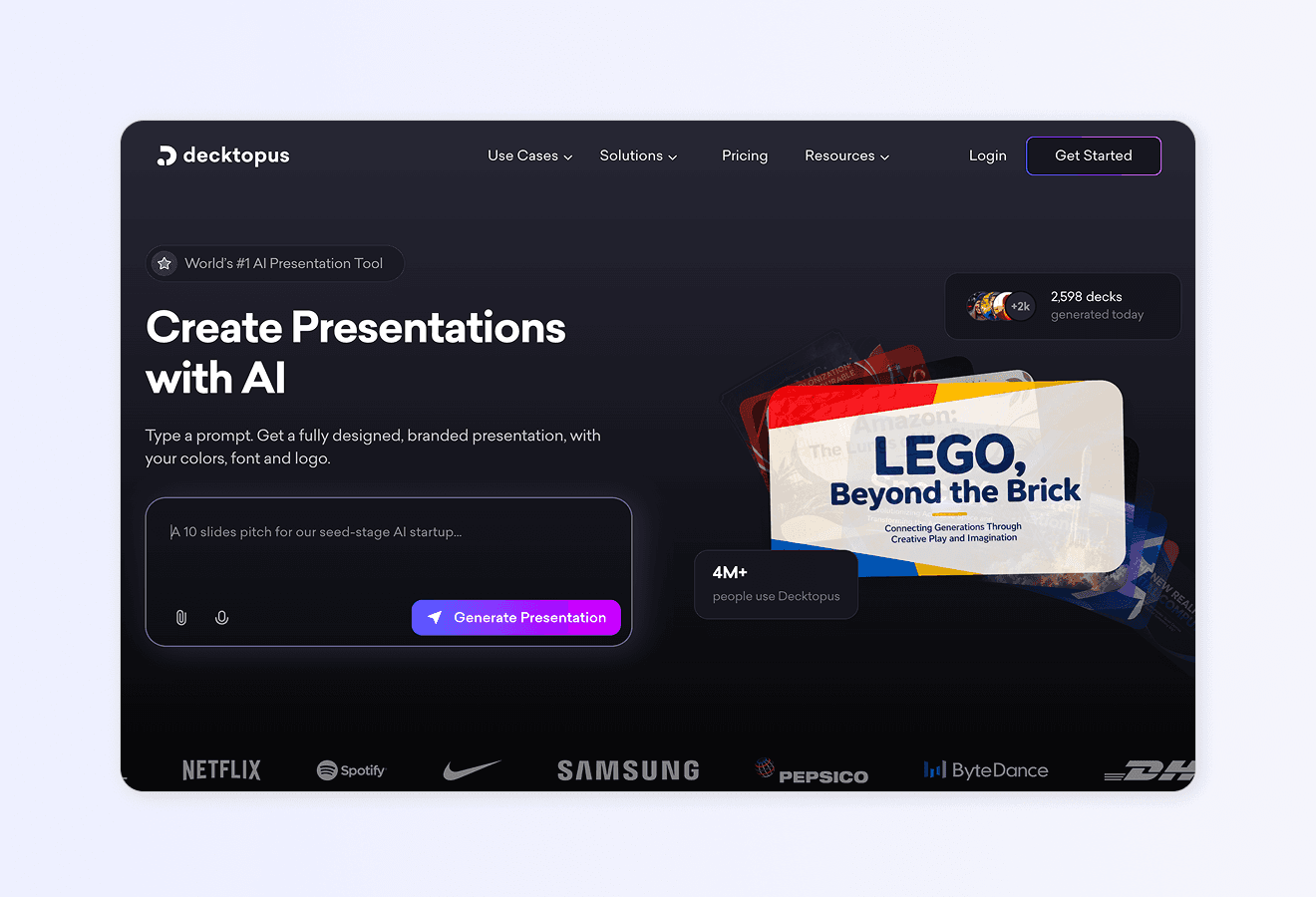
Your use of funds slide lives inside a bigger pitch deck. The whole thing needs to work. Decktopus AI generates a full pitch deck (including a professional use of funds slide) from a short description in minutes.
1. Describe your topic. Type something like “Series A pitch deck for a B2B SaaS company raising $3M with 18-month runway target.” Or upload your business plan, financial model, or one-pager as a supporting file. If you already have an older pitch deck, Decktopus AI’s Beautify feature can redesign it or use it as a source for a new version.
2. Choose your style. Pick a brand, reuse a saved look, or start fresh with AI. Decktopus AI will ask how you want your presentation to look. You can apply a saved brand, import your brand directly from your company website URL (which pulls in your logo, colors, and fonts), or let AI generate a professional style from scratch.
3. Review the outline. Decktopus AI generates a slide-by-slide structure covering hook, problem, solution, market, product, business model, traction, team, competition, financials, use of funds, and ask. Adjust before the full deck is built.
4. Refine with Edit with AI. Click Edit with AI and type instructions like “make the use of funds slide a pie chart with 5 categories,” “add dollar amounts alongside percentages,” or “add a milestone next to each category.” All edits are tracked with unlimited version history.
5. Export or share. Download as PDF, PPT, or PNG. Share via live link. Any updates you make afterward automatically appear at the same URL, so investors always see the latest version. Or present directly.
You can also use the Loop AI Delivery Coach during rehearsal for real-time feedback on pacing, filler words, and clarity before your investor meeting. It’s especially useful for the use of funds walkthrough, where nervous founders often rush through the numbers instead of standing in them confidently.
For broader guidance, see the best AI presentation tools, the best pitch deck generators for founders, and our ultimate presentation tools roundup.
Ready to build a pitch deck that turns investor meetings into checks? Get started with Decktopus AI.
Frequently Asked Questions
What is the purpose of the use of funds slide?
The use of funds slide shows investors exactly how their capital will be allocated across specific spending categories, tied to specific business milestones. It builds trust by turning a fundraising ask into a concrete plan and demonstrates the founder’s operational judgment.
Why is the use of funds slide so important to investors?
Investors care because it reveals how the founder thinks about capital allocation, milestone planning, and runway management. Since running out of cash accounts for roughly 38% of startup failures, the use of funds slide is one of the strongest signals of whether the team can turn capital into progress.
How many categories should a use of funds slide have?
Most strong use of funds slides use 4 to 6 categories: Product Development, Team, Marketing and Sales, Operations, and sometimes Runway or Contingency. More than 6 makes the visual unreadable.
Should I use a pie chart or a bar chart?
Pie charts are best for simple allocation across 4 to 6 categories and read quickly. Bar charts are better when you want to show comparisons or spending over time. For detailed later-stage decks, a hybrid with a chart plus a small dollar-amount table often works best.
What percentages are typical for each category?
At seed stage: 30-40% product, 30-35% team, 15-25% GTM, 5-10% ops, 5-10% runway. At Series A: 25-35% product, 30-40% team, 25-35% GTM, 5-10% ops, 5-10% runway. These shift as the company matures toward growth stage.
How much runway should the use of funds slide show?
Most rounds are structured to provide 12 to 18 months of runway to the next fundable milestone. State this explicitly. “This $3M provides 18 months of runway to reach Series A metrics.”
What is a good use of funds slide example?
The best examples come from public decks like Airbnb, Facebook, and Uber (all available online). They share the same traits: clear categories, dollar amounts, milestone alignment, and a visual format that scans in under 30 seconds. See our breakdown of the Airbnb pitch deck.
How does the use of funds slide connect to the rest of the pitch deck?
Every allocation should tie back to a story told earlier in the deck. Marketing spend should match the GTM strategy slide. Team hires should match the team slide. Product spend should match the product roadmap. Contradictions between slides break investor trust faster than any single mistake.
Can I use images or visuals to enhance the use of funds slide?
Yes. Icons, small illustrations, or milestone visuals can make the slide more engaging. But keep it clean. Overdesigned slides distract from the numbers, which are the point.
What role does the team play in the use of funds slide?
Team allocation often connects directly to the team slide. If you’re raising to hire 6 engineers, 2 salespeople, and 1 marketer, name those roles. Specificity builds credibility because it shows the founder has already thought through the org design.
How does market size relate to the use of funds slide?
Larger markets justify heavier GTM allocation. If you claim a $10B market, investors expect meaningful investment in customer acquisition. If your allocation shows 5% marketing on a $10B market claim, the numbers don’t match the story.
What is the best way to end a pitch with the use of funds slide?
Restate the ask, the runway, and the milestone. “We’re raising $3M to provide 18 months of runway and reach $5M ARR.” Then leave room for questions. End with confidence, not with an apology or a soft close. See our guide on how to end a presentation with impact.
What tool should I use to build a pitch deck with a strong use of funds slide?
Decktopus AI generates a full pitch deck (including the use of funds slide) from a short description in minutes with automatic brand import from your website URL and Loop AI Delivery Coach for rehearsal. For more, see our roundup of the best pitch deck generators for founders.
Conclusion
The use of funds slide isn’t a formality. It’s one of the highest-scrutiny slides in any modern pitch deck, especially since the funding environment tightened post-2022. Investors read it as a proxy for how you think about capital, milestones, hiring, and runway. Get it right, and the rest of the deck feels more credible. Get it wrong, and even a strong product story loses momentum.
The winning formula is straightforward. Specific categories. Dollar amounts alongside percentages. Every allocation tied to a milestone. Alignment with the rest of the deck. A clear runway statement. And a visual format that reads in under 30 seconds.
Whether you’re pitching pre-seed, seed, Series A, or beyond, the fundamentals hold. Use the 5-Category Framework as a starting point. Adjust the mix based on your stage. Tie every dollar to an outcome. And rehearse the delivery until you can walk through the slide without looking at it.
For your next fundraise, treat the use of funds slide as an opportunity to build trust, not a checkbox to complete. Founders who nail this slide raise faster, at better terms, and with investors who actually understand what they’re funding.
For more resources, see our guides on pitch deck examples, how to make the best startup pitch, and the best pitch deck generators for founders.
Related posts
The Ultimate Guide to the Best AI Pitch Deck Generators: Free and Paid Options for Creating Stunning Pitch Decks
Discover the best AI pitch deck generators to streamline creating decks for investors. Ideal for entrepreneurs and startups, these AI tools help craft the perfect pitch deck effortlessly.
Pitch Deck
Top 10 Best AI-Powered Pitch Deck Generators For Founders
Discover the best AI pitch deck generators for founders. Compare top tools that generate investor-ready decks in minutes, apply your brand automatically, and let you focus on the pitch instead of the design.
Pitch Deck

Early Stage Entrepreneur Hack: Talking to Users
You have your idea and you have your pitch deck. You knock on some doors, pitch the idea, and even though your pitch deck looks stunning, the investor is not sure about the idea. They want to see the transactions first. What a bummer!
Pitch Deck