Presentations
Top Tome Alternatives: Boost Your Presentations in 2026
Discover leading Tome AI alternatives! Boost your presentations with cuttingedge tools!


Alara Akçasız
Another standout is Beautify: upload an existing presentation and choose between a full visual redesign or using it as a resource to generate a completely new deck. For teams migrating from Tome, this means existing content doesn't go to waste.
Introduction to Tome and the Need for Alternatives
The Rise of Visual Storytelling in Presentations
In a world where every detail counts, visual storytelling in presentations has become king. Gone are the days when bullet points reigned supreme oday’s audiences crave narratives that spring to life with each click.
Stunning graphics, compelling animations, and interactive elements are not just nice to have; they are expected. This transformative shift pushes presenters to seek tools that can deliver such dynamic experiences.
Why Seek Alternatives to Tome in 2026?

As we navigate through, the landscape of digital presentation tools continues to evolve, offering a myriad of options tailored to different needs and preferences.
While Tome has been a popular choice for its advanced features and customization capabilities, it may not be the perfect fit for everyone.
Some users are finding it too complex or time-consuming for their needs, leading them to explore other tools that prioritize ease of use, quick creation, and a more intuitive interface.
In this blog post, we’ll delve into the reasons why you might consider seeking alternatives to Tome and highlight some excellent options available today.
Top Tome Alternatives (The Ultimate List)
Alternative #1: Decktopus AI
Revolutionizing Content Creation with AI-Powered Assistance
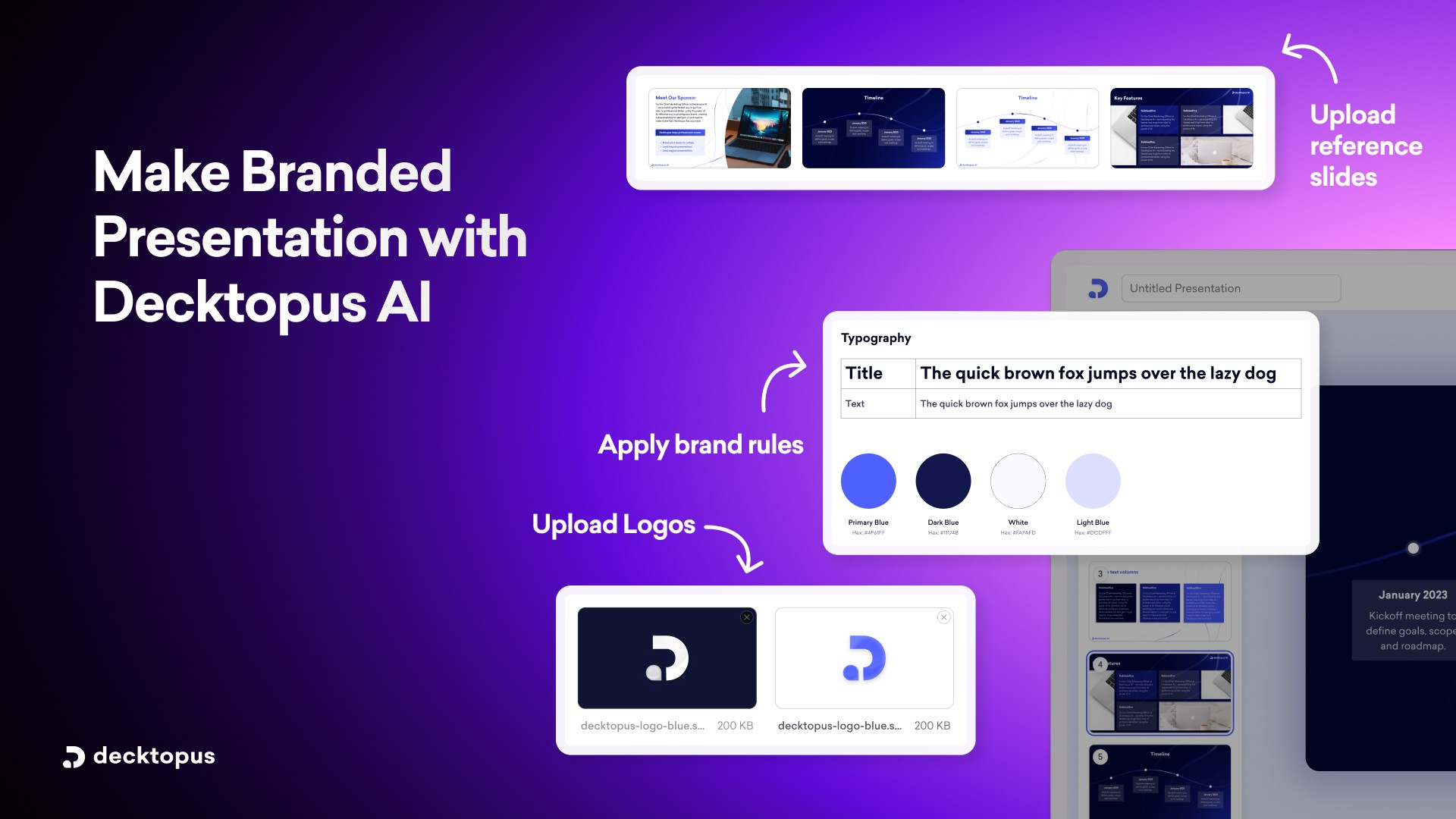
Decktopus AI stands out as a game-changer in the world of presentation software, leveraging artificial intelligence to streamline the content creation process and enhance the quality of presentations.
Its AI-powered engine acts as a virtual assistant, empowering users to generate fully designed decks tailored to their needs effortlessly.
By simply entering the topic of their presentation, Decktopus AI analyzes the content and provides content suggestions, eliminating the dreaded writer’s block and ensuring a smooth workflow.
This innovative approach not only saves time but also enhances creativity, allowing users to focus on delivering impactful presentations.
AI-Powered Presentation Generation
Decktopus is one of the best Tome alternatives for teams that need to go from topic to finished presentation fast. The best AI presentation maker lets you describe your topic, upload your files, and get a complete, structured presentation in minutes. Content, layout, and design are handled without any manual work.
Brand Kit for Consistent Team Output
Set your colors, fonts, and logo once. Every presentation your team produces automatically matches your company style. No formatting work, no off-brand slides going out to clients or leadership.
Prompt-Based Editing
Type what you want updated and the slide changes instantly. No need to manually adjust layouts or redesign anything. Version history lets you restore any previous slide for free.
Built-In Delivery Coaching
Decktopus includes built-in delivery coaching so you can practice and get real-time feedback before the actual meeting. For anyone looking for Tome alternatives that go beyond slide design, this is the feature that sets Decktopus apart.
Collaboration and Cloud Access
Decktopus is built for teams. Share a live link with colleagues and collaborate in real-time without sending files back and forth. Presentations are saved automatically to the cloud and can be accessed from any device, anywhere.
For teams using Decktopus as their Tome alternative, the shared brand kit means everyone produces on-brand output by default. No chasing teammates to fix colors or fonts before a big meeting.
Why Decktopus Beats Tome for Speed
As a Tome alternative, Decktopus is built around one goal: getting you to a finished, professional presentation faster.
Describe your topic or upload your files. The AI generates a complete, structured deck automatically. No blank slides, no manual design work, no searching for stock images.
Where Tome requires time and effort to customize every element, Decktopus handles the heavy lifting so you can focus on the content and the delivery.
[[EMBED:PGRpdiBzdHlsZT0ib3ZlcmZsb3cteDphdXRvO21hcmdpbjoyMHB4IDAiPjxzdHlsZT4uZHRrLXRibCwuZHRrLXRibCAqe2JveC1zaXppbmc6Ym9yZGVyLWJveDttYXJnaW46MDtwYWRkaW5nOjB9LmR0ay10Ymx7Zm9udC1mYW1pbHk6J1BvcHBpbnMnLHN5c3RlbS11aSxzYW5zLXNlcmlmO2NvbG9yOiMyRDM0MzY7bWF4LXdpZHRoOjg2MHB4O21hcmdpbjowIGF1dG87Ym9yZGVyOjFweCBzb2xpZCAjRThFQUYwO2JvcmRlci1yYWRpdXM6MjBweDtvdmVyZmxvdzpoaWRkZW47YmFja2dyb3VuZDojZmZmfS5kdGstdGJsIC5oZWFke3BhZGRpbmc6MjZweCAyOHB4IDIwcHh9LmR0ay10YmwgLmhlYWQgaDJ7Zm9udC1zaXplOmNsYW1wKDIycHgsNXZ3LDMycHgpO2ZvbnQtd2VpZ2h0OjcwMDtsaW5lLWhlaWdodDoxLjF9LmR0ay10YmwgLmhlYWQgcHtjb2xvcjojNzg4MDhBO2ZvbnQtc2l6ZToxNXB4O21hcmdpbi10b3A6NHB4fS5kdGstdGJsIC5yb3d7ZGlzcGxheTpncmlkO2dyaWQtdGVtcGxhdGUtY29sdW1uczoxLjdmciAxZnIgMWZyO2JvcmRlci10b3A6MXB4IHNvbGlkICNFOEVBRjB9LmR0ay10YmwgLnJvdy5oZWFkZXJ7Ym9yZGVyLXRvcDowfS5kdGstdGJsIC5jZWxse3BhZGRpbmc6MTRweCAxNnB4O2Rpc3BsYXk6ZmxleDtmbGV4LWRpcmVjdGlvbjpjb2x1bW47anVzdGlmeS1jb250ZW50OmNlbnRlcjthbGlnbi1pdGVtczpjZW50ZXI7dGV4dC1hbGlnbjpjZW50ZXI7Z2FwOjZweDttaW4taGVpZ2h0OjYwcHh9LmR0ay10YmwgLmZlYXR7YWxpZ24taXRlbXM6ZmxleC1zdGFydDt0ZXh0LWFsaWduOmxlZnQ7Zm9udC13ZWlnaHQ6NTAwO2ZvbnQtc2l6ZToxNnB4O2xpbmUtaGVpZ2h0OjEuM30uZHRrLXRibCAuY29sLWR0a3tiYWNrZ3JvdW5kOiNFRUVCRkR9LmR0ay10YmwgLnJvdzpudGgtY2hpbGQoZXZlbikgLmZlYXR7YmFja2dyb3VuZDojRkFGQUZDfS5kdGstdGJsIC5yb3c6bnRoLWNoaWxkKGV2ZW4pIC5jb2wtY29tcHtiYWNrZ3JvdW5kOiNGQUZBRkN9LmR0ay10YmwgLmhlYWRlciAuY2VsbHtmb250LXdlaWdodDo2MDA7Zm9udC1zaXplOjE4cHg7bWluLWhlaWdodDphdXRvO3BhZGRpbmc6MTZweH0uZHRrLXRibCAuaGVhZGVyIC5jb2wtZHRre2JhY2tncm91bmQ6IzZDNUNFNztjb2xvcjojZmZmO2JvcmRlci1yYWRpdXM6MTBweCAxMHB4IDAgMH0uZHRrLXRibCAuYnt3aWR0aDoyOHB4O2hlaWdodDoyOHB4O2JvcmRlci1yYWRpdXM6NTAlO2Rpc3BsYXk6aW5saW5lLWZsZXg7YWxpZ24taXRlbXM6Y2VudGVyO2p1c3RpZnktY29udGVudDpjZW50ZXI7Y29sb3I6I2ZmZjtmb250LXNpemU6MTVweDtmb250LXdlaWdodDo3MDA7bGluZS1oZWlnaHQ6MTtmbGV4OjAgMCAyOHB4fS5kdGstdGJsIC55ZXN7YmFja2dyb3VuZDojMjJCMjZDfS5kdGstdGJsIC5ub3tiYWNrZ3JvdW5kOiNFODU0NUN9LmR0ay10YmwgLnBhcnR7YmFja2dyb3VuZDojRjBBQTI4fS5kdGstdGJsIC5ub3Rle2ZvbnQtc2l6ZToxMnB4O2NvbG9yOiM3ODgwOEE7bGluZS1oZWlnaHQ6MS4zO3dvcmQtd3JhcDpicmVhay13b3JkO21heC13aWR0aDoxMDAlfS5kdGstdGJsIC5sYmx7ZGlzcGxheTpub25lO2ZvbnQtc2l6ZToxM3B4O2NvbG9yOiM3ODgwOEE7Zm9udC13ZWlnaHQ6NTAwfS5kdGstdGJsIC52YWx7ZGlzcGxheTpmbGV4O2FsaWduLWl0ZW1zOmNlbnRlcjtnYXA6OHB4O2ZsZXgtd3JhcDpub3dyYXB9LmR0ay10YmwgLmZvb3R7ZGlzcGxheTpmbGV4O2ZsZXgtd3JhcDp3cmFwO2dhcDoxMHB4O2p1c3RpZnktY29udGVudDpzcGFjZS1iZXR3ZWVuO2FsaWduLWl0ZW1zOmNlbnRlcjtwYWRkaW5nOjE2cHggMjhweDtib3JkZXItdG9wOjFweCBzb2xpZCAjRThFQUYwO2NvbG9yOiM3ODgwOEE7Zm9udC1zaXplOjEzcHh9LmR0ay10YmwgLmxlZ2VuZHtkaXNwbGF5OmZsZXg7Z2FwOjE2cHh9LmR0ay10YmwgLmxlZ2VuZCBzcGFue2Rpc3BsYXk6aW5saW5lLWZsZXg7YWxpZ24taXRlbXM6Y2VudGVyO2dhcDo2cHh9LmR0ay10YmwgLmxlZ2VuZCAuYnt3aWR0aDoxOXB4O2hlaWdodDoxOXB4O2ZvbnQtc2l6ZToxMXB4O2ZsZXg6MCAwIDE5cHh9QG1lZGlhKG1heC13aWR0aDo1NjBweCl7LmR0ay10YmwgLmhlYWRlcntkaXNwbGF5Om5vbmV9LmR0ay10YmwgLnJvd3tncmlkLXRlbXBsYXRlLWNvbHVtbnM6MWZyO2JvcmRlci10b3A6MDtwYWRkaW5nOjZweCAwO2JvcmRlci1ib3R0b206MXB4IHNvbGlkICNFOEVBRjB9LmR0ay10YmwgLnJvdzpsYXN0LWNoaWxke2JvcmRlci1ib3R0b206MH0uZHRrLXRibCAuY2VsbHttaW4taGVpZ2h0OmF1dG87cGFkZGluZzo5cHggMThweDthbGlnbi1pdGVtczpmbGV4LXN0YXJ0O3RleHQtYWxpZ246bGVmdH0uZHRrLXRibCAuZmVhdHtmb250LXdlaWdodDo2MDA7Zm9udC1zaXplOjE2cHg7cGFkZGluZy1ib3R0b206MnB4O2JhY2tncm91bmQ6dHJhbnNwYXJlbnQhaW1wb3J0YW50fS5kdGstdGJsIC5jb2wtZHRrLC5kdGstdGJsIC5jb2wtY29tcHtiYWNrZ3JvdW5kOnRyYW5zcGFyZW50IWltcG9ydGFudDtmbGV4LWRpcmVjdGlvbjpyb3chaW1wb3J0YW50O2p1c3RpZnktY29udGVudDpzcGFjZS1iZXR3ZWVuO3dpZHRoOjEwMCU7Z2FwOjEycHg7cGFkZGluZzo2cHggMTRweDttYXJnaW46MnB4IDE0cHh9LmR0ay10YmwgLmNvbC1kdGt7Ym9yZGVyLWxlZnQ6M3B4IHNvbGlkICM2QzVDRTc7Ym9yZGVyLXJhZGl1czo0cHg7YmFja2dyb3VuZDojRUVFQkZEIWltcG9ydGFudH0uZHRrLXRibCAuY29sLWNvbXB7Ym9yZGVyLWxlZnQ6M3B4IHNvbGlkICNFOEVBRjB9LmR0ay10YmwgLmxibHtkaXNwbGF5OmlubGluZX0uZHRrLXRibCAuZm9vdHtwYWRkaW5nOjE2cHggMThweDtmbGV4LWRpcmVjdGlvbjpjb2x1bW47YWxpZ24taXRlbXM6ZmxleC1zdGFydH19PC9zdHlsZT48ZGl2IGNsYXNzPSJkdGstdGJsIj48ZGl2IGNsYXNzPSJoZWFkIj48aDI+RGVja3RvcHVzIHZzLiBUb21lPC9oMj48cD5BSSBwcmVzZW50YXRpb24gZmVhdHVyZSBjb21wYXJpc29uPC9wPjwvZGl2PjxkaXYgY2xhc3M9InJvdyBoZWFkZXIiPjxkaXYgY2xhc3M9ImNlbGwgZmVhdCI+RmVhdHVyZTwvZGl2PjxkaXYgY2xhc3M9ImNlbGwgY29sLWR0ayI+RGVja3RvcHVzPC9kaXY+PGRpdiBjbGFzcz0iY2VsbCBjb2wtY29tcCI+VG9tZTwvZGl2PjwvZGl2PjxkaXYgY2xhc3M9InJvdyI+PGRpdiBjbGFzcz0iY2VsbCBmZWF0Ij5FbmQtdG8tZW5kIEFJIGRlY2sgZnJvbSBhIHByb21wdDwvZGl2PjxkaXYgY2xhc3M9ImNlbGwgY29sLWR0ayI+PGRpdiBjbGFzcz0idmFsIj48c3BhbiBjbGFzcz0ibGJsIj5EZWNrdG9wdXM8L3NwYW4+PHNwYW4gY2xhc3M9ImIgeWVzIj7inJM8L3NwYW4+PC9kaXY+PC9kaXY+PGRpdiBjbGFzcz0iY2VsbCBjb2wtY29tcCI+PGRpdiBjbGFzcz0idmFsIj48c3BhbiBjbGFzcz0ibGJsIj5Ub21lPC9zcGFuPjxzcGFuIGNsYXNzPSJiIHllcyI+4pyTPC9zcGFuPjwvZGl2PjwvZGl2PjwvZGl2PjxkaXYgY2xhc3M9InJvdyI+PGRpdiBjbGFzcz0iY2VsbCBmZWF0Ij5BdXRvbWF0aWMgYnJhbmQgZXh0cmFjdGlvbiBmcm9tIGEgVVJMPC9kaXY+PGRpdiBjbGFzcz0iY2VsbCBjb2wtZHRrIj48ZGl2IGNsYXNzPSJ2YWwiPjxzcGFuIGNsYXNzPSJsYmwiPkRlY2t0b3B1czwvc3Bhbj48c3BhbiBjbGFzcz0iYiB5ZXMiPuKckzwvc3Bhbj48L2Rpdj48L2Rpdj48ZGl2IGNsYXNzPSJjZWxsIGNvbC1jb21wIj48ZGl2IGNsYXNzPSJ2YWwiPjxzcGFuIGNsYXNzPSJsYmwiPlRvbWU8L3NwYW4+PHNwYW4gY2xhc3M9ImIgbm8iPuKclTwvc3Bhbj48L2Rpdj48L2Rpdj48L2Rpdj48ZGl2IGNsYXNzPSJyb3ciPjxkaXYgY2xhc3M9ImNlbGwgZmVhdCI+QUkgZGVsaXZlcnkgY29hY2hpbmcgJmFtcDsgcHJhY3RpY2UgbW9kZTwvZGl2PjxkaXYgY2xhc3M9ImNlbGwgY29sLWR0ayI+PGRpdiBjbGFzcz0idmFsIj48c3BhbiBjbGFzcz0ibGJsIj5EZWNrdG9wdXM8L3NwYW4+PHNwYW4gY2xhc3M9ImIgeWVzIj7inJM8L3NwYW4+PC9kaXY+PC9kaXY+PGRpdiBjbGFzcz0iY2VsbCBjb2wtY29tcCI+PGRpdiBjbGFzcz0idmFsIj48c3BhbiBjbGFzcz0ibGJsIj5Ub21lPC9zcGFuPjxzcGFuIGNsYXNzPSJiIG5vIj7inJU8L3NwYW4+PC9kaXY+PC9kaXY+PC9kaXY+PGRpdiBjbGFzcz0icm93Ij48ZGl2IGNsYXNzPSJjZWxsIGZlYXQiPkFJIENhcm91c2VsIE1ha2VyIChMaW5rZWRJbiAvIElHKTwvZGl2PjxkaXYgY2xhc3M9ImNlbGwgY29sLWR0ayI+PGRpdiBjbGFzcz0idmFsIj48c3BhbiBjbGFzcz0ibGJsIj5EZWNrdG9wdXM8L3NwYW4+PHNwYW4gY2xhc3M9ImIgeWVzIj7inJM8L3NwYW4+PC9kaXY+PC9kaXY+PGRpdiBjbGFzcz0iY2VsbCBjb2wtY29tcCI+PGRpdiBjbGFzcz0idmFsIj48c3BhbiBjbGFzcz0ibGJsIj5Ub21lPC9zcGFuPjxzcGFuIGNsYXNzPSJiIG5vIj7inJU8L3NwYW4+PC9kaXY+PC9kaXY+PC9kaXY+PGRpdiBjbGFzcz0icm93Ij48ZGl2IGNsYXNzPSJjZWxsIGZlYXQiPkFJIGltYWdlIGdlbmVyYXRpb248L2Rpdj48ZGl2IGNsYXNzPSJjZWxsIGNvbC1kdGsiPjxkaXYgY2xhc3M9InZhbCI+PHNwYW4gY2xhc3M9ImxibCI+RGVja3RvcHVzPC9zcGFuPjxzcGFuIGNsYXNzPSJiIHllcyI+4pyTPC9zcGFuPjwvZGl2PjwvZGl2PjxkaXYgY2xhc3M9ImNlbGwgY29sLWNvbXAiPjxkaXYgY2xhc3M9InZhbCI+PHNwYW4gY2xhc3M9ImxibCI+VG9tZTwvc3Bhbj48c3BhbiBjbGFzcz0iYiB5ZXMiPuKckzwvc3Bhbj48L2Rpdj48c3BhbiBjbGFzcz0ibm90ZSI+REFMTMK3RSBpbnRlZ3JhdGlvbjwvc3Bhbj48L2Rpdj48L2Rpdj48ZGl2IGNsYXNzPSJyb3ciPjxkaXYgY2xhc3M9ImNlbGwgZmVhdCI+RG9jdW1lbnQgLyBQREYgaW1wb3J0IHRvIGRlY2s8L2Rpdj48ZGl2IGNsYXNzPSJjZWxsIGNvbC1kdGsiPjxkaXYgY2xhc3M9InZhbCI+PHNwYW4gY2xhc3M9ImxibCI+RGVja3RvcHVzPC9zcGFuPjxzcGFuIGNsYXNzPSJiIHllcyI+4pyTPC9zcGFuPjwvZGl2PjwvZGl2PjxkaXYgY2xhc3M9ImNlbGwgY29sLWNvbXAiPjxkaXYgY2xhc3M9InZhbCI+PHNwYW4gY2xhc3M9ImxibCI+VG9tZTwvc3Bhbj48c3BhbiBjbGFzcz0iYiBwYXJ0Ij7igJM8L3NwYW4+PC9kaXY+PC9kaXY+PC9kaXY+PGRpdiBjbGFzcz0icm93Ij48ZGl2IGNsYXNzPSJjZWxsIGZlYXQiPlN0b3J5dGVsbGluZyB0dW5lZCB0byB5b3VyIHB1cnBvc2U8L2Rpdj48ZGl2IGNsYXNzPSJjZWxsIGNvbC1kdGsiPjxkaXYgY2xhc3M9InZhbCI+PHNwYW4gY2xhc3M9ImxibCI+RGVja3RvcHVzPC9zcGFuPjxzcGFuIGNsYXNzPSJiIHllcyI+4pyTPC9zcGFuPjwvZGl2PjwvZGl2PjxkaXYgY2xhc3M9ImNlbGwgY29sLWNvbXAiPjxkaXYgY2xhc3M9InZhbCI+PHNwYW4gY2xhc3M9ImxibCI+VG9tZTwvc3Bhbj48c3BhbiBjbGFzcz0iYiB5ZXMiPuKckzwvc3Bhbj48L2Rpdj48L2Rpdj48L2Rpdj48ZGl2IGNsYXNzPSJyb3ciPjxkaXYgY2xhc3M9ImNlbGwgZmVhdCI+QnJhbmQtY29uc2lzdGVudCB0ZWFtIHRlbXBsYXRlczwvZGl2PjxkaXYgY2xhc3M9ImNlbGwgY29sLWR0ayI+PGRpdiBjbGFzcz0idmFsIj48c3BhbiBjbGFzcz0ibGJsIj5EZWNrdG9wdXM8L3NwYW4+PHNwYW4gY2xhc3M9ImIgeWVzIj7inJM8L3NwYW4+PC9kaXY+PC9kaXY+PGRpdiBjbGFzcz0iY2VsbCBjb2wtY29tcCI+PGRpdiBjbGFzcz0idmFsIj48c3BhbiBjbGFzcz0ibGJsIj5Ub21lPC9zcGFuPjxzcGFuIGNsYXNzPSJiIHBhcnQiPuKAkzwvc3Bhbj48L2Rpdj48L2Rpdj48L2Rpdj48ZGl2IGNsYXNzPSJyb3ciPjxkaXYgY2xhc3M9ImNlbGwgZmVhdCI+Tm8gZGVzaWduIHNraWxscyByZXF1aXJlZDwvZGl2PjxkaXYgY2xhc3M9ImNlbGwgY29sLWR0ayI+PGRpdiBjbGFzcz0idmFsIj48c3BhbiBjbGFzcz0ibGJsIj5EZWNrdG9wdXM8L3NwYW4+PHNwYW4gY2xhc3M9ImIgeWVzIj7inJM8L3NwYW4+PC9kaXY+PC9kaXY+PGRpdiBjbGFzcz0iY2VsbCBjb2wtY29tcCI+PGRpdiBjbGFzcz0idmFsIj48c3BhbiBjbGFzcz0ibGJsIj5Ub21lPC9zcGFuPjxzcGFuIGNsYXNzPSJiIHllcyI+4pyTPC9zcGFuPjwvZGl2PjwvZGl2PjwvZGl2PjxkaXYgY2xhc3M9InJvdyI+PGRpdiBjbGFzcz0iY2VsbCBmZWF0Ij5DbGVhbiBQb3dlclBvaW50ICgucHB0eCkgZXhwb3J0PC9kaXY+PGRpdiBjbGFzcz0iY2VsbCBjb2wtZHRrIj48ZGl2IGNsYXNzPSJ2YWwiPjxzcGFuIGNsYXNzPSJsYmwiPkRlY2t0b3B1czwvc3Bhbj48c3BhbiBjbGFzcz0iYiB5ZXMiPuKckzwvc3Bhbj48L2Rpdj48L2Rpdj48ZGl2IGNsYXNzPSJjZWxsIGNvbC1jb21wIj48ZGl2IGNsYXNzPSJ2YWwiPjxzcGFuIGNsYXNzPSJsYmwiPlRvbWU8L3NwYW4+PHNwYW4gY2xhc3M9ImIgbm8iPuKclTwvc3Bhbj48L2Rpdj48L2Rpdj48L2Rpdj48ZGl2IGNsYXNzPSJyb3ciPjxkaXYgY2xhc3M9ImNlbGwgZmVhdCI+UHJlc2VudCBmcm9tIGFueSBicm93c2VyPC9kaXY+PGRpdiBjbGFzcz0iY2VsbCBjb2wtZHRrIj48ZGl2IGNsYXNzPSJ2YWwiPjxzcGFuIGNsYXNzPSJsYmwiPkRlY2t0b3B1czwvc3Bhbj48c3BhbiBjbGFzcz0iYiB5ZXMiPuKckzwvc3Bhbj48L2Rpdj48L2Rpdj48ZGl2IGNsYXNzPSJjZWxsIGNvbC1jb21wIj48ZGl2IGNsYXNzPSJ2YWwiPjxzcGFuIGNsYXNzPSJsYmwiPlRvbWU8L3NwYW4+PHNwYW4gY2xhc3M9ImIgeWVzIj7inJM8L3NwYW4+PC9kaXY+PC9kaXY+PC9kaXY+PGRpdiBjbGFzcz0icm93Ij48ZGl2IGNsYXNzPSJjZWxsIGZlYXQiPlphcGllciBpbnRlZ3JhdGlvbjwvZGl2PjxkaXYgY2xhc3M9ImNlbGwgY29sLWR0ayI+PGRpdiBjbGFzcz0idmFsIj48c3BhbiBjbGFzcz0ibGJsIj5EZWNrdG9wdXM8L3NwYW4+PHNwYW4gY2xhc3M9ImIgeWVzIj7inJM8L3NwYW4+PC9kaXY+PC9kaXY+PGRpdiBjbGFzcz0iY2VsbCBjb2wtY29tcCI+PGRpdiBjbGFzcz0idmFsIj48c3BhbiBjbGFzcz0ibGJsIj5Ub21lPC9zcGFuPjxzcGFuIGNsYXNzPSJiIG5vIj7inJU8L3NwYW4+PC9kaXY+PC9kaXY+PC9kaXY+PGRpdiBjbGFzcz0icm93Ij48ZGl2IGNsYXNzPSJjZWxsIGZlYXQiPlJlYWwtdGltZSBjby1lZGl0aW5nPC9kaXY+PGRpdiBjbGFzcz0iY2VsbCBjb2wtZHRrIj48ZGl2IGNsYXNzPSJ2YWwiPjxzcGFuIGNsYXNzPSJsYmwiPkRlY2t0b3B1czwvc3Bhbj48c3BhbiBjbGFzcz0iYiBubyI+4pyVPC9zcGFuPjwvZGl2PjxzcGFuIGNsYXNzPSJub3RlIj5TaGFyZWQgYWNjZXNzIChCdXNpbmVzcyk8L3NwYW4+PC9kaXY+PGRpdiBjbGFzcz0iY2VsbCBjb2wtY29tcCI+PGRpdiBjbGFzcz0idmFsIj48c3BhbiBjbGFzcz0ibGJsIj5Ub21lPC9zcGFuPjxzcGFuIGNsYXNzPSJiIHllcyI+4pyTPC9zcGFuPjwvZGl2PjwvZGl2PjwvZGl2PjxkaXYgY2xhc3M9InJvdyI+PGRpdiBjbGFzcz0iY2VsbCBmZWF0Ij5FbnRyeSBwcmljZTwvZGl2PjxkaXYgY2xhc3M9ImNlbGwgY29sLWR0ayI+PGRpdiBjbGFzcz0idmFsIj48c3BhbiBjbGFzcz0ibGJsIj5EZWNrdG9wdXM8L3NwYW4+PHNwYW4gY2xhc3M9ImIgeWVzIj7inJM8L3NwYW4+PC9kaXY+PHNwYW4gY2xhc3M9Im5vdGUiPiQ5Ljk5L21vPC9zcGFuPjwvZGl2PjxkaXYgY2xhc3M9ImNlbGwgY29sLWNvbXAiPjxkaXYgY2xhc3M9InZhbCI+PHNwYW4gY2xhc3M9ImxibCI+VG9tZTwvc3Bhbj48c3BhbiBjbGFzcz0iYiB5ZXMiPuKckzwvc3Bhbj48L2Rpdj48c3BhbiBjbGFzcz0ibm90ZSI+RnJlZSB0aWVyICsgJDE2L21vPC9zcGFuPjwvZGl2PjwvZGl2PjxkaXYgY2xhc3M9ImZvb3QiPjxkaXY+VXBkYXRlZCBKdWx5IDIwMjYgJm5ic3A7wrcmbmJzcDsgZGVja3RvcHVzLmNvbTwvZGl2PjxkaXYgY2xhc3M9ImxlZ2VuZCI+PHNwYW4+PHNwYW4gY2xhc3M9ImIgeWVzIj7inJM8L3NwYW4+WWVzPC9zcGFuPjxzcGFuPjxzcGFuIGNsYXNzPSJiIHBhcnQiPuKAkzwvc3Bhbj5QYXJ0aWFsPC9zcGFuPjxzcGFuPjxzcGFuIGNsYXNzPSJiIG5vIj7inJU8L3NwYW4+Tm88L3NwYW4+PC9kaXY+PC9kaXY+PC9kaXY+PC9kaXY+]]
Additionally, Decktopus boasts a user-friendly interface and a wide range of customizable templates and themes, allowing users to create visually stunning presentations with ease.
Its collaboration features and cloud-based platform further enhance productivity and convenience, making it the preferred choice for professionals seeking efficiency and creativity in their presentations.
Overall, Decktopus‘s innovative features and streamlined workflow make it a much better option than Tome for creating impactful and engaging presentations.
[[EMBED:PGRpdiBzdHlsZT0ib3ZlcmZsb3cteDphdXRvO21hcmdpbjoyMHB4IDAiPjx0YWJsZSBzdHlsZT0id2lkdGg6MTAwJTtib3JkZXItY29sbGFwc2U6Y29sbGFwc2U7Zm9udC1zaXplOjE1cHg7bWFyZ2luOjhweCAwIj48dGggc3R5bGU9ImJvcmRlcjoxcHggc29saWQgI2UzZTZlYTtwYWRkaW5nOjEwcHggMTRweDt0ZXh0LWFsaWduOmxlZnQ7YmFja2dyb3VuZDojZjRmNmY4O2ZvbnQtd2VpZ2h0OjYwMCI+PHRyIHN0eWxlPSJiYWNrZ3JvdW5kLWNvbG9yOiNmNGY0ZjQ7Ij48dGggc3R5bGU9ImJvcmRlcjoxcHggc29saWQgI2UzZTZlYTtwYWRkaW5nOjEwcHggMTRweDt0ZXh0LWFsaWduOmxlZnQ7YmFja2dyb3VuZDojZjRmNmY4O2ZvbnQtd2VpZ2h0OjYwMCI+RmVhdHVyZTwvdGg+PHRoIHN0eWxlPSJib3JkZXI6MXB4IHNvbGlkICNlM2U2ZWE7cGFkZGluZzoxMHB4IDE0cHg7dGV4dC1hbGlnbjpsZWZ0O2JhY2tncm91bmQ6I2Y0ZjZmODtmb250LXdlaWdodDo2MDAiPkRlY2t0b3B1czwvdGg+PHRoIHN0eWxlPSJib3JkZXI6MXB4IHNvbGlkICNlM2U2ZWE7cGFkZGluZzoxMHB4IDE0cHg7dGV4dC1hbGlnbjpsZWZ0O2JhY2tncm91bmQ6I2Y0ZjZmODtmb250LXdlaWdodDo2MDAiPlRvbWU8L3RoPjwvdHI+PC90aGVhZD48dGJvZHk+PHRyPjx0ZCBzdHlsZT0iYm9yZGVyOjFweCBzb2xpZCAjZTNlNmVhO3BhZGRpbmc6MTBweCAxNHB4O3RleHQtYWxpZ246bGVmdDt2ZXJ0aWNhbC1hbGlnbjp0b3AiPkVhc2Ugb2YgVXNlPC90ZD48dGQgc3R5bGU9ImJvcmRlcjoxcHggc29saWQgI2UzZTZlYTtwYWRkaW5nOjEwcHggMTRweDt0ZXh0LWFsaWduOmxlZnQ7dmVydGljYWwtYWxpZ246dG9wIj7inJTvuI88L3RkPjx0ZCBzdHlsZT0iYm9yZGVyOjFweCBzb2xpZCAjZTNlNmVhO3BhZGRpbmc6MTBweCAxNHB4O3RleHQtYWxpZ246bGVmdDt2ZXJ0aWNhbC1hbGlnbjp0b3AiPuKdjDwvdGQ+PC90cj48dHIgc3R5bGU9ImJhY2tncm91bmQtY29sb3I6I2Y5ZjlmOTsiPjx0ZCBzdHlsZT0iYm9yZGVyOjFweCBzb2xpZCAjZTNlNmVhO3BhZGRpbmc6MTBweCAxNHB4O3RleHQtYWxpZ246bGVmdDt2ZXJ0aWNhbC1hbGlnbjp0b3AiPkJyYW5kIEtpdDwvdGQ+PHRkIHN0eWxlPSJib3JkZXI6MXB4IHNvbGlkICNlM2U2ZWE7cGFkZGluZzoxMHB4IDE0cHg7dGV4dC1hbGlnbjpsZWZ0O3ZlcnRpY2FsLWFsaWduOnRvcCI+4pyU77iPPC90ZD48dGQgc3R5bGU9ImJvcmRlcjoxcHggc29saWQgI2UzZTZlYTtwYWRkaW5nOjEwcHggMTRweDt0ZXh0LWFsaWduOmxlZnQ7dmVydGljYWwtYWxpZ246dG9wIj7inYw8L3RkPjwvdHI+PHRyPjx0ZCBzdHlsZT0iYm9yZGVyOjFweCBzb2xpZCAjZTNlNmVhO3BhZGRpbmc6MTBweCAxNHB4O3RleHQtYWxpZ246bGVmdDt2ZXJ0aWNhbC1hbGlnbjp0b3AiPlF1aWNrIENyZWF0aW9uPC90ZD48dGQgc3R5bGU9ImJvcmRlcjoxcHggc29saWQgI2UzZTZlYTtwYWRkaW5nOjEwcHggMTRweDt0ZXh0LWFsaWduOmxlZnQ7dmVydGljYWwtYWxpZ246dG9wIj7inJTvuI88L3RkPjx0ZCBzdHlsZT0iYm9yZGVyOjFweCBzb2xpZCAjZTNlNmVhO3BhZGRpbmc6MTBweCAxNHB4O3RleHQtYWxpZ246bGVmdDt2ZXJ0aWNhbC1hbGlnbjp0b3AiPuKdjDwvdGQ+PC90cj48dHIgc3R5bGU9ImJhY2tncm91bmQtY29sb3I6I2Y5ZjlmOTsiPjx0ZCBzdHlsZT0iYm9yZGVyOjFweCBzb2xpZCAjZTNlNmVhO3BhZGRpbmc6MTBweCAxNHB4O3RleHQtYWxpZ246bGVmdDt2ZXJ0aWNhbC1hbGlnbjp0b3AiPkludGVyYWN0aXZlIEVsZW1lbnRzPC90ZD48dGQgc3R5bGU9ImJvcmRlcjoxcHggc29saWQgI2UzZTZlYTtwYWRkaW5nOjEwcHggMTRweDt0ZXh0LWFsaWduOmxlZnQ7dmVydGljYWwtYWxpZ246dG9wIj7inJTvuI88L3RkPjx0ZCBzdHlsZT0iYm9yZGVyOjFweCBzb2xpZCAjZTNlNmVhO3BhZGRpbmc6MTBweCAxNHB4O3RleHQtYWxpZ246bGVmdDt2ZXJ0aWNhbC1hbGlnbjp0b3AiPuKclO+4jzwvdGQ+PC90cj48dHI+PHRkIHN0eWxlPSJib3JkZXI6MXB4IHNvbGlkICNlM2U2ZWE7cGFkZGluZzoxMHB4IDE0cHg7dGV4dC1hbGlnbjpsZWZ0O3ZlcnRpY2FsLWFsaWduOnRvcCI+Q29sbGFib3JhdGlvbiBUb29sczwvdGQ+PHRkIHN0eWxlPSJib3JkZXI6MXB4IHNvbGlkICNlM2U2ZWE7cGFkZGluZzoxMHB4IDE0cHg7dGV4dC1hbGlnbjpsZWZ0O3ZlcnRpY2FsLWFsaWduOnRvcCI+4pyU77iPPC90ZD48dGQgc3R5bGU9ImJvcmRlcjoxcHggc29saWQgI2UzZTZlYTtwYWRkaW5nOjEwcHggMTRweDt0ZXh0LWFsaWduOmxlZnQ7dmVydGljYWwtYWxpZ246dG9wIj7inJTvuI88L3RkPjwvdHI+PHRyIHN0eWxlPSJiYWNrZ3JvdW5kLWNvbG9yOiNmOWY5Zjk7Ij48dGQgc3R5bGU9ImJvcmRlcjoxcHggc29saWQgI2UzZTZlYTtwYWRkaW5nOjEwcHggMTRweDt0ZXh0LWFsaWduOmxlZnQ7dmVydGljYWwtYWxpZ246dG9wIj5JbnRlZ3JhdGlvbnM8L3RkPjx0ZCBzdHlsZT0iYm9yZGVyOjFweCBzb2xpZCAjZTNlNmVhO3BhZGRpbmc6MTBweCAxNHB4O3RleHQtYWxpZ246bGVmdDt2ZXJ0aWNhbC1hbGlnbjp0b3AiPuKclO+4jzwvdGQ+PHRkIHN0eWxlPSJib3JkZXI6MXB4IHNvbGlkICNlM2U2ZWE7cGFkZGluZzoxMHB4IDE0cHg7dGV4dC1hbGlnbjpsZWZ0O3ZlcnRpY2FsLWFsaWduOnRvcCI+4pyU77iPPC90ZD48L3RyPjx0cj48dGQgc3R5bGU9ImJvcmRlcjoxcHggc29saWQgI2UzZTZlYTtwYWRkaW5nOjEwcHggMTRweDt0ZXh0LWFsaWduOmxlZnQ7dmVydGljYWwtYWxpZ246dG9wIj5BSSBBc3Npc3RhbmNlPC90ZD48dGQgc3R5bGU9ImJvcmRlcjoxcHggc29saWQgI2UzZTZlYTtwYWRkaW5nOjEwcHggMTRweDt0ZXh0LWFsaWduOmxlZnQ7dmVydGljYWwtYWxpZ246dG9wIj7inJTvuI88L3RkPjx0ZCBzdHlsZT0iYm9yZGVyOjFweCBzb2xpZCAjZTNlNmVhO3BhZGRpbmc6MTBweCAxNHB4O3RleHQtYWxpZ246bGVmdDt2ZXJ0aWNhbC1hbGlnbjp0b3AiPuKclO+4jzwvdGQ+PC90cj48dHIgc3R5bGU9ImJhY2tncm91bmQtY29sb3I6I2Y5ZjlmOTsiPjx0ZCBzdHlsZT0iYm9yZGVyOjFweCBzb2xpZCAjZTNlNmVhO3BhZGRpbmc6MTBweCAxNHB4O3RleHQtYWxpZ246bGVmdDt2ZXJ0aWNhbC1hbGlnbjp0b3AiPkRlbGl2ZXJ5IENvYWNoaW5nPC90ZD48dGQgc3R5bGU9ImJvcmRlcjoxcHggc29saWQgI2UzZTZlYTtwYWRkaW5nOjEwcHggMTRweDt0ZXh0LWFsaWduOmxlZnQ7dmVydGljYWwtYWxpZ246dG9wIj7inJTvuI88L3RkPjx0ZCBzdHlsZT0iYm9yZGVyOjFweCBzb2xpZCAjZTNlNmVhO3BhZGRpbmc6MTBweCAxNHB4O3RleHQtYWxpZ246bGVmdDt2ZXJ0aWNhbC1hbGlnbjp0b3AiPuKdjDwvdGQ+PC90cj48L3Rib2R5PjwvdGFibGU+PC9kaXY+]]
In conclusion, Decktopus AI is not just another presentation tool; it’s a powerful ally for professionals, educators, and creatives looking to unlock their full potential.
With its AI-powered assistance, dynamic image generation, tailored content suggestions, and seamless collaboration features, Decktopus AI revolutionizes the way presentations are created and delivered.
Whether you’re a seasoned presenter or a novice, Decktopus AI empowers you to craft compelling stories that captivate audiences and drive meaningful engagement.
Pros and Cons of Decktopus AI
Pros:
Speed: Describe your topic and get a complete, structured presentation in minutes. No blank slides, no manual formatting.
Brand kit: Every presentation your team produces automatically matches your company colors, fonts, and logo.
Delivery coaching: Practice your presentation and get real-time feedback before the actual meeting.
Prompt-based editing: Type what you want changed and the slide updates instantly.
File upload: Upload up to 5 documents to ground the AI output in your own content.
Version history: Restore any previous slide for free.
Cons:
Requires an internet connection as it is a cloud-based tool.
Not suited for users who want granular manual control over every design element. If deep customization is the priority, Tome or PowerPoint may be a better fit.
Use Cases for Different User Segments
Decktopus caters to a wide range of users:
Business Professionals: Create engaging pitches, reports, and proposals.
Teachers: Design interactive lessons and educational materials.
Artists: Showcase portfolios with visually appealing layouts.
Other use cases of Decktopus AI include: Sales Professionals, Marketing Managers, Account Executives, BDRs, Founders, Agencies, Webinars & Conferences, Customer Support & Success Executives, and Vocal Decks.
Decktopus vs Tome: Which Is the Better Choice?
When comparing Tome alternatives, the difference between Decktopus and Tome comes down to one thing: speed vs. control.
Tome is built for customization.Users who want granular control over every layout, element, and interaction will find Tome flexible. It suits designers and professionals who have the time and skill to build highly tailored presentations from scratch.
Decktopus is built for speed and consistency.Describe your topic, upload your files, and get a complete, structured presentation in minutes. The brand kit ensures every slide your team produces is automatically on-brand. Built-in delivery coaching helps you prepare before the actual meeting. No design skills needed.
Which should you choose?
Choose Tome if deep manual customization is the priority.
Choose Decktopus if you need to present regularly, work in a team, and want fast, consistent, professional output.
For more detailed comparisons, you can check out these links:
Alternative #2: Microsoft PowerPoint
The Old-School Choice
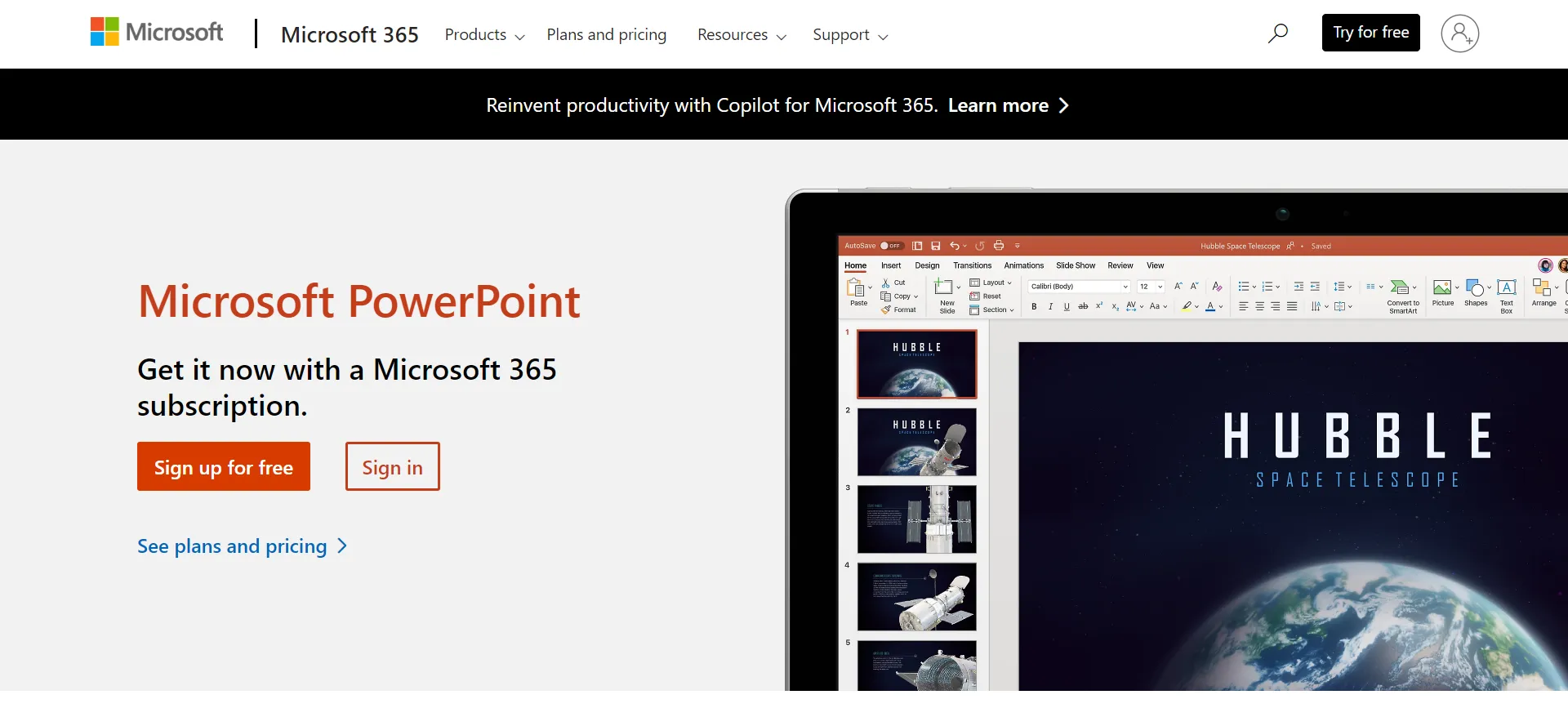
Microsoft PowerPoint continues to be a juggernaut in the presentation software arena, offering features that can take any pitch from drab to dynamic. They boast a wide array of customizable templates, intricate animation capabilities, and the ability to embed diverse forms of media.
Collaboration and Cross-Platform Compatibility
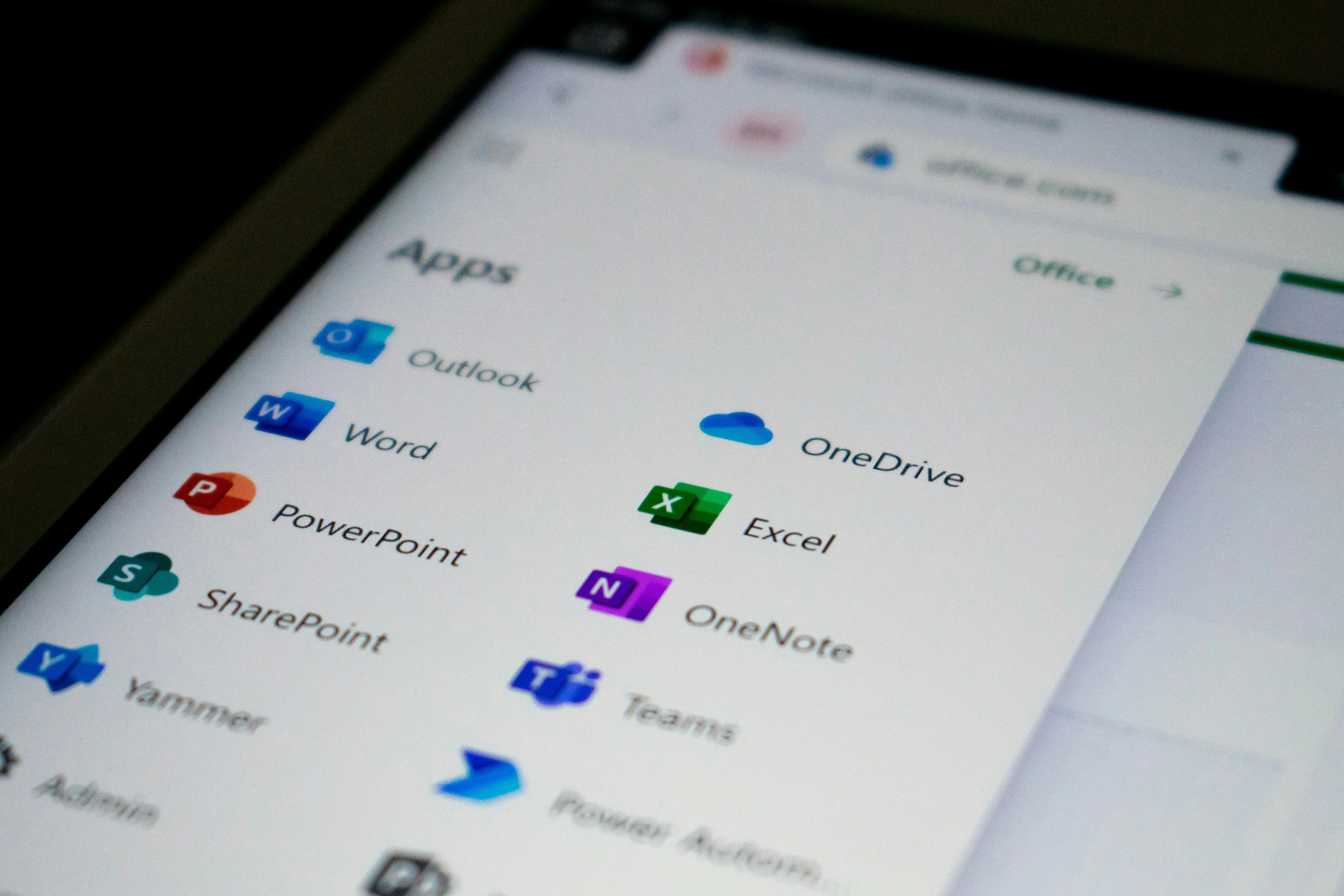
PowerPoint’s embrace of the collaborative spirit is evident in its smooth integration with OneDrive, SharePoint and other Microsoft apps, allowing teams to work simultaneously on presentations, ensuring everything stays in data sync.
It doesn’t matter if team members are using Windows, Mac, or a multitude of mobile devices; PowerPoint’s cross-platform format compatibility ensures that collaboration barriers are virtually non-existent.
Alternative #2: Prezi
The Non-Linear Pathway to Dynamic Presentations
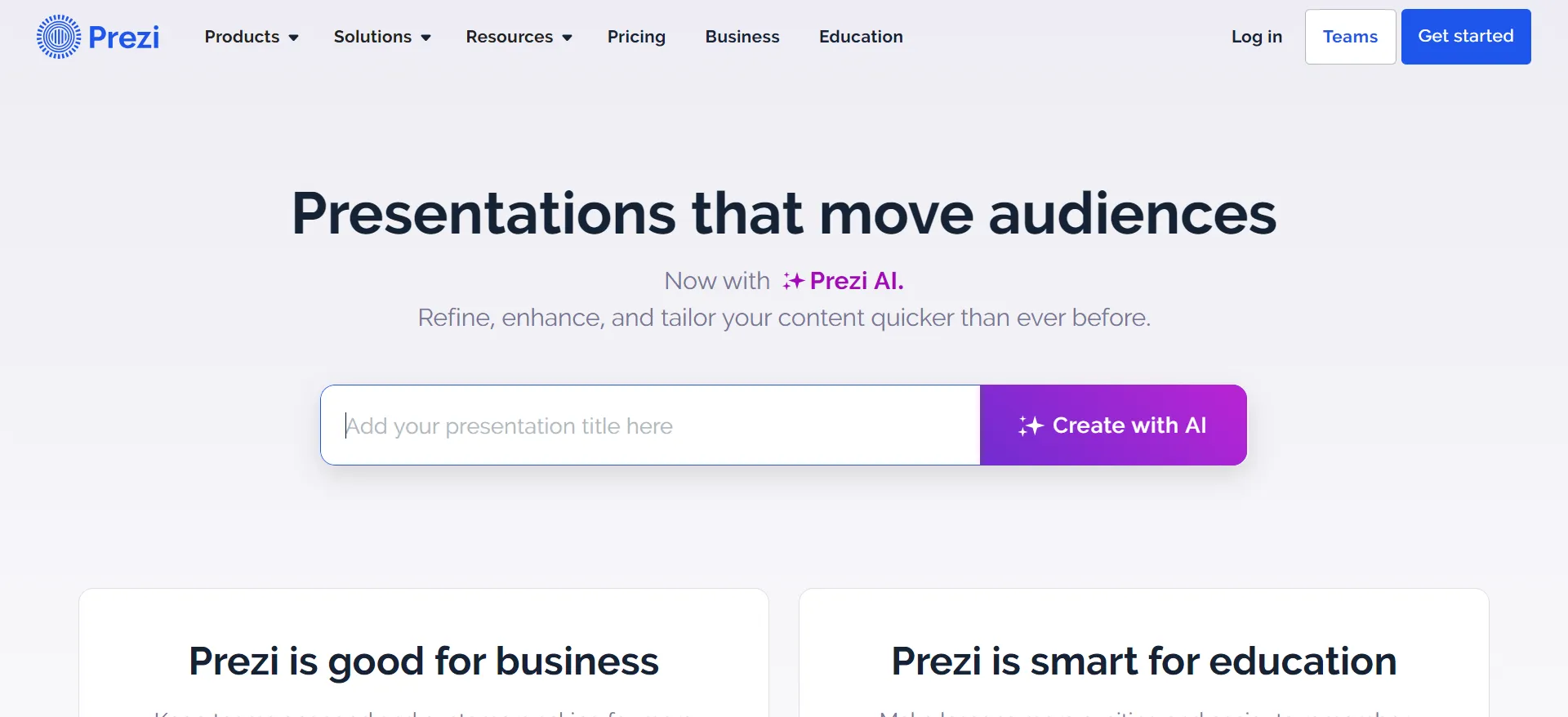
Prezi flips the script on traditional slide-by-slide storytelling by offering presenters a sprawling canvas where ideas can be interconnected in a non-linear fashion in its website. This allows the audience to see the bigger picture literally, grasp complex relationships, and follow a more organic train of thought.
It’s perfect for brainstorming sessions, strategic analyses, or any scenario where the journey from point A to B isn’t a straight line but an explorative path.
Prezi’s unique approach means ideas don’t have to be constrained by order or hierarchy, freeing presenters to create a more dynamic, memorable experience.
Engaging Audiences with Zooming User Interface

Prezi’s signature zooming user interface is a game-changer for maintaining audience engagement. As the presenter zooms in on details and out to reveal context, it keeps viewers on the edge of their seats, much like a cinematic experience.
This motion creates emphasis and connection between topics, showing how the micro and macro are woven together.
It’s an ideal tool when they want their audience not just listening but interacting with the presentation’s landscape. Prezi’s ability to turn a passive experience into an immersive journey can make all the difference in capturing and keeping their attention.
Alternative #3: Keynote
The Go-To for Mac Users Seeking Sleek Design Options
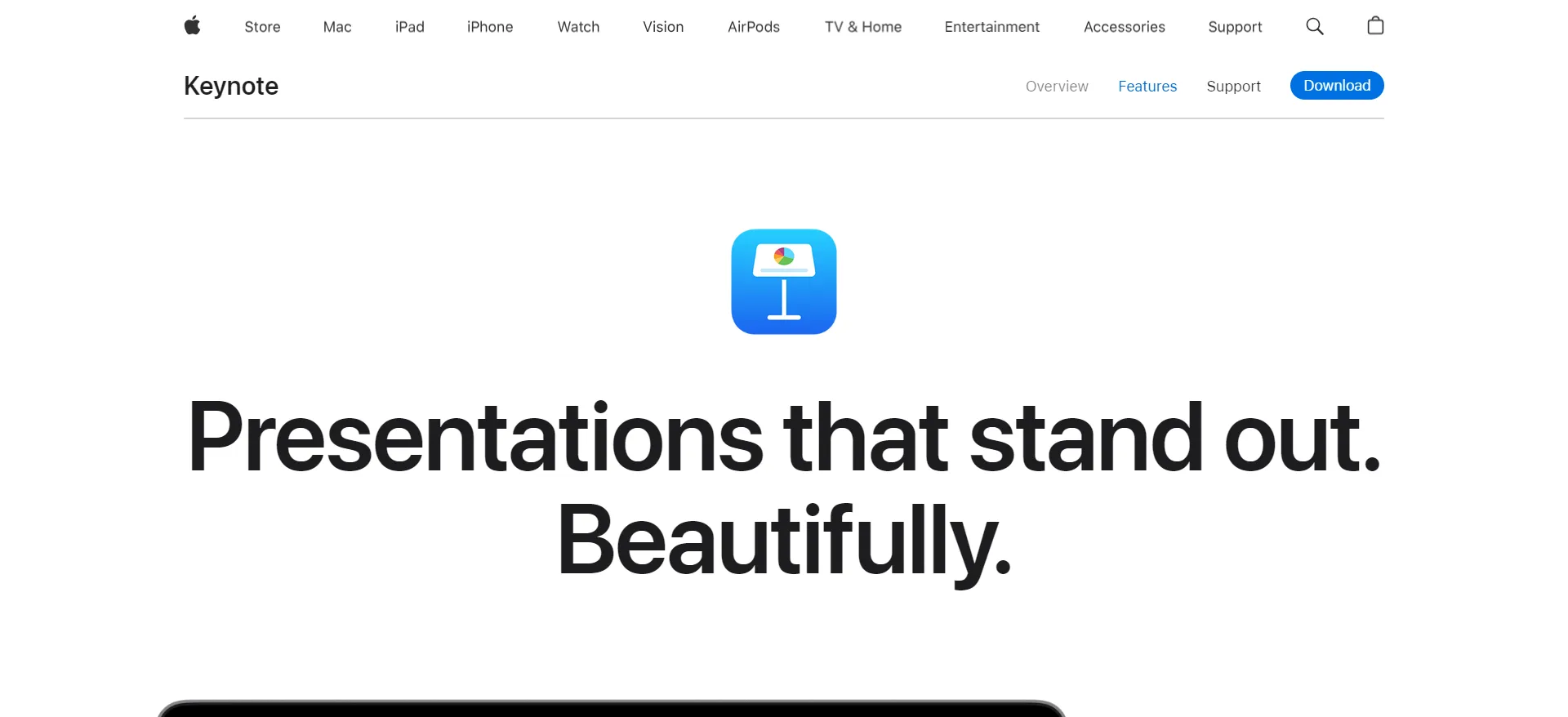
For the design aficionados in the Mac community, Keynote is akin to finding their visual soulmate in presentation software. It’s tailored to enhance the aesthetics of their content with its sleek design options.
Keynote dazzles with its array of high-quality templates that exude a polished Apple aesthetic, making each slide appear like it was crafted by a designer.
The intuitive interface allows Mac users to wield advanced graphic tools with ease, elevating their presentations into captivating stories. With Keynote, anyone can morph their ideas into visually striking narratives that resonate with elegance and creativity.
Seamless Integration Across Apple Devices

Keynote truly shines when it comes to integration across the full spectrum of Apple devices. Users can start crafting their presentation on a Mac, add finishing touches on an iPad, and present from an iPhone with practiced ease.
The continuity features are smooth as silk, and with the ability to control presentations using an Apple Watch, it’s clear that Keynote is designed for a seamless, interconnected Apple ecosystem.
This unparalleled compatibility means that one’s work can travel with them effortlessly, ensuring they’re always primed to present with style, no matter the Apple device in hand.
Alternative #4: Canva
Simplifying Design for Non-Designers
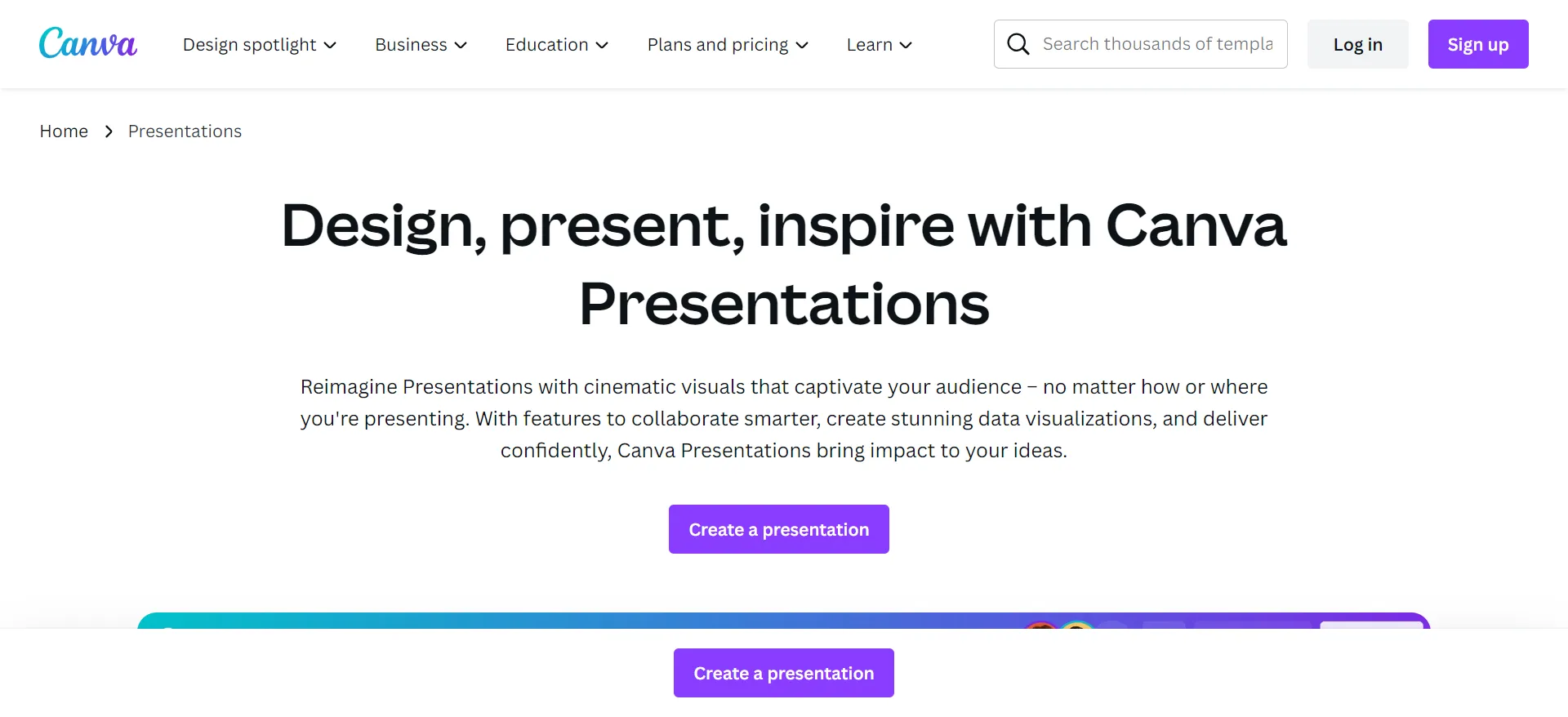
Canva levels the design playing field, empowering those without a background in graphic design to create stunning presentations.
Its user-friendly interface coupled with a vast library of customizable templates turns complex design tasks into simple, enjoyable activities. Just a few drag-and-drop actions can yield professional-looking results that make the content shine.
Canva’s thoughtful approach to design simplifies the process so anyone can convey their message with visual flair, making it an alluring choice for non-designers aiming to captivate their audience with minimal effort.
Extensive Library of Templates and Visual Assets
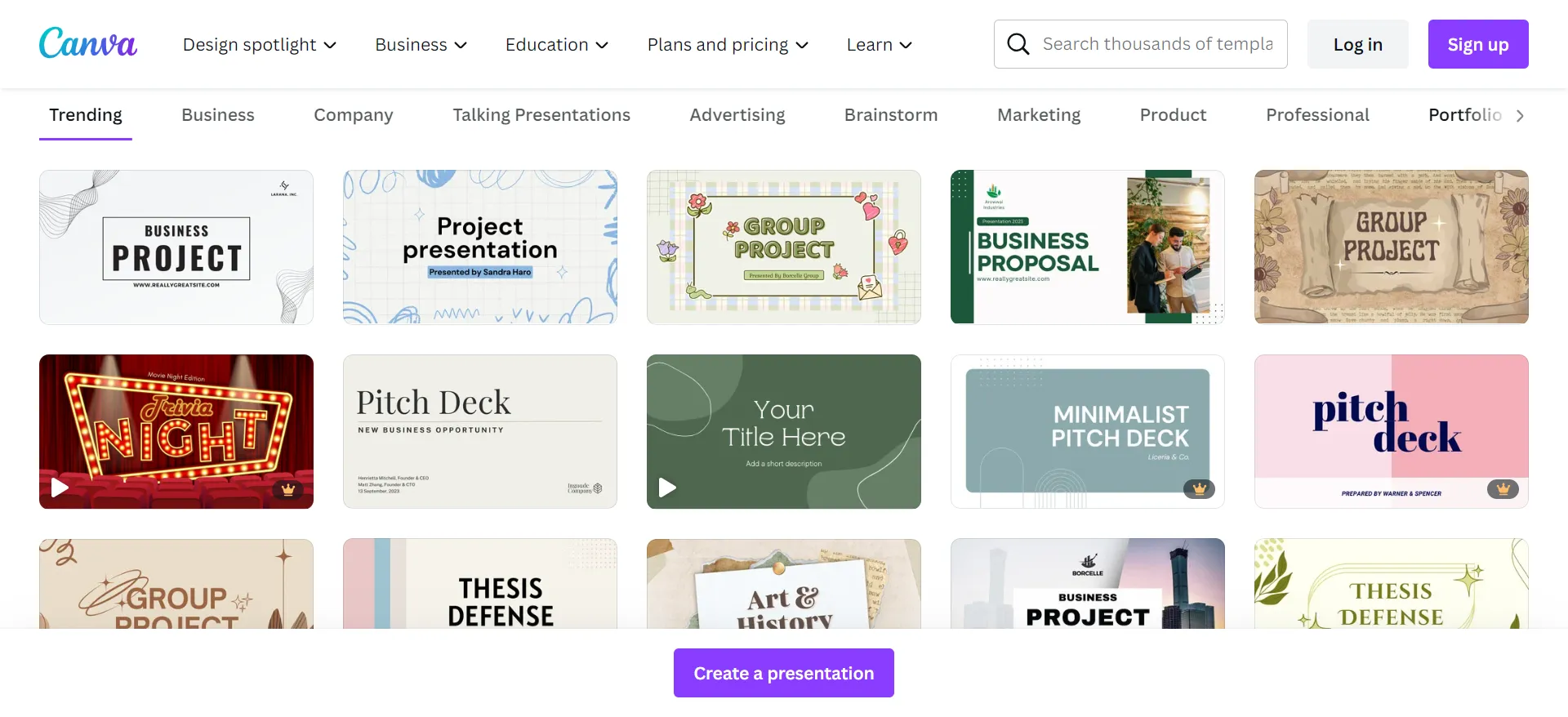
Canva’s extensive library of templates and visual assets is a veritable treasure trove for creating eye-catching presentations.
Creative freedom is at the fingertips with thousands of design options, from sleek and professional to bold and playful. They can indulge in an array of fonts, images, illustrations, and even videos that bring their slides to life.
Plus, with easy-to-use design elements and animations, Canva ensures that every presentation delights and informs. Whether presenting to a classroom or boardroom, Canva has the assets to make the message resonate.
Alternative #5: Zoho Show
Collaborative Features for Team-Centric Presentations
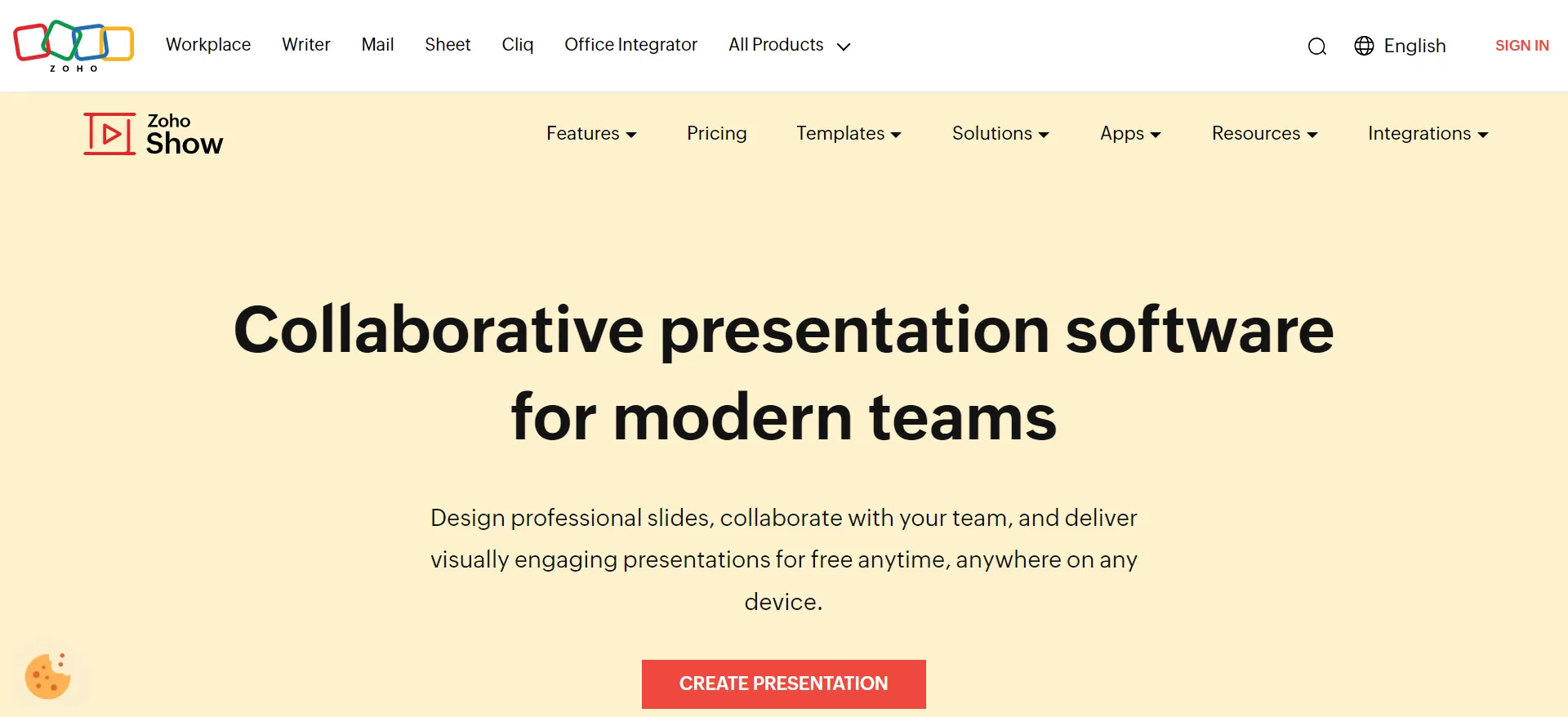
Zoho Show excels when teamwork is at the heart of the presentation process. Its collaborative features foster a spirit of partnership, allowing team members to contribute and refine content, no matter where they are.
Real-time co-authoring, commenting, and chat functions mean ideas can flow freely and be shaped collectively.
Teams can track changes, revert to previous versions, and ensure that everyone has a hand in the final product. For those who believe that great ideas are born from collaboration, Zoho Show is a tool that brings teams together to craft compelling stories.
Cloud-Based Convenience and Versatility
Zoho Show shines with its cloud-based platform, offering convenience, versatility, and peace of mind. Presentations are saved automatically and can be accessed from any device, anywhere, all they need is an internet connection.
This means goodbye to the days of flash drives and frantic email attachments before meetings.
With features like real-time collaboration and the ability to broadcast presentations to remote participants, Zoho Show is designed for the modern, mobile, and connected workforce. Its versatility extends to integration with various platforms, making it a nimble tool for a variety of professional environments.
Making the Switch: Transitioning from Tome
Importing Existing Content
Switching to a Tome alternative does not mean starting from scratch. Most platforms including Decktopus let you upload existing files and build from there.
With Decktopus, you can upload up to 5 documents directly into the AI. Your existing research, reports, and notes become the foundation for a new, structured presentation automatically. No manual rebuilding, no blank slides.
The switch from Tome is straightforward. Upload your content, describe what you need, and Decktopus generates a complete deck around it in minutes.
The Comparative Edge: Usability, Features, and Support
Evaluating User Experience Across Platforms
When it comes to evaluating user experience across different presentation platforms, you’re looking at a variety of factors. Does the interface invite you in, or do you feel overwhelmed just thinking about where to start?
How smooth is the learning curve? Are there helpful tutorials and customer service at the ready for when you hit a snag?
Consider platform-specific navigation and how intuitive it is for a new user.
Gauge the responsiveness of each application, noting any lag or bugs.
Assess the availability and quality of templates and tools to help you get started quickly.
Look closely at the collaboration features - can you easily work with others, and how does the platform handle changes and feedback?
Examine the export and sharing options; how many steps does it take to get your presentation to your audience, and in what formats can you share it?
For a stellar user experience, the platform of choice should strike the right balance between simplicity and functionality, remaining agile for quick tweaks while also being powerful enough to allow for in-depth customization.
Exploring reviews and testimonials can provide real-world insights into how these platforms perform when put to the test.
Assessing Unique Features That Differentiate Each Tool
While scouting for the best Tome alternative, it’s crucial to zero in on the unique features that set each tool apart. Because let’s face it, in a sea of presentation platforms, you want the one that not only ticks all the right boxes but also brings something special to the table.
Investigate how each platform handles multimedia integration, from video embedding to interactive charts.
Look for standout elements, like AI design assistance or advanced data visualization tools.
Check for unique collaboration options does the platform allow for anonymous feedback or integrate with project management tools?
Delve into customization possibilities, considering everything from theme adjustments to the ability to code your own templates.
Pay attention to built-in analytics and feedback collection capabilities that can help you measure the impact of your presentation.
The tools that stand out usually have that one killer feature or a unique bundle of capabilities that not only complement the standard fare but take your presentations up a notch, potentially transforming your workflow and end product.
What Happened to Tome in 2025 and 2026?
If you’re searching for Tome alternatives, it’s worth knowing that Tome itself has significantly changed direction.
In late 2024, Tome announced it was pivoting away from its original consumer and creator-focused product. The company repositioned toward enterprise sales enablement, specifically building AI tools for sales teams rather than general presentation creation. By early 2025, Tome’s original storytelling and presentation product was being sunset, with the platform redirecting users toward its new CRM-adjacent sales tooling.
This means the Tome many users knew, the one built around visual narratives, scrollable decks, and creative storytelling, is no longer the active product being developed or maintained.
If you were using Tome for business presentations, pitch decks, or team communication, you’re not just looking for a better alternative. You’re looking for a replacement for a product that no longer exists in the same form.
The tools compared in this guide, particularly Decktopus for speed and brand consistency, are the active alternatives worth evaluating in 2026.
Frequently Asked Questions (FAQ):
1) What is better than Tome?
When looking for a strong Tome alternative, Decktopus is a top choice for anyone who needs to create presentations quickly without sacrificing quality. Where Tome requires significant time investment to master its customization options, Decktopus uses AI to handle structure, layout, and design automatically. Describe your topic, upload your files, and get a complete deck in minutes. The brand kit ensures every presentation your team produces stays consistent, and built-in delivery coaching helps you prepare for the actual presentation.
2) Is there a free AI like Tome?
Decktopus is a strong free Tome alternative that combines AI presentation generation with a user-friendly interface. Its free tier lets you generate presentations using AI without upfront costs, making it accessible for individuals and small teams. For full access to features like the brand kit, delivery coaching, and version history, paid plans are available. Check the Decktopus pricing page for current details.
3) Is Tome better than Canva?
When comparing Tome and Canva for creating presentations, the choice depends on your specific needs and preferences. Tome excels in offering extensive customization options and advanced features suitable for detailed and sophisticated presentations.
However, for users prioritizing ease of use and versatility, Canva may be more appealing.
Canva provides a wide range of design tools and templates that cater to various design projects beyond presentations, including social media graphics, posters, and more.
In contrast, Tome’s focus remains on delivering powerful presentation features, making it ideal for users needing comprehensive customization and control over their presentation design.
4) Which is better, Tome, Decktopus, or Gamma?
IChoosing between Tome alternatives like Decktopus and Gamma depends on what you need. Tome offers deep customization for users who want full control over every design element. Decktopus is the better choice for speed and consistency — AI generation, brand kit, and delivery coaching make it ideal for teams who present regularly. Gamma focuses on data-driven visualizations and suits users whose presentations are primarily data-heavy. If ease of use and team consistency are the priority, Decktopus is the strongest of the three.
5)Tome AI free or paid?
Tome’s AI features are primarily available through paid plans. Decktopus offers a free tier with AI assistance included, making it one of the more accessible Tome alternatives for users who want AI-powered presentation generation without an immediate financial commitment. See the Decktopus pricing page for a full breakdown of what is included at each level.
Related posts

Best TED Talks to Improve Your Presentation Skills
Watch ten of the best TED talks for presentation skills and use a practical exercise from each to improve structure, voice, visuals, and confidence.
Presentations

Decktopus AI Best Practices: The Complete Guide, Tips and Tricks (2026)
A complete guide to using Decktopus AI effectively, from writing better prompts and reviewing outlines to rehearsing with Loop and building carousels.
Presentations
What Makes Slides Look Professional in 2026
Learn the 10 slide design principles top presenters follow, common presentation design mistakes to avoid, and how to apply every principle to your slides in minutes with AI
Presentations