Business & Strategy
Competitor Analysis Examples: 7 Frameworks That Actually Help You Win
Learn 7 competitor analysis frameworks with real examples, strategic insights, and practical ways to identify market gaps, improve positioning, and outperform competitors.


Decktopus Content Team
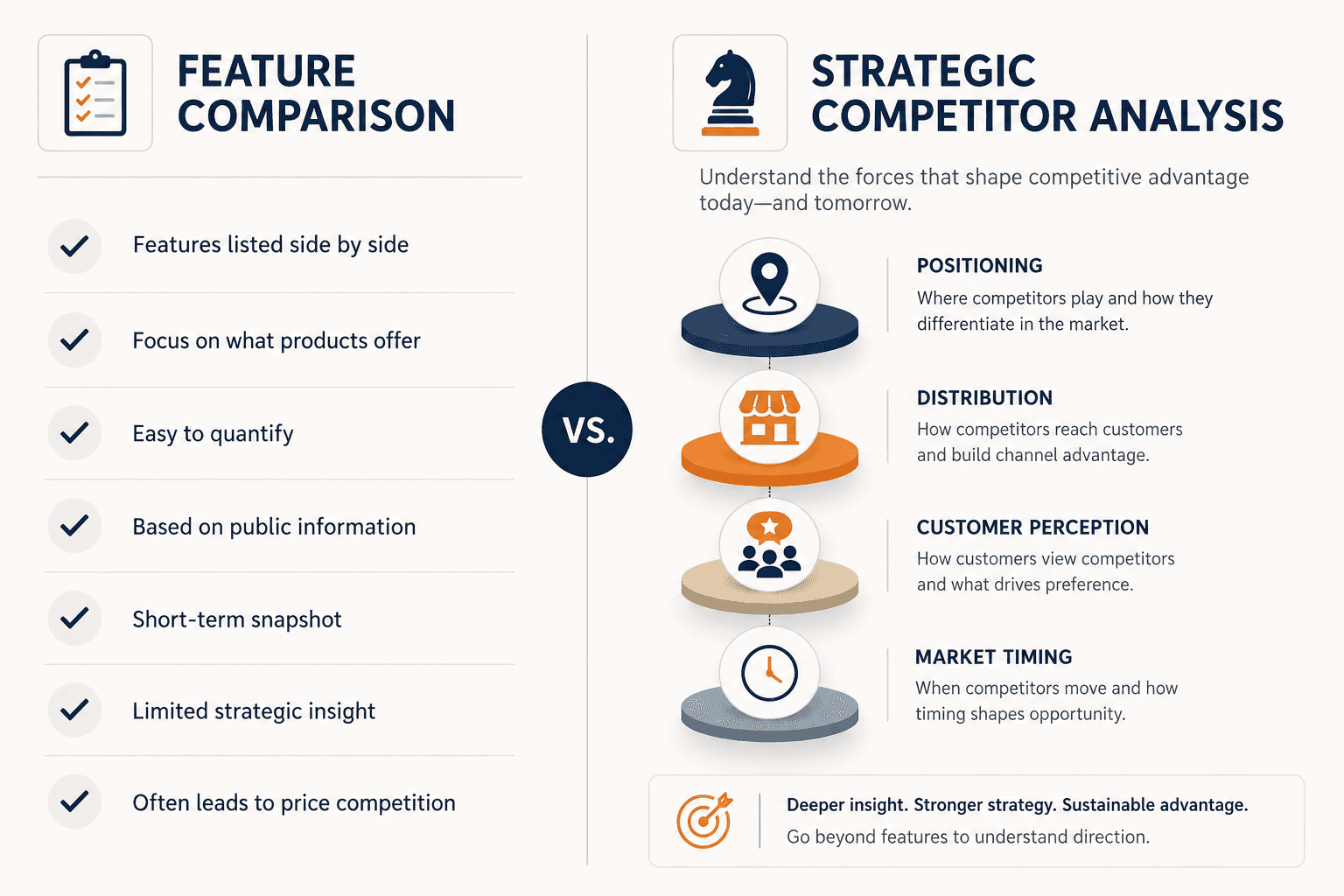
Most companies don’t lose because competitors have better features.
They lose because they misunderstand who they’re really competing against.
Startups obsess over feature comparison tables while ignoring distribution advantages. SaaS companies benchmark pricing while missing shifts in customer perception. Founders prepare investor slides comparing product capabilities while investors care far more about positioning, market timing, and defensibility.
That’s why effective competitor analysis is not about collecting information. It’s about identifying where you can realistically win.
In this guide, you’ll learn:
The most useful competitor analysis frameworks (SWOT, Porter’s Five Forces, perceptual maps, and more)
When each framework works, and when it fails
Real examples from SaaS, consumer brands, and startups
Common mistakes companies make
How to turn competitor research into strategic decisions
What Is Competitor Analysis?
Competitor analysis is the process of evaluating competing businesses to understand:
Their strengths
Their weaknesses
Their positioning
Their market strategy
Their customer perception
Their defensibility
The goal is not to copy competitors.
The goal is to discover where they are vulnerable, what customers still want, and how your business can occupy a stronger strategic position.
The best competitor analyses answer three questions:
Who are your actual competitors?
Why are customers choosing them?
Where can you create an advantage they cannot easily replicate?
That last point matters most. Because in modern markets, feature parity happens fast.
Real competitive advantage usually comes from brand perception, distribution, ecosystem lock-in, network effects, switching costs, trust, or customer experience.
Why Competitor Analysis Matters More Than Ever
Markets move faster than they did even three years ago.
AI lowers barriers to entry. Products become commoditized quickly. Customer expectations shift constantly.
That means competitor analysis is no longer a yearly exercise. It’s an ongoing strategic discipline.
A strong competitor analysis helps you:
Identify underserved customer segments
Discover positioning gaps
Price more intelligently
Anticipate competitive threats
Improve product prioritization
Refine your messaging
Understand why competitors are actually winning
The right competitor analysis tools can speed up the data-gathering side, but the strategic interpretation still requires human judgment.
Most importantly, it helps you avoid competing in the wrong category entirely.
For example:
Slack doesn’t only compete against chat apps. Netflix doesn’t only compete against streaming services. Figma doesn’t only compete against design software.
They compete against habits, workflows, ecosystems, and incumbent distribution advantages.
That’s where many companies miscalculate competition.
The 3 Layers of Competitive Pressure
One of the biggest mistakes businesses make is assuming competition happens only at the product level.
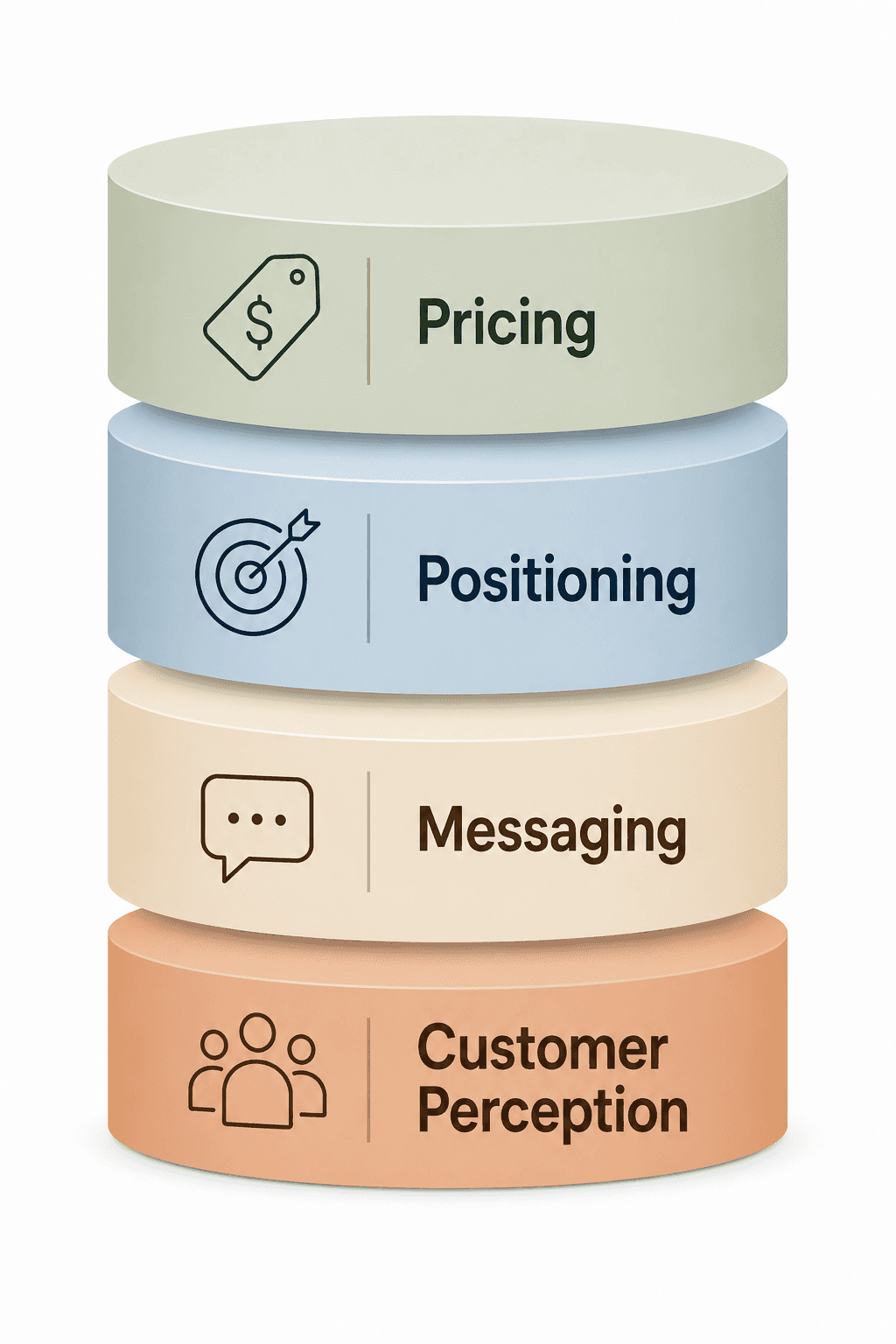
In reality, companies compete across three layers:
[[EMBED:PGRpdiBzdHlsZT0ib3ZlcmZsb3cteDphdXRvO21hcmdpbjoyMHB4IDAiPjx0YWJsZSBzdHlsZT0id2lkdGg6MTAwJTtib3JkZXItY29sbGFwc2U6Y29sbGFwc2U7Zm9udC1zaXplOjE1cHg7bWFyZ2luOjhweCAwIj48dGggc3R5bGU9ImJvcmRlcjoxcHggc29saWQgI2UzZTZlYTtwYWRkaW5nOjEwcHggMTRweDt0ZXh0LWFsaWduOmxlZnQ7YmFja2dyb3VuZDojZjRmNmY4O2ZvbnQtd2VpZ2h0OjYwMCI+PHRyPjx0aCBzdHlsZT0iYm9yZGVyOjFweCBzb2xpZCAjZTNlNmVhO3BhZGRpbmc6MTBweCAxNHB4O3RleHQtYWxpZ246bGVmdDtiYWNrZ3JvdW5kOiNmNGY2Zjg7Zm9udC13ZWlnaHQ6NjAwIj5MYXllcjwvdGg+PHRoIHN0eWxlPSJib3JkZXI6MXB4IHNvbGlkICNlM2U2ZWE7cGFkZGluZzoxMHB4IDE0cHg7dGV4dC1hbGlnbjpsZWZ0O2JhY2tncm91bmQ6I2Y0ZjZmODtmb250LXdlaWdodDo2MDAiPldoYXQgSXQgTWVhbnM8L3RoPjx0aCBzdHlsZT0iYm9yZGVyOjFweCBzb2xpZCAjZTNlNmVhO3BhZGRpbmc6MTBweCAxNHB4O3RleHQtYWxpZ246bGVmdDtiYWNrZ3JvdW5kOiNmNGY2Zjg7Zm9udC13ZWlnaHQ6NjAwIj5FeGFtcGxlPC90aD48L3RyPjwvdGhlYWQ+PHRib2R5Pjx0cj48dGQgc3R5bGU9ImJvcmRlcjoxcHggc29saWQgI2UzZTZlYTtwYWRkaW5nOjEwcHggMTRweDt0ZXh0LWFsaWduOmxlZnQ7dmVydGljYWwtYWxpZ246dG9wIj5GZWF0dXJlIENvbXBldGl0aW9uPC90ZD48dGQgc3R5bGU9ImJvcmRlcjoxcHggc29saWQgI2UzZTZlYTtwYWRkaW5nOjEwcHggMTRweDt0ZXh0LWFsaWduOmxlZnQ7dmVydGljYWwtYWxpZ246dG9wIj5Qcm9kdWN0IGNhcGFiaWxpdGllczwvdGQ+PHRkIHN0eWxlPSJib3JkZXI6MXB4IHNvbGlkICNlM2U2ZWE7cGFkZGluZzoxMHB4IDE0cHg7dGV4dC1hbGlnbjpsZWZ0O3ZlcnRpY2FsLWFsaWduOnRvcCI+Wm9vbSB2cyBHb29nbGUgTWVldDwvdGQ+PC90cj48dHI+PHRkIHN0eWxlPSJib3JkZXI6MXB4IHNvbGlkICNlM2U2ZWE7cGFkZGluZzoxMHB4IDE0cHg7dGV4dC1hbGlnbjpsZWZ0O3ZlcnRpY2FsLWFsaWduOnRvcCI+RGlzdHJpYnV0aW9uIENvbXBldGl0aW9uPC90ZD48dGQgc3R5bGU9ImJvcmRlcjoxcHggc29saWQgI2UzZTZlYTtwYWRkaW5nOjEwcHggMTRweDt0ZXh0LWFsaWduOmxlZnQ7dmVydGljYWwtYWxpZ246dG9wIj5BYmlsaXR5IHRvIGFjcXVpcmUgY3VzdG9tZXJzPC90ZD48dGQgc3R5bGU9ImJvcmRlcjoxcHggc29saWQgI2UzZTZlYTtwYWRkaW5nOjEwcHggMTRweDt0ZXh0LWFsaWduOmxlZnQ7dmVydGljYWwtYWxpZ246dG9wIj5IdWJTcG90IHZzIHNtYWxsZXIgQ1JNczwvdGQ+PC90cj48dHI+PHRkIHN0eWxlPSJib3JkZXI6MXB4IHNvbGlkICNlM2U2ZWE7cGFkZGluZzoxMHB4IDE0cHg7dGV4dC1hbGlnbjpsZWZ0O3ZlcnRpY2FsLWFsaWduOnRvcCI+QXR0ZW50aW9uIENvbXBldGl0aW9uPC90ZD48dGQgc3R5bGU9ImJvcmRlcjoxcHggc29saWQgI2UzZTZlYTtwYWRkaW5nOjEwcHggMTRweDt0ZXh0LWFsaWduOmxlZnQ7dmVydGljYWwtYWxpZ246dG9wIj5CcmFuZCBtaW5kc2hhcmUgYW5kIHBlcmNlcHRpb248L3RkPjx0ZCBzdHlsZT0iYm9yZGVyOjFweCBzb2xpZCAjZTNlNmVhO3BhZGRpbmc6MTBweCAxNHB4O3RleHQtYWxpZ246bGVmdDt2ZXJ0aWNhbC1hbGlnbjp0b3AiPkFwcGxlIHZzIEFuZHJvaWQgYnJhbmRzPC90ZD48L3RyPjwvdGJvZHk+PC90YWJsZT48L2Rpdj4=]]
Most startups over-focus on layer one. But feature advantages disappear quickly. The strongest companies dominate layers two and three.
That’s why competitor analysis should never stop at feature comparison.
7 Competitor Analysis Frameworks (And When They Actually Work)
1. SWOT Analysis
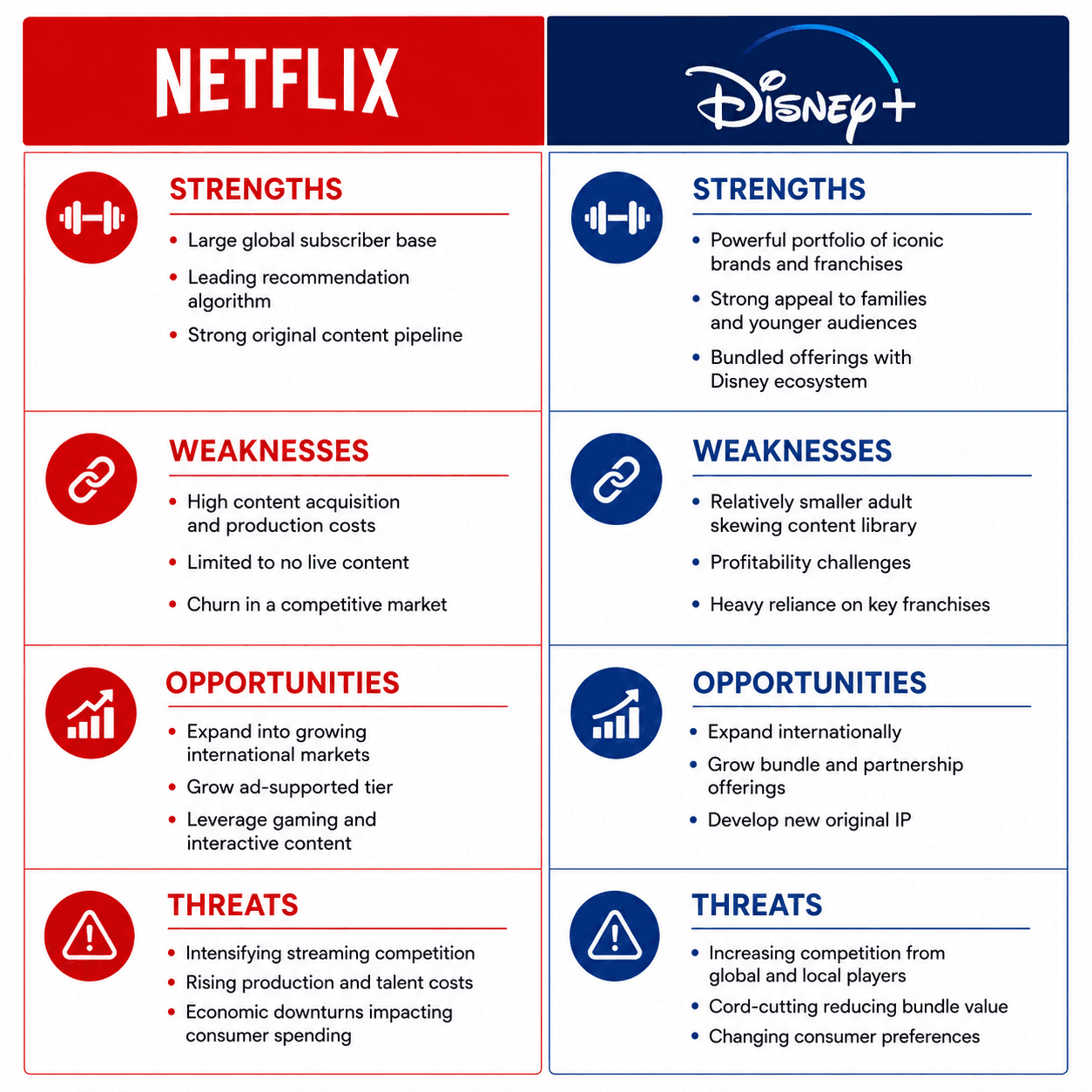
SWOT stands for Strengths, Weaknesses, Opportunities, and Threats.
It’s the most widely used competitor analysis framework because it’s simple and flexible.
But most companies use SWOT incorrectly. They turn it into brainstorming instead of prioritization.
A strong SWOT analysis focuses only on factors that meaningfully affect competitive advantage.
Example: Netflix vs Disney+
When SWOT works best: Early-stage strategic planning, investor preparation, executive alignment, market overview analysis.
When SWOT fails: When every item sounds generic, when opportunities aren’t actionable, or when teams confuse “features” with strategic advantages.
Weak SWOT example: “Great customer service.”
Strong SWOT example: “Enterprise onboarding team reduces churn among multi-seat customers.”
Specificity creates strategic value.
2. Porter’s Five Forces
Porter’s Five Forces evaluates the economic structure of a market.
The five forces are:
Threat of new entrants
Supplier power
Buyer power
Threat of substitutes
Competitive rivalry
This framework is especially useful before entering a market. For a closer look at how to evaluate market opportunity itself, see our market analysis guide.
Example: Coffee Shop Industry
[[EMBED:PGRpdiBzdHlsZT0ib3ZlcmZsb3cteDphdXRvO21hcmdpbjoyMHB4IDAiPjx0YWJsZSBzdHlsZT0id2lkdGg6MTAwJTtib3JkZXItY29sbGFwc2U6Y29sbGFwc2U7Zm9udC1zaXplOjE1cHg7bWFyZ2luOjhweCAwIj48dGggc3R5bGU9ImJvcmRlcjoxcHggc29saWQgI2UzZTZlYTtwYWRkaW5nOjEwcHggMTRweDt0ZXh0LWFsaWduOmxlZnQ7YmFja2dyb3VuZDojZjRmNmY4O2ZvbnQtd2VpZ2h0OjYwMCI+PHRyPjx0aCBzdHlsZT0iYm9yZGVyOjFweCBzb2xpZCAjZTNlNmVhO3BhZGRpbmc6MTBweCAxNHB4O3RleHQtYWxpZ246bGVmdDtiYWNrZ3JvdW5kOiNmNGY2Zjg7Zm9udC13ZWlnaHQ6NjAwIj5Gb3JjZTwvdGg+PHRoIHN0eWxlPSJib3JkZXI6MXB4IHNvbGlkICNlM2U2ZWE7cGFkZGluZzoxMHB4IDE0cHg7dGV4dC1hbGlnbjpsZWZ0O2JhY2tncm91bmQ6I2Y0ZjZmODtmb250LXdlaWdodDo2MDAiPkFuYWx5c2lzPC90aD48L3RyPjwvdGhlYWQ+PHRib2R5Pjx0cj48dGQgc3R5bGU9ImJvcmRlcjoxcHggc29saWQgI2UzZTZlYTtwYWRkaW5nOjEwcHggMTRweDt0ZXh0LWFsaWduOmxlZnQ7dmVydGljYWwtYWxpZ246dG9wIj5OZXcgRW50cmFudHM8L3RkPjx0ZCBzdHlsZT0iYm9yZGVyOjFweCBzb2xpZCAjZTNlNmVhO3BhZGRpbmc6MTBweCAxNHB4O3RleHQtYWxpZ246bGVmdDt2ZXJ0aWNhbC1hbGlnbjp0b3AiPkhpZ2guIExvdyBzdGFydHVwIGJhcnJpZXJzLjwvdGQ+PC90cj48dHI+PHRkIHN0eWxlPSJib3JkZXI6MXB4IHNvbGlkICNlM2U2ZWE7cGFkZGluZzoxMHB4IDE0cHg7dGV4dC1hbGlnbjpsZWZ0O3ZlcnRpY2FsLWFsaWduOnRvcCI+U3VwcGxpZXJzPC90ZD48dGQgc3R5bGU9ImJvcmRlcjoxcHggc29saWQgI2UzZTZlYTtwYWRkaW5nOjEwcHggMTRweDt0ZXh0LWFsaWduOmxlZnQ7dmVydGljYWwtYWxpZ246dG9wIj5Nb2RlcmF0ZS4gTWFueSBiZWFuIHN1cHBsaWVycyBleGlzdC48L3RkPjwvdHI+PHRyPjx0ZCBzdHlsZT0iYm9yZGVyOjFweCBzb2xpZCAjZTNlNmVhO3BhZGRpbmc6MTBweCAxNHB4O3RleHQtYWxpZ246bGVmdDt2ZXJ0aWNhbC1hbGlnbjp0b3AiPkJ1eWVyczwvdGQ+PHRkIHN0eWxlPSJib3JkZXI6MXB4IHNvbGlkICNlM2U2ZWE7cGFkZGluZzoxMHB4IDE0cHg7dGV4dC1hbGlnbjpsZWZ0O3ZlcnRpY2FsLWFsaWduOnRvcCI+SGlnaC4gQ3VzdG9tZXJzIHN3aXRjaCBlYXNpbHkuPC90ZD48L3RyPjx0cj48dGQgc3R5bGU9ImJvcmRlcjoxcHggc29saWQgI2UzZTZlYTtwYWRkaW5nOjEwcHggMTRweDt0ZXh0LWFsaWduOmxlZnQ7dmVydGljYWwtYWxpZ246dG9wIj5TdWJzdGl0dXRlczwvdGQ+PHRkIHN0eWxlPSJib3JkZXI6MXB4IHNvbGlkICNlM2U2ZWE7cGFkZGluZzoxMHB4IDE0cHg7dGV4dC1hbGlnbjpsZWZ0O3ZlcnRpY2FsLWFsaWduOnRvcCI+VmVyeSBoaWdoLiBUZWEsIGVuZXJneSBkcmlua3MsIGhvbWUgYnJld2luZy48L3RkPjwvdHI+PHRyPjx0ZCBzdHlsZT0iYm9yZGVyOjFweCBzb2xpZCAjZTNlNmVhO3BhZGRpbmc6MTBweCAxNHB4O3RleHQtYWxpZ246bGVmdDt2ZXJ0aWNhbC1hbGlnbjp0b3AiPlJpdmFscnk8L3RkPjx0ZCBzdHlsZT0iYm9yZGVyOjFweCBzb2xpZCAjZTNlNmVhO3BhZGRpbmc6MTBweCAxNHB4O3RleHQtYWxpZ246bGVmdDt2ZXJ0aWNhbC1hbGlnbjp0b3AiPkV4dHJlbWVseSBoaWdoLiBMb2NhbCBhbmQgbmF0aW9uYWwgY29tcGV0aXRpb24uPC90ZD48L3RyPjwvdGJvZHk+PC90YWJsZT48L2Rpdj4=]]
Where Porter’s Five Forces still works: Retail, manufacturing, hospitality, marketplaces, and traditional industries.
Where it struggles today: Modern SaaS markets complicate Porter’s model because network effects matter more, ecosystems create lock-in, AI reduces barriers rapidly, and distribution advantages compound faster.
For example, Notion’s threat is not only other productivity apps. Its threat includes AI assistants, Google Workspace, changing workflows, and shifting knowledge-management habits.
That complexity matters.
3. Feature Comparison Matrix
This is the framework most startups jump to first.
And often, it’s the least important strategically. Because customers rarely buy software purely based on feature counts.
Still, feature matrices are useful for sales enablement, landing pages, investor decks, and product differentiation.
Example: AI Presentation Platforms
[[EMBED:PGRpdiBzdHlsZT0ib3ZlcmZsb3cteDphdXRvO21hcmdpbjoyMHB4IDAiPjx0YWJsZSBzdHlsZT0id2lkdGg6MTAwJTtib3JkZXItY29sbGFwc2U6Y29sbGFwc2U7Zm9udC1zaXplOjE1cHg7bWFyZ2luOjhweCAwIj48dGggc3R5bGU9ImJvcmRlcjoxcHggc29saWQgI2UzZTZlYTtwYWRkaW5nOjEwcHggMTRweDt0ZXh0LWFsaWduOmxlZnQ7YmFja2dyb3VuZDojZjRmNmY4O2ZvbnQtd2VpZ2h0OjYwMCI+PHRyPjx0aCBzdHlsZT0iYm9yZGVyOjFweCBzb2xpZCAjZTNlNmVhO3BhZGRpbmc6MTBweCAxNHB4O3RleHQtYWxpZ246bGVmdDtiYWNrZ3JvdW5kOiNmNGY2Zjg7Zm9udC13ZWlnaHQ6NjAwIj5GZWF0dXJlPC90aD48dGggc3R5bGU9ImJvcmRlcjoxcHggc29saWQgI2UzZTZlYTtwYWRkaW5nOjEwcHggMTRweDt0ZXh0LWFsaWduOmxlZnQ7YmFja2dyb3VuZDojZjRmNmY4O2ZvbnQtd2VpZ2h0OjYwMCI+RGVja3RvcHVzPC90aD48dGggc3R5bGU9ImJvcmRlcjoxcHggc29saWQgI2UzZTZlYTtwYWRkaW5nOjEwcHggMTRweDt0ZXh0LWFsaWduOmxlZnQ7YmFja2dyb3VuZDojZjRmNmY4O2ZvbnQtd2VpZ2h0OjYwMCI+Q29tcGV0aXRvciBBPC90aD48dGggc3R5bGU9ImJvcmRlcjoxcHggc29saWQgI2UzZTZlYTtwYWRkaW5nOjEwcHggMTRweDt0ZXh0LWFsaWduOmxlZnQ7YmFja2dyb3VuZDojZjRmNmY4O2ZvbnQtd2VpZ2h0OjYwMCI+Q29tcGV0aXRvciBCPC90aD48L3RyPjwvdGhlYWQ+PHRib2R5Pjx0cj48dGQgc3R5bGU9ImJvcmRlcjoxcHggc29saWQgI2UzZTZlYTtwYWRkaW5nOjEwcHggMTRweDt0ZXh0LWFsaWduOmxlZnQ7dmVydGljYWwtYWxpZ246dG9wIj5BSSBkZWNrIGdlbmVyYXRpb248L3RkPjx0ZCBzdHlsZT0iYm9yZGVyOjFweCBzb2xpZCAjZTNlNmVhO3BhZGRpbmc6MTBweCAxNHB4O3RleHQtYWxpZ246bGVmdDt2ZXJ0aWNhbC1hbGlnbjp0b3AiPlllczwvdGQ+PHRkIHN0eWxlPSJib3JkZXI6MXB4IHNvbGlkICNlM2U2ZWE7cGFkZGluZzoxMHB4IDE0cHg7dGV4dC1hbGlnbjpsZWZ0O3ZlcnRpY2FsLWFsaWduOnRvcCI+WWVzPC90ZD48dGQgc3R5bGU9ImJvcmRlcjoxcHggc29saWQgI2UzZTZlYTtwYWRkaW5nOjEwcHggMTRweDt0ZXh0LWFsaWduOmxlZnQ7dmVydGljYWwtYWxpZ246dG9wIj5ZZXM8L3RkPjwvdHI+PHRyPjx0ZCBzdHlsZT0iYm9yZGVyOjFweCBzb2xpZCAjZTNlNmVhO3BhZGRpbmc6MTBweCAxNHB4O3RleHQtYWxpZ246bGVmdDt2ZXJ0aWNhbC1hbGlnbjp0b3AiPkJyYW5kIGltcG9ydCBmcm9tIFVSTDwvdGQ+PHRkIHN0eWxlPSJib3JkZXI6MXB4IHNvbGlkICNlM2U2ZWE7cGFkZGluZzoxMHB4IDE0cHg7dGV4dC1hbGlnbjpsZWZ0O3ZlcnRpY2FsLWFsaWduOnRvcCI+WWVzPC90ZD48dGQgc3R5bGU9ImJvcmRlcjoxcHggc29saWQgI2UzZTZlYTtwYWRkaW5nOjEwcHggMTRweDt0ZXh0LWFsaWduOmxlZnQ7dmVydGljYWwtYWxpZ246dG9wIj5ObzwvdGQ+PHRkIHN0eWxlPSJib3JkZXI6MXB4IHNvbGlkICNlM2U2ZWE7cGFkZGluZzoxMHB4IDE0cHg7dGV4dC1hbGlnbjpsZWZ0O3ZlcnRpY2FsLWFsaWduOnRvcCI+Tm88L3RkPjwvdHI+PHRyPjx0ZCBzdHlsZT0iYm9yZGVyOjFweCBzb2xpZCAjZTNlNmVhO3BhZGRpbmc6MTBweCAxNHB4O3RleHQtYWxpZ246bGVmdDt2ZXJ0aWNhbC1hbGlnbjp0b3AiPkJyYW5kIGNvbXBsaWFuY2UgYXV0by1jaGVjazwvdGQ+PHRkIHN0eWxlPSJib3JkZXI6MXB4IHNvbGlkICNlM2U2ZWE7cGFkZGluZzoxMHB4IDE0cHg7dGV4dC1hbGlnbjpsZWZ0O3ZlcnRpY2FsLWFsaWduOnRvcCI+WWVzPC90ZD48dGQgc3R5bGU9ImJvcmRlcjoxcHggc29saWQgI2UzZTZlYTtwYWRkaW5nOjEwcHggMTRweDt0ZXh0LWFsaWduOmxlZnQ7dmVydGljYWwtYWxpZ246dG9wIj5ObzwvdGQ+PHRkIHN0eWxlPSJib3JkZXI6MXB4IHNvbGlkICNlM2U2ZWE7cGFkZGluZzoxMHB4IDE0cHg7dGV4dC1hbGlnbjpsZWZ0O3ZlcnRpY2FsLWFsaWduOnRvcCI+Tm88L3RkPjwvdHI+PHRyPjx0ZCBzdHlsZT0iYm9yZGVyOjFweCBzb2xpZCAjZTNlNmVhO3BhZGRpbmc6MTBweCAxNHB4O3RleHQtYWxpZ246bGVmdDt2ZXJ0aWNhbC1hbGlnbjp0b3AiPlByb21wdC1iYXNlZCBlZGl0aW5nPC90ZD48dGQgc3R5bGU9ImJvcmRlcjoxcHggc29saWQgI2UzZTZlYTtwYWRkaW5nOjEwcHggMTRweDt0ZXh0LWFsaWduOmxlZnQ7dmVydGljYWwtYWxpZ246dG9wIj5ZZXM8L3RkPjx0ZCBzdHlsZT0iYm9yZGVyOjFweCBzb2xpZCAjZTNlNmVhO3BhZGRpbmc6MTBweCAxNHB4O3RleHQtYWxpZ246bGVmdDt2ZXJ0aWNhbC1hbGlnbjp0b3AiPkxpbWl0ZWQ8L3RkPjx0ZCBzdHlsZT0iYm9yZGVyOjFweCBzb2xpZCAjZTNlNmVhO3BhZGRpbmc6MTBweCAxNHB4O3RleHQtYWxpZ246bGVmdDt2ZXJ0aWNhbC1hbGlnbjp0b3AiPk5vPC90ZD48L3RyPjx0cj48dGQgc3R5bGU9ImJvcmRlcjoxcHggc29saWQgI2UzZTZlYTtwYWRkaW5nOjEwcHggMTRweDt0ZXh0LWFsaWduOmxlZnQ7dmVydGljYWwtYWxpZ246dG9wIj5TbGlkZSB2ZXJzaW9uIGhpc3Rvcnk8L3RkPjx0ZCBzdHlsZT0iYm9yZGVyOjFweCBzb2xpZCAjZTNlNmVhO3BhZGRpbmc6MTBweCAxNHB4O3RleHQtYWxpZ246bGVmdDt2ZXJ0aWNhbC1hbGlnbjp0b3AiPlVubGltaXRlZDwvdGQ+PHRkIHN0eWxlPSJib3JkZXI6MXB4IHNvbGlkICNlM2U2ZWE7cGFkZGluZzoxMHB4IDE0cHg7dGV4dC1hbGlnbjpsZWZ0O3ZlcnRpY2FsLWFsaWduOnRvcCI+TGltaXRlZDwvdGQ+PHRkIHN0eWxlPSJib3JkZXI6MXB4IHNvbGlkICNlM2U2ZWE7cGFkZGluZzoxMHB4IDE0cHg7dGV4dC1hbGlnbjpsZWZ0O3ZlcnRpY2FsLWFsaWduOnRvcCI+Tm88L3RkPjwvdHI+PHRyPjx0ZCBzdHlsZT0iYm9yZGVyOjFweCBzb2xpZCAjZTNlNmVhO3BhZGRpbmc6MTBweCAxNHB4O3RleHQtYWxpZ246bGVmdDt2ZXJ0aWNhbC1hbGlnbjp0b3AiPkV4cG9ydCBhcyBQREYvUFBUPC90ZD48dGQgc3R5bGU9ImJvcmRlcjoxcHggc29saWQgI2UzZTZlYTtwYWRkaW5nOjEwcHggMTRweDt0ZXh0LWFsaWduOmxlZnQ7dmVydGljYWwtYWxpZ246dG9wIj5ZZXM8L3RkPjx0ZCBzdHlsZT0iYm9yZGVyOjFweCBzb2xpZCAjZTNlNmVhO3BhZGRpbmc6MTBweCAxNHB4O3RleHQtYWxpZ246bGVmdDt2ZXJ0aWNhbC1hbGlnbjp0b3AiPlBERiBvbmx5PC90ZD48dGQgc3R5bGU9ImJvcmRlcjoxcHggc29saWQgI2UzZTZlYTtwYWRkaW5nOjEwcHggMTRweDt0ZXh0LWFsaWduOmxlZnQ7dmVydGljYWwtYWxpZ246dG9wIj5ZZXM8L3RkPjwvdHI+PC90Ym9keT48L3RhYmxlPjwvZGl2Pg==]]
Building a clean comparison matrix in PowerPoint takes hours and breaks the moment a brand color is off, which is why product and sales teams use Decktopus to generate the matrix slide directly from their research notes, with brand colors and fonts applied automatically from their website URL.
The biggest mistake companies make: They compare features customers don’t actually care about.
Buyers often prioritize ease of adoption, integrations, onboarding, trust, workflow compatibility, and pricing clarity. Not feature volume.
That’s why many “feature-superior” products still lose.
4. Perceptual Map (Positioning Map)
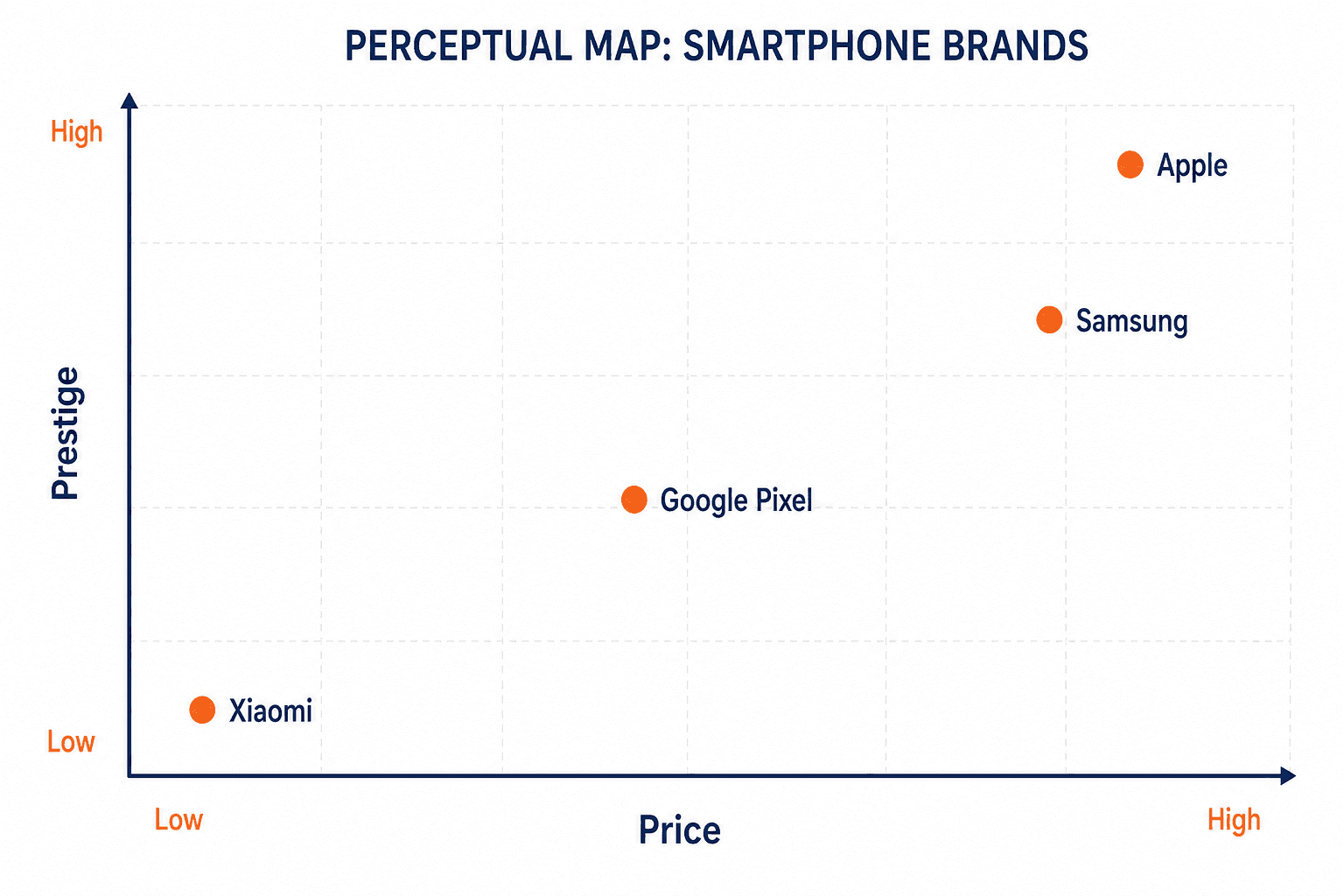
A perceptual map shows how customers perceive brands across two dimensions.
This framework is incredibly useful because perception often matters more than reality.
Example: Smartphone Brands
X-axis: Price
Y-axis: Prestige
Apple: High price, high prestige
Samsung: High price, medium prestige
Google Pixel: Medium price, growing prestige
Xiaomi: Lower price, lower prestige
Why this framework matters: Many companies accidentally position themselves into crowded zones. The best opportunities usually exist in underserved segments, ignored customer identities, or emerging positioning categories.
For example, Liquid Death succeeded partly because it positioned water like an energy drink brand. That was perception innovation, not product innovation. Perceptual maps land harder when they’re visually polished, and Decktopus generates positioning map slides automatically based on your competitive data, so the moment of strategic insight (where the white space is) hits the audience in two seconds instead of buried in a paragraph.
If you’re identifying underserved customer segments through perception, our guide to segmentation and targeting walks through how to find and prioritize them.
When to use it: Brand positioning, messaging strategy, rebranding projects, investor storytelling, market white-space discovery.
Perceptual maps are also useful when refreshing your visual identity. If you’re rebuilding how you show up to customers, see our best portfolio examples for how leading brands position themselves visually.
5. Strategic Group Analysis
Some industries are too fragmented for simple comparison tables.
Strategic group analysis clusters competitors based on shared strategies.
Example: Fitness Industry
[[EMBED:PGRpdiBzdHlsZT0ib3ZlcmZsb3cteDphdXRvO21hcmdpbjoyMHB4IDAiPjx0YWJsZSBzdHlsZT0id2lkdGg6MTAwJTtib3JkZXItY29sbGFwc2U6Y29sbGFwc2U7Zm9udC1zaXplOjE1cHg7bWFyZ2luOjhweCAwIj48dGggc3R5bGU9ImJvcmRlcjoxcHggc29saWQgI2UzZTZlYTtwYWRkaW5nOjEwcHggMTRweDt0ZXh0LWFsaWduOmxlZnQ7YmFja2dyb3VuZDojZjRmNmY4O2ZvbnQtd2VpZ2h0OjYwMCI+PHRyPjx0aCBzdHlsZT0iYm9yZGVyOjFweCBzb2xpZCAjZTNlNmVhO3BhZGRpbmc6MTBweCAxNHB4O3RleHQtYWxpZ246bGVmdDtiYWNrZ3JvdW5kOiNmNGY2Zjg7Zm9udC13ZWlnaHQ6NjAwIj5Hcm91cDwvdGg+PHRoIHN0eWxlPSJib3JkZXI6MXB4IHNvbGlkICNlM2U2ZWE7cGFkZGluZzoxMHB4IDE0cHg7dGV4dC1hbGlnbjpsZWZ0O2JhY2tncm91bmQ6I2Y0ZjZmODtmb250LXdlaWdodDo2MDAiPlBvc2l0aW9uaW5nPC90aD48L3RyPjwvdGhlYWQ+PHRib2R5Pjx0cj48dGQgc3R5bGU9ImJvcmRlcjoxcHggc29saWQgI2UzZTZlYTtwYWRkaW5nOjEwcHggMTRweDt0ZXh0LWFsaWduOmxlZnQ7dmVydGljYWwtYWxpZ246dG9wIj5Cb3V0aXF1ZSBmaXRuZXNzPC90ZD48dGQgc3R5bGU9ImJvcmRlcjoxcHggc29saWQgI2UzZTZlYTtwYWRkaW5nOjEwcHggMTRweDt0ZXh0LWFsaWduOmxlZnQ7dmVydGljYWwtYWxpZ246dG9wIj5QcmVtaXVtLCBleHBlcmllbmNlLWRyaXZlbjwvdGQ+PC90cj48dHI+PHRkIHN0eWxlPSJib3JkZXI6MXB4IHNvbGlkICNlM2U2ZWE7cGFkZGluZzoxMHB4IDE0cHg7dGV4dC1hbGlnbjpsZWZ0O3ZlcnRpY2FsLWFsaWduOnRvcCI+QmlnLWJveCBneW1zPC90ZD48dGQgc3R5bGU9ImJvcmRlcjoxcHggc29saWQgI2UzZTZlYTtwYWRkaW5nOjEwcHggMTRweDt0ZXh0LWFsaWduOmxlZnQ7dmVydGljYWwtYWxpZ246dG9wIj5BZmZvcmRhYmxlLCBhY2Nlc3NpYmxlPC90ZD48L3RyPjx0cj48dGQgc3R5bGU9ImJvcmRlcjoxcHggc29saWQgI2UzZTZlYTtwYWRkaW5nOjEwcHggMTRweDt0ZXh0LWFsaWduOmxlZnQ7dmVydGljYWwtYWxpZ246dG9wIj5BdC1ob21lIGZpdG5lc3M8L3RkPjx0ZCBzdHlsZT0iYm9yZGVyOjFweCBzb2xpZCAjZTNlNmVhO3BhZGRpbmc6MTBweCAxNHB4O3RleHQtYWxpZ246bGVmdDt2ZXJ0aWNhbC1hbGlnbjp0b3AiPkNvbnZlbmllbmNlIGFuZCB0ZWNobm9sb2d5PC90ZD48L3RyPjx0cj48dGQgc3R5bGU9ImJvcmRlcjoxcHggc29saWQgI2UzZTZlYTtwYWRkaW5nOjEwcHggMTRweDt0ZXh0LWFsaWduOmxlZnQ7dmVydGljYWwtYWxpZ246dG9wIj5GcmVlL2FwcC1iYXNlZCBmaXRuZXNzPC90ZD48dGQgc3R5bGU9ImJvcmRlcjoxcHggc29saWQgI2UzZTZlYTtwYWRkaW5nOjEwcHggMTRweDt0ZXh0LWFsaWduOmxlZnQ7dmVydGljYWwtYWxpZ246dG9wIj5Db21tdW5pdHktZHJpdmVuIGFuZCBsb3ctY29zdDwvdGQ+PC90cj48L3Rib2R5PjwvdGFibGU+PC9kaXY+]]
This framework reveals where markets are overcrowded, where margins are shrinking, and where positioning opportunities exist.
Why it’s powerful: It helps companies stop comparing themselves to irrelevant competitors.
A luxury fitness studio should not benchmark itself against Planet Fitness.
Different economics.Different customer psychology.Different expectations.
6. Customer Journey Comparison
Most competitor analyses ignore customer experience entirely.
That’s a huge mistake.
Products are increasingly similar. Experiences are not.
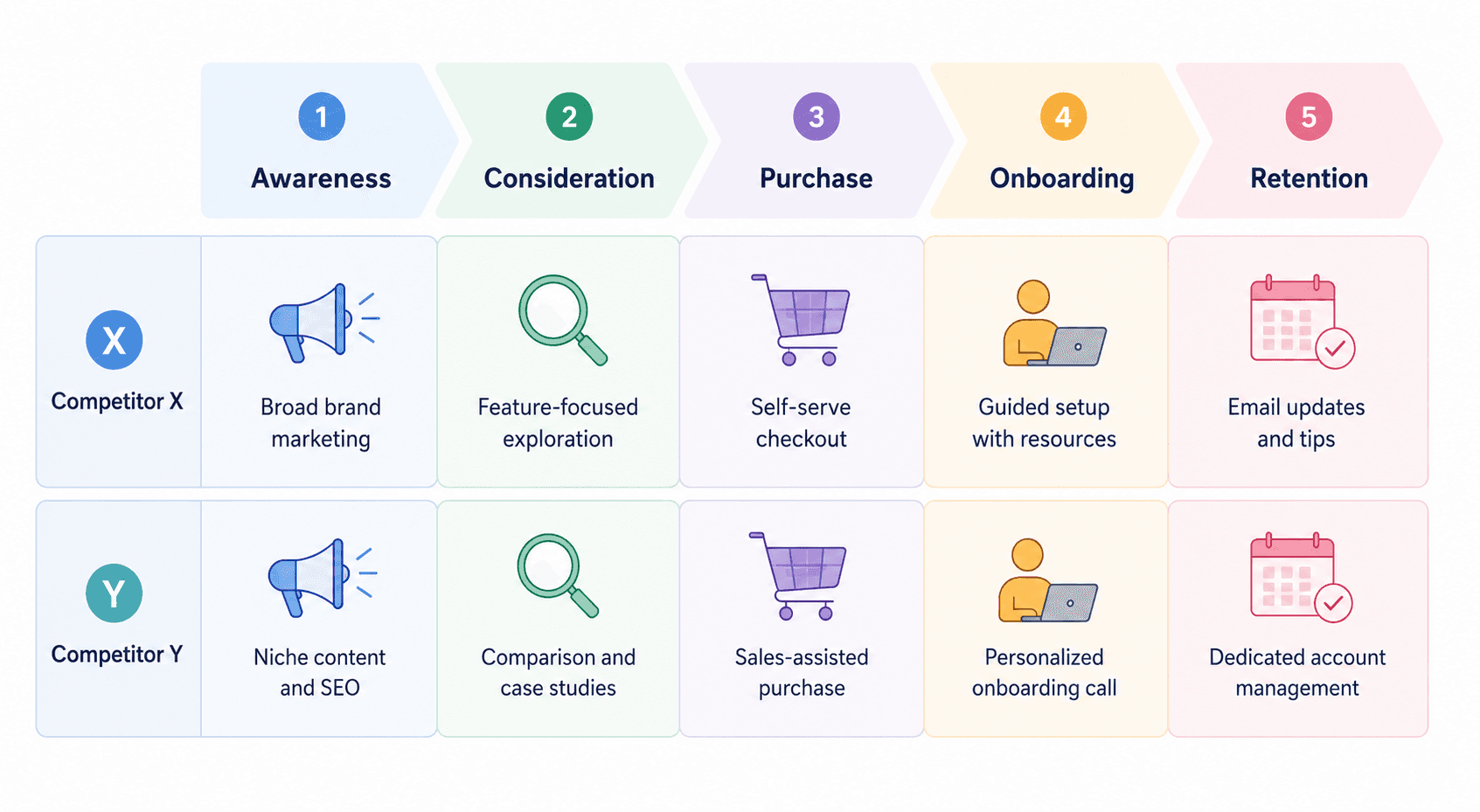
Customer journey analysis evaluates acquisition, onboarding, retention, support, and expansion.
Example: B2B SaaS Journey
[[EMBED:PGRpdiBzdHlsZT0ib3ZlcmZsb3cteDphdXRvO21hcmdpbjoyMHB4IDAiPjx0YWJsZSBzdHlsZT0id2lkdGg6MTAwJTtib3JkZXItY29sbGFwc2U6Y29sbGFwc2U7Zm9udC1zaXplOjE1cHg7bWFyZ2luOjhweCAwIj48dGggc3R5bGU9ImJvcmRlcjoxcHggc29saWQgI2UzZTZlYTtwYWRkaW5nOjEwcHggMTRweDt0ZXh0LWFsaWduOmxlZnQ7YmFja2dyb3VuZDojZjRmNmY4O2ZvbnQtd2VpZ2h0OjYwMCI+PHRyPjx0aCBzdHlsZT0iYm9yZGVyOjFweCBzb2xpZCAjZTNlNmVhO3BhZGRpbmc6MTBweCAxNHB4O3RleHQtYWxpZ246bGVmdDtiYWNrZ3JvdW5kOiNmNGY2Zjg7Zm9udC13ZWlnaHQ6NjAwIj5TdGFnZTwvdGg+PHRoIHN0eWxlPSJib3JkZXI6MXB4IHNvbGlkICNlM2U2ZWE7cGFkZGluZzoxMHB4IDE0cHg7dGV4dC1hbGlnbjpsZWZ0O2JhY2tncm91bmQ6I2Y0ZjZmODtmb250LXdlaWdodDo2MDAiPkNvbXBldGl0b3IgWDwvdGg+PHRoIHN0eWxlPSJib3JkZXI6MXB4IHNvbGlkICNlM2U2ZWE7cGFkZGluZzoxMHB4IDE0cHg7dGV4dC1hbGlnbjpsZWZ0O2JhY2tncm91bmQ6I2Y0ZjZmODtmb250LXdlaWdodDo2MDAiPkNvbXBldGl0b3IgWTwvdGg+PC90cj48L3RoZWFkPjx0Ym9keT48dHI+PHRkIHN0eWxlPSJib3JkZXI6MXB4IHNvbGlkICNlM2U2ZWE7cGFkZGluZzoxMHB4IDE0cHg7dGV4dC1hbGlnbjpsZWZ0O3ZlcnRpY2FsLWFsaWduOnRvcCI+QXdhcmVuZXNzPC90ZD48dGQgc3R5bGU9ImJvcmRlcjoxcHggc29saWQgI2UzZTZlYTtwYWRkaW5nOjEwcHggMTRweDt0ZXh0LWFsaWduOmxlZnQ7dmVydGljYWwtYWxpZ246dG9wIj5MaW5rZWRJbiBhZHM8L3RkPjx0ZCBzdHlsZT0iYm9yZGVyOjFweCBzb2xpZCAjZTNlNmVhO3BhZGRpbmc6MTBweCAxNHB4O3RleHQtYWxpZ246bGVmdDt2ZXJ0aWNhbC1hbGlnbjp0b3AiPlNFTyBjb250ZW50PC90ZD48L3RyPjx0cj48dGQgc3R5bGU9ImJvcmRlcjoxcHggc29saWQgI2UzZTZlYTtwYWRkaW5nOjEwcHggMTRweDt0ZXh0LWFsaWduOmxlZnQ7dmVydGljYWwtYWxpZ246dG9wIj5Db25zaWRlcmF0aW9uPC90ZD48dGQgc3R5bGU9ImJvcmRlcjoxcHggc29saWQgI2UzZTZlYTtwYWRkaW5nOjEwcHggMTRweDt0ZXh0LWFsaWduOmxlZnQ7dmVydGljYWwtYWxpZ246dG9wIj5GcmVlIHRyaWFsPC90ZD48dGQgc3R5bGU9ImJvcmRlcjoxcHggc29saWQgI2UzZTZlYTtwYWRkaW5nOjEwcHggMTRweDt0ZXh0LWFsaWduOmxlZnQ7dmVydGljYWwtYWxpZ246dG9wIj5EZW1vIGNhbGw8L3RkPjwvdHI+PHRyPjx0ZCBzdHlsZT0iYm9yZGVyOjFweCBzb2xpZCAjZTNlNmVhO3BhZGRpbmc6MTBweCAxNHB4O3RleHQtYWxpZ246bGVmdDt2ZXJ0aWNhbC1hbGlnbjp0b3AiPlB1cmNoYXNlPC90ZD48dGQgc3R5bGU9ImJvcmRlcjoxcHggc29saWQgI2UzZTZlYTtwYWRkaW5nOjEwcHggMTRweDt0ZXh0LWFsaWduOmxlZnQ7dmVydGljYWwtYWxpZ246dG9wIj5TZWxmLXNlcnZlPC90ZD48dGQgc3R5bGU9ImJvcmRlcjoxcHggc29saWQgI2UzZTZlYTtwYWRkaW5nOjEwcHggMTRweDt0ZXh0LWFsaWduOmxlZnQ7dmVydGljYWwtYWxpZ246dG9wIj5TYWxlcy1hc3Npc3RlZDwvdGQ+PC90cj48dHI+PHRkIHN0eWxlPSJib3JkZXI6MXB4IHNvbGlkICNlM2U2ZWE7cGFkZGluZzoxMHB4IDE0cHg7dGV4dC1hbGlnbjpsZWZ0O3ZlcnRpY2FsLWFsaWduOnRvcCI+T25ib2FyZGluZzwvdGQ+PHRkIHN0eWxlPSJib3JkZXI6MXB4IHNvbGlkICNlM2U2ZWE7cGFkZGluZzoxMHB4IDE0cHg7dGV4dC1hbGlnbjpsZWZ0O3ZlcnRpY2FsLWFsaWduOnRvcCI+SW50ZXJhY3RpdmUgdHV0b3JpYWxzPC90ZD48dGQgc3R5bGU9ImJvcmRlcjoxcHggc29saWQgI2UzZTZlYTtwYWRkaW5nOjEwcHggMTRweDt0ZXh0LWFsaWduOmxlZnQ7dmVydGljYWwtYWxpZ246dG9wIj5DdXN0b21lciBzdWNjZXNzIG9uYm9hcmRpbmc8L3RkPjwvdHI+PHRyPjx0ZCBzdHlsZT0iYm9yZGVyOjFweCBzb2xpZCAjZTNlNmVhO3BhZGRpbmc6MTBweCAxNHB4O3RleHQtYWxpZ246bGVmdDt2ZXJ0aWNhbC1hbGlnbjp0b3AiPlJldGVudGlvbjwvdGQ+PHRkIHN0eWxlPSJib3JkZXI6MXB4IHNvbGlkICNlM2U2ZWE7cGFkZGluZzoxMHB4IDE0cHg7dGV4dC1hbGlnbjpsZWZ0O3ZlcnRpY2FsLWFsaWduOnRvcCI+SW4tYXBwIHByb21wdHM8L3RkPjx0ZCBzdHlsZT0iYm9yZGVyOjFweCBzb2xpZCAjZTNlNmVhO3BhZGRpbmc6MTBweCAxNHB4O3RleHQtYWxpZ246bGVmdDt2ZXJ0aWNhbC1hbGlnbjp0b3AiPlF1YXJ0ZXJseSByZXZpZXdzPC90ZD48L3RyPjwvdGJvZHk+PC90YWJsZT48L2Rpdj4=]]
Why this framework is underrated: Many companies lose customers because onboarding is confusing, pricing feels opaque, demos create friction, or activation takes too long.
Competitor journey analysis often reveals easier wins than product development.
7. War Gaming (Scenario Analysis)
War gaming models how competitors may react to strategic moves.
This is one of the most advanced, and most valuable, frameworks. Especially in fast-moving markets.
Example scenario: You launch a free tier, lower pricing, AI automation, or enterprise expansion.
Questions to analyze:
Will competitors match pricing?
Will they reposition instead?
How long can they sustain a response?
Do they have structural advantages?
Will investors pressure them to react?
For a deeper look at planning strategic moves, our guide to go-to-market strategy walks through how to structure decisions like these.
Why war gaming matters: The best strategic moves are often asymmetrical, difficult to counter, or economically painful for competitors to imitate.
That’s strategic leverage.
How to Structure a Competitor Analysis That Actually Drives Decisions
Most competitor analyses become giant documents nobody uses.
The problem is not lack of information. It’s lack of prioritization.
A useful competitor analysis should answer:
What matters?
What changes?
What should we do next?
Here’s a practical structure.
Step 1: Identify Real Competitors
Break competitors into:
Direct competitors
Indirect competitors
Emerging competitors
Don’t stop at obvious names. Sometimes your biggest threat is a bundle, a platform, AI automation, or changing consumer behavior.
Step 2: Gather Strategic Data
Useful sources include pricing pages, customer reviews, LinkedIn hiring trends, product release notes, investor presentations, Reddit discussions, YouTube reviews, and analyst reports.
When the data is heavy on numbers, visualize it. Tools that turn raw competitor data into bar charts or pie charts make patterns easier to communicate to stakeholders.
The goal is pattern recognition. Not information hoarding.
Step 3: Choose the Right Framework
Different situations require different frameworks.
[[EMBED:PGRpdiBzdHlsZT0ib3ZlcmZsb3cteDphdXRvO21hcmdpbjoyMHB4IDAiPjx0YWJsZSBzdHlsZT0id2lkdGg6MTAwJTtib3JkZXItY29sbGFwc2U6Y29sbGFwc2U7Zm9udC1zaXplOjE1cHg7bWFyZ2luOjhweCAwIj48dGggc3R5bGU9ImJvcmRlcjoxcHggc29saWQgI2UzZTZlYTtwYWRkaW5nOjEwcHggMTRweDt0ZXh0LWFsaWduOmxlZnQ7YmFja2dyb3VuZDojZjRmNmY4O2ZvbnQtd2VpZ2h0OjYwMCI+PHRyPjx0aCBzdHlsZT0iYm9yZGVyOjFweCBzb2xpZCAjZTNlNmVhO3BhZGRpbmc6MTBweCAxNHB4O3RleHQtYWxpZ246bGVmdDtiYWNrZ3JvdW5kOiNmNGY2Zjg7Zm9udC13ZWlnaHQ6NjAwIj5Hb2FsPC90aD48dGggc3R5bGU9ImJvcmRlcjoxcHggc29saWQgI2UzZTZlYTtwYWRkaW5nOjEwcHggMTRweDt0ZXh0LWFsaWduOmxlZnQ7YmFja2dyb3VuZDojZjRmNmY4O2ZvbnQtd2VpZ2h0OjYwMCI+QmVzdCBGcmFtZXdvcms8L3RoPjwvdHI+PC90aGVhZD48dGJvZHk+PHRyPjx0ZCBzdHlsZT0iYm9yZGVyOjFweCBzb2xpZCAjZTNlNmVhO3BhZGRpbmc6MTBweCAxNHB4O3RleHQtYWxpZ246bGVmdDt2ZXJ0aWNhbC1hbGlnbjp0b3AiPk1hcmtldCBlbnRyeTwvdGQ+PHRkIHN0eWxlPSJib3JkZXI6MXB4IHNvbGlkICNlM2U2ZWE7cGFkZGluZzoxMHB4IDE0cHg7dGV4dC1hbGlnbjpsZWZ0O3ZlcnRpY2FsLWFsaWduOnRvcCI+UG9ydGVyJ3MgRml2ZSBGb3JjZXM8L3RkPjwvdHI+PHRyPjx0ZCBzdHlsZT0iYm9yZGVyOjFweCBzb2xpZCAjZTNlNmVhO3BhZGRpbmc6MTBweCAxNHB4O3RleHQtYWxpZ246bGVmdDt2ZXJ0aWNhbC1hbGlnbjp0b3AiPlByb2R1Y3QgcG9zaXRpb25pbmc8L3RkPjx0ZCBzdHlsZT0iYm9yZGVyOjFweCBzb2xpZCAjZTNlNmVhO3BhZGRpbmc6MTBweCAxNHB4O3RleHQtYWxpZ246bGVmdDt2ZXJ0aWNhbC1hbGlnbjp0b3AiPlBlcmNlcHR1YWwgTWFwPC90ZD48L3RyPjx0cj48dGQgc3R5bGU9ImJvcmRlcjoxcHggc29saWQgI2UzZTZlYTtwYWRkaW5nOjEwcHggMTRweDt0ZXh0LWFsaWduOmxlZnQ7dmVydGljYWwtYWxpZ246dG9wIj5JbnZlc3RvciBwcmVzZW50YXRpb248L3RkPjx0ZCBzdHlsZT0iYm9yZGVyOjFweCBzb2xpZCAjZTNlNmVhO3BhZGRpbmc6MTBweCAxNHB4O3RleHQtYWxpZ246bGVmdDt2ZXJ0aWNhbC1hbGlnbjp0b3AiPlNXT1QgKyBGZWF0dXJlIE1hdHJpeDwvdGQ+PC90cj48dHI+PHRkIHN0eWxlPSJib3JkZXI6MXB4IHNvbGlkICNlM2U2ZWE7cGFkZGluZzoxMHB4IDE0cHg7dGV4dC1hbGlnbjpsZWZ0O3ZlcnRpY2FsLWFsaWduOnRvcCI+Q3VzdG9tZXIgZXhwZXJpZW5jZSBvcHRpbWl6YXRpb248L3RkPjx0ZCBzdHlsZT0iYm9yZGVyOjFweCBzb2xpZCAjZTNlNmVhO3BhZGRpbmc6MTBweCAxNHB4O3RleHQtYWxpZ246bGVmdDt2ZXJ0aWNhbC1hbGlnbjp0b3AiPkpvdXJuZXkgQW5hbHlzaXM8L3RkPjwvdHI+PHRyPjx0ZCBzdHlsZT0iYm9yZGVyOjFweCBzb2xpZCAjZTNlNmVhO3BhZGRpbmc6MTBweCAxNHB4O3RleHQtYWxpZ246bGVmdDt2ZXJ0aWNhbC1hbGlnbjp0b3AiPlN0cmF0ZWdpYyBwbGFubmluZzwvdGQ+PHRkIHN0eWxlPSJib3JkZXI6MXB4IHNvbGlkICNlM2U2ZWE7cGFkZGluZzoxMHB4IDE0cHg7dGV4dC1hbGlnbjpsZWZ0O3ZlcnRpY2FsLWFsaWduOnRvcCI+V2FyIEdhbWluZzwvdGQ+PC90cj48L3Rib2R5PjwvdGFibGU+PC9kaXY+]]
Step 4: Identify Competitive Gaps
Look for underserved audiences, weak onboarding, pricing confusion, poor customer sentiment, weak positioning, missing integrations, or slow product velocity.
These are often more important than features.
Step 5: Convert Insights Into Action
Every competitor insight should lead to a decision.
Examples: messaging adjustment, pricing experiment, onboarding redesign, feature prioritization, market repositioning.
If analysis changes nothing, it was wasted work.
Common Competitor Analysis Mistakes
1. Focusing Only on Features
Feature parity happens quickly. Positioning advantages last longer.
2. Ignoring Distribution
The better product often loses to stronger ecosystems, better partnerships, or better acquisition channels.
Microsoft Teams is a classic example. Bundling beat product preference.
3. Comparing Yourself to Everyone
If every company is your competitor, your strategy becomes unfocused.
Prioritize the three to five competitors that shape customer decisions most directly.
4. Treating Competitor Analysis as Static
Markets shift constantly. Competitor analysis should evolve quarterly. Especially in AI-driven markets.
5. Confusing Visibility With Defensibility
A competitor may appear dominant while having weak retention or fragile economics. Visibility alone is not strategic strength.
How to Present Competitor Analysis to Investors or Teams
Investors don’t want a 40-slide competitive analysis report. They want clarity.
The best presentations usually include:
A market positioning map
A concise feature comparison
Competitive differentiation
A clear explanation of why your company can win
One of the most effective approaches is:
Explain the market
Show where competitors cluster
Identify the underserved gap
Explain why your positioning matters
Investors don’t want a 40-slide report, they want a tight five-slide story, and Decktopus generates that exact narrative deck from your competitor research: market overview, positioning map, gap analysis, competitive edge, and recommendation, all on-brand and ready to present.
That story matters more than listing features.
For more on framing competitive narratives in pitches, see our guide on how to sell an idea effectively.
Turning Competitor Research Into a Presentation
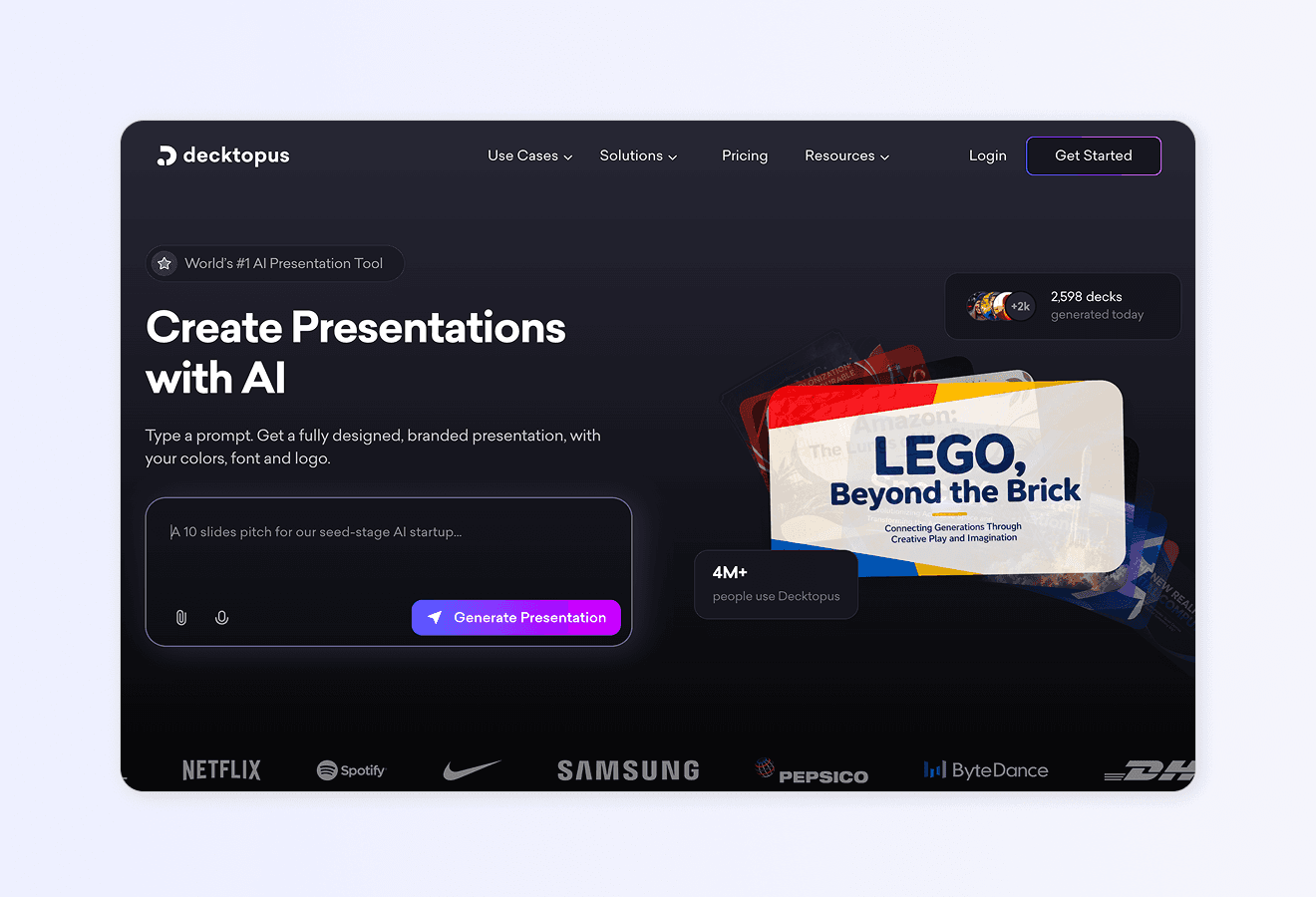
This is where tools like Decktopus become useful.
Instead of manually designing comparison slides, you can generate SWOT visuals, feature matrices, positioning maps, and investor-ready summaries automatically.
Here’s how it works in Decktopus:
Describe your topic. Type something like “Competitor analysis for the AI presentation software market.” Or upload your research notes as supporting files.
Choose your style. Paste your homepage URL to apply your brand automatically, or apply a saved Brand Kit.
Review the outline. Decktopus generates a slide structure with sections for competitor overview, SWOT, feature comparison, and recommendations. Adjust before the full deck is built.
Refine in the editor. Use the prompt bar to fine-tune any slide. Try “switch this to a perceptual map” or “make this SWOT more visual.” Brand Compliance keeps every slide on-brand.
Export or share. Download as PDF or PPT, share via link, or present directly.
The key advantage is speed. Because competitor research becomes outdated quickly.
If you’re new to AI presentation platforms, our guide to the best AI presentation tools walks through how each one handles speed, design, and brand consistency.
Frequently Asked Questions
What is the best competitor analysis framework?
There is no universal “best” framework. SWOT is best for high-level strategy. Feature matrices work well for product comparisons. Perceptual maps help with positioning. War gaming is strongest for strategic planning. The right framework depends on the decision you’re making.
How often should competitor analysis be updated?
At minimum: quarterly reviews, annual deep dives, and updates before major launches or fundraising. AI markets may require monthly monitoring.
How many competitors should you analyze?
Usually three to five direct competitors, plus two or three indirect or emerging threats. Beyond that, focus declines.
What tools help with competitor analysis?
Popular tools include SimilarWeb, Crunchbase, G2, LinkedIn, SEMrush, Ahrefs, Gartner, Reddit, and YouTube reviews. Each reveals different competitive signals.
Can AI help with competitor analysis?
Yes. AI tools are useful for summarizing research, identifying patterns, organizing comparisons, and generating presentations.
But strategic judgment still requires human interpretation. The companies that win will combine AI-assisted research with human strategic thinking.
Should I use a competitor analysis template or build one from scratch?
A competitor analysis template saves time and forces structure, but adapt it to your industry. Templates work best when you treat them as starting points, not finished products.
Final Thoughts
The best competitor analyses do not obsess over copying competitors.
They identify where the market is shifting, what customers actually value, and where competitors are structurally weak.
That’s the real purpose of competitive strategy.
Because sustainable advantage rarely comes from having more features. It comes from understanding perception, distribution, customer psychology, timing, and strategic positioning better than everyone else.
Related posts

How to Improve Communication Skills at Work (2026 Practical Guide)
The 5 workplace communication skills that matter most, the CLEAR framework, and the AI practice method that turns weak communicators into strong ones.
Business & Strategy

Job Interview Sample Questions: How to Practice Your Answers (2026)
The 20 most common interview questions, the STAR framework for answers, and the AI practice method that turns rehearsed responses into confident ones.
Business & Strategy

How to Negotiate a Raise: The Script, Practice Method & Tips That Actually Work
A step-by-step script for negotiating a raise, common mistakes to avoid, and the AI practice method that turns a nervous ask into a confident one.
Business & Strategy