Presentations
Best TED Talks to Improve Your Presentation Skills
Watch ten of the best TED talks for presentation skills and use a practical exercise from each to improve structure, voice, visuals, and confidence.


İlayda Tunaboylu
The best TED talks for presentation skills teach one clear technique and demonstrate it at the same time. Their main benefit is observation: viewers can study how a speaker structures an idea, controls the voice, uses visuals, handles vulnerability, or creates a memorable ending, then apply that choice to their own work.
TED released six recorded talks online in June 2006, then developed a growing educational archive in which every published talk is reviewed by research, editorial, and curatorial teams. The official TED Talks overview explains why these talks are useful study material rather than random viral clips.
This list is designed for practice, not passive watching. Each recommendation includes one lesson and one exercise to use in the next presentation.
Best TED talks for presentation skills at a glance
Talk | Speaker | Best for | Practice focus |
|---|---|---|---|
TED's Secret to Great Public Speaking | Chris Anderson | One central idea | Message selection |
The Secret Structure of Great Talks | Nancy Duarte | Persuasive structure | Contrast |
How to Speak So That People Want to Listen | Julian Treasure | Voice | Pace and emphasis |
The 110 Techniques of Communication and Public Speaking | David JP Phillips | Trainable behaviors | One measurable technique |
Want to Give a Great Presentation? Use Ugly Sketches | Martin J. Eppler | Simple visuals | Visual relationships |
The Public Speaking Lesson You Never Had | DK | Audience mindset | Usefulness over perfection |
The Trick to Powerful Public Speaking | Lawrence Bernstein | Connection | Conversational delivery |
How I Beat Stage Fright | Joe Kowan | Performance anxiety | Recovery routine |
How Great Leaders Inspire Action | Simon Sinek | Purpose | Why before what |
10 Ways to Have a Better Conversation | Celeste Headlee | Listening | Question handling |
Ten talks and practical exercises
1. Chris Anderson: TED's Secret to Great Public Speaking
Best for: Building a talk around one idea
Chris Anderson argues that there is no single formula for a great talk. The essential task is to give the audience an idea worth understanding and build it carefully in their minds.
What to learn
Choose one central idea and make every part of the talk serve it. An idea is more useful than a broad topic because it makes a claim the audience can examine and remember.
Broad topic: "Customer experience."
Central idea: "Customers lose confidence when progress becomes invisible."
The second version helps the presenter choose relevant evidence and reject unrelated material.
Practice exercise
Complete this sentence: "The one idea we want the audience to leave with is ____." Remove any section that does not explain, prove, or apply that idea.
2. Nancy Duarte: The Secret Structure of Great Talks
Best for: Persuasive structure
Nancy Duarte explores how compelling speeches create contrast between current reality and a better future. Movement between the two creates tension and gives the audience a reason to care. The same contrast strengthens persuasive presentations.
What to learn
Structure is not only sequence. It can create meaningful tension. Show what exists now, what could exist, and what the audience can do to help close the gap.
Practice exercise
Mark each section of the outline as "what is" or "what could be." If one side is missing, add the contrast. End by showing the next step toward the better outcome.
3. Julian Treasure: How to Speak So That People Want to Listen
Best for: Voice and vocal variety
Julian Treasure examines speaking habits and vocal tools that affect how a message is received.
What to learn
Voice carries structure and emotion. Pace, pitch, volume, emphasis, and silence can make the same words feel rushed, uncertain, calm, urgent, or important.
Vocal variety should support meaning. Constant intensity is not variety. A deliberate pause may carry more weight than added volume.
Practice exercise
Record one minute of the presentation. Mark where the pace changes, where a pause should appear, and which words deserve emphasis. Record it again and compare the two versions.
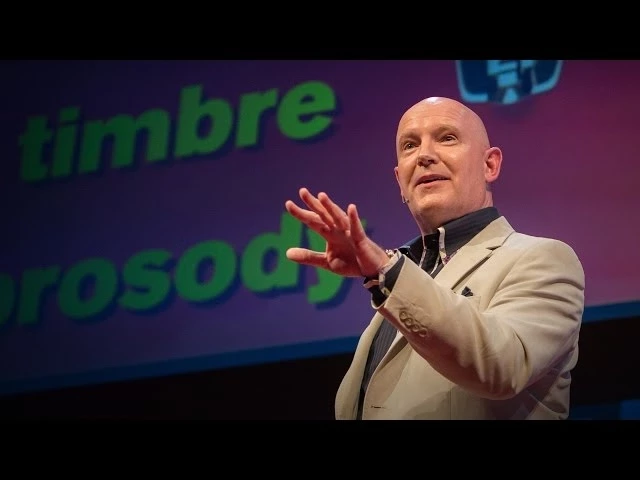
4. David JP Phillips: The 110 Techniques of Communication and Public Speaking
Best for: Breaking communication into trainable behaviors
David JP Phillips presents public speaking as a collection of specific techniques rather than a mysterious talent.
What to learn
Improvement becomes easier when a broad goal is divided into observable behaviors. "Be more engaging" is difficult to practice. "Pause after the main claim" is specific and reviewable.
Practice exercise
Choose one behavior for the next rehearsal: slower pace, stronger eye contact, clearer gestures, or more deliberate pauses. Review only that behavior afterward. Keep it, change it, or test it again.
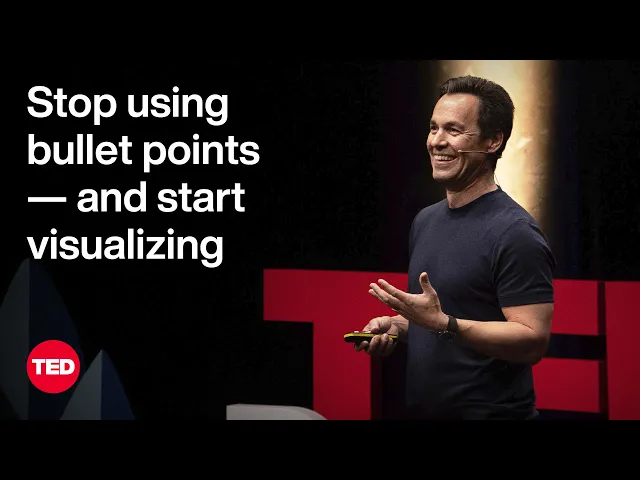
5. Martin J. Eppler: Want to Give a Great Presentation? Use Ugly Sketches
Best for: Simple visuals and collaborative thinking
Martin J. Eppler shows how rough sketches can clarify ideas and involve an audience without requiring polished illustration.
What to learn
A useful visual does not need to be beautiful. It needs to reveal a relationship, process, choice, or idea. Rough thinking can help the presenter discover the visual before refining it.
Practice exercise
Take one abstract concept and draw it with boxes, arrows, and labels. Ask what relationship the sketch reveals. Use that answer to decide whether the final slide needs a flow, comparison, hierarchy, or timeline.
6. DK: The Public Speaking Lesson You Never Had
Best for: Reframing the relationship with the audience
DK challenges common assumptions about public speaking and encourages a more useful view of what the audience needs from the presenter.
What to learn
The audience is not waiting for perfection. It is waiting for value. Shifting attention from self-evaluation to audience usefulness can make preparation more focused and delivery more natural.
Practice exercise
Replace "How will we look?" with three audience questions:
What do they need to understand?
What might confuse or concern them?
What action would help them?
Use the answers to revise the opening, examples, and conclusion.

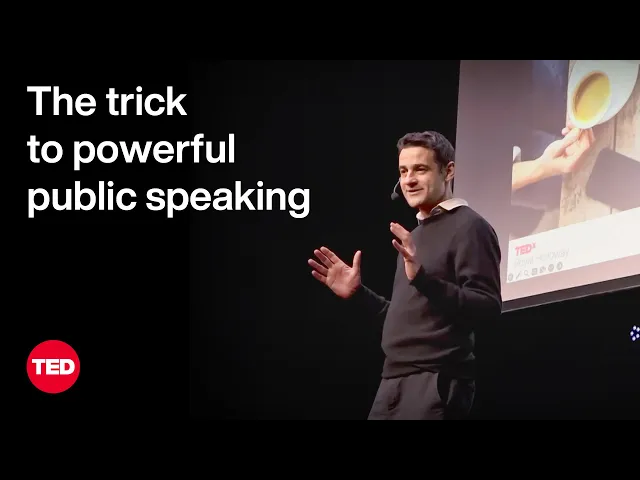
7. Lawrence Bernstein: The Trick to Powerful Public Speaking
Best for: Connection and delivery choices
Lawrence Bernstein explores how speakers create a stronger relationship with listeners.
What to learn
Public speaking is communication with people, not performance at people. Eye contact, conversational language, and attention to audience response make the message feel direct.
Practice exercise
Rehearse the opening as though you are explaining the idea to one intelligent colleague. Keep the language natural, then retain that tone when addressing the full room. These presentation-opening techniques can help if the first minute remains formal or distant.
8. Joe Kowan: How I Beat Stage Fright
Best for: Managing performance anxiety
Joe Kowan uses humor and personal experience to show one way he confronted stage fright.
What to learn
Nerves do not have to disappear before a person can speak effectively. Naming the fear, preparing for it, and continuing through it can reduce its control.
The goal is not to promise that one method removes anxiety for everyone. It is to build a reliable response when anxiety appears.
Practice exercise
Write a pre-presentation routine with three parts: one physical reset, one opening sentence you know well, and one reminder focused on the audience. Use this guide to building speaking confidence to develop the routine further.

9. Simon Sinek: How Great Leaders Inspire Action
Best for: Organizing a message around purpose
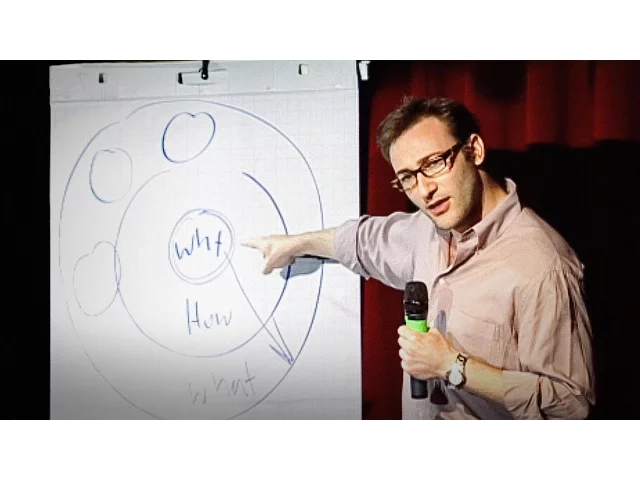
Simon Sinek's talk is a useful study in repetition, a simple organizing model, and purpose-led communication.
What to learn
An audience often needs to understand why a proposal matters before it can care about what it contains. Purpose creates a frame for the details.
Purpose should not replace evidence. A strong presentation explains why the issue matters, how the approach works, and what is being proposed.
Practice exercise
Write three lines: why this matters, how the approach works, and what is being proposed. Test whether the presentation gives the "why" enough emphasis, then check whether the ending creates a clear action.
10. Celeste Headlee: 10 Ways to Have a Better Conversation
Best for: Listening and question sessions
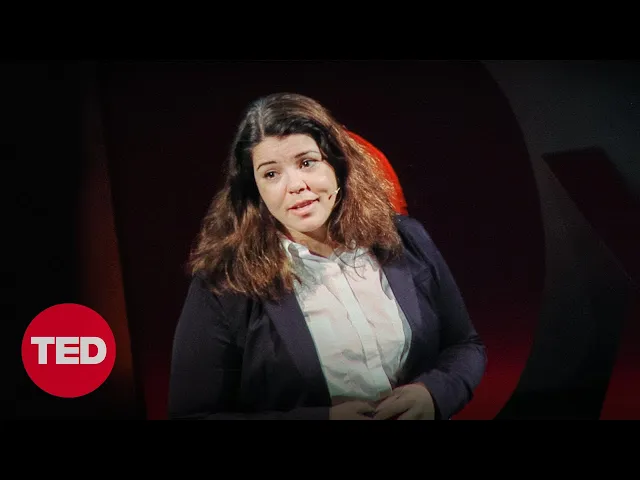
Celeste Headlee offers practical guidance for better conversations. The lessons also apply to audience interaction and question sessions.
What to learn
Good presenters listen. They do not treat every question as a cue to repeat prepared material. They stay present, avoid pretending to know, and respond to what was actually asked. This is also central to effective workplace communication.
Practice exercise
Ask a colleague to interrupt a rehearsal with questions. Listen to the complete question, answer it in one sentence, and then add the necessary context. If you do not know, state what you will verify.
The WATCH Learning Framework
Watching several talks in a row can feel productive without changing a skill. Use the WATCH Learning Framework:
W: Watch once for the idea. Understand the talk before analyzing the performance.
A: Analyze one technique. Choose structure, voice, visuals, stories, confidence, or questions.
T: Timestamp the moment. Note exactly where the technique appears and what changes.
C: Create your own application. Apply the principle to a short section of a real presentation.
H: Hear and review the result. Record the attempt, compare it with the goal, and revise.
WATCH stage | Avoid | Do instead |
|---|---|---|
Watch | Multitasking | Understand the central idea |
Analyze | Studying every technique | Choose one behavior |
Timestamp | Writing a vague note | Capture the exact moment and effect |
Create | Copying the speaker's wording | Apply the principle to your own message |
Hear | Trusting how the rehearsal felt | Review the recording or feedback |
Focus on choices, not personality. This guide to practicing public speaking alone provides another repeatable practice process.
Which TED talk should you watch first?
Current challenge | Start with | Practice next |
|---|---|---|
The idea is too broad | Chris Anderson | Write the one-sentence idea |
The structure feels flat | Nancy Duarte | Add current-versus-possible contrast |
The voice sounds rushed | Julian Treasure | Mark pace, pause, and emphasis |
The goal feels vague | David JP Phillips | Choose one observable behavior |
The visuals are complicated | Martin J. Eppler | Sketch the relationship |
The talk feels self-conscious | DK | Rewrite around audience usefulness |
Connection feels distant | Lawrence Bernstein | Rehearse conversationally |
Stage fright is the obstacle | Joe Kowan | Build a recovery routine |
The purpose is unclear | Simon Sinek | Write why, how, and what |
Questions are difficult | Celeste Headlee | Practice listening and direct answers |
Common mistakes when studying TED talks
Watching without a practice goal. Choose one weakness in a real presentation before selecting the talk. Observation becomes useful when it changes a behavior.
Copying a speaker's personality. Do not imitate vocal style, humor, gestures, or personal stories that do not fit you. Study the communication choice and adapt it.
Assuming popularity proves every claim. A successful talk can still contain a claim that needs verification. Check the original sources before reusing data or conclusions.
Studying only the most polished moment. Watch transitions, setup, recovery, and the path into the ending. The structure between memorable moments often explains why they work.
Trying to apply all ten lessons. Choose one technique for one presentation. Too many simultaneous changes make delivery less natural and improvement harder to measure.
Ignoring the difference between stage and workplace settings. A conference talk, board meeting, sales conversation, and project update require different levels of interaction and detail. Adapt the technique to the format.
How to apply a TED technique with Decktopus AI
Decktopus AI can turn a practice goal into an outline, complete presentation, and focused revision workflow. The speaker still owns the facts, examples, voice, and final judgment.
Use these presentation tips during the final content and design review.
Who this section is for
Sales reps and account executives: rehearsing a pitch technique before a live call. See Decktopus for sales.
Founders: practicing a central-idea or purpose-led narrative for investor talks. See Decktopus for founders.
Marketers: applying structure and contrast techniques to campaign recaps and strategy presentations. See Decktopus for marketers.
Webinar hosts: using vocal variety and audience-usefulness techniques in longer-format talks. See Decktopus for webinars.
Why Decktopus AI is built for technique-based improvement
AI outline generation lets users test the story structure before full generation.
AI presentation generation creates the complete presentation after outline approval.
Brand import via URL supports on-brand presentations.
Edit with AI supports natural-language changes to text, images, layouts, and elements, with a preview before applying.
Manual text editing gives precise control over the central idea and wording.
Beautify can use source files as a resource or redesign existing content.
AI image generation and stock libraries support custom visuals, Unsplash, and Freepik.
Version History preserves unlimited versions and allows restoration.
Decktopus AI vs. traditional slide-building tools
Task | Traditional slide tool | Decktopus AI |
|---|---|---|
Testing a new structure | Rebuild slides manually to try a different order | Edit the AI-generated outline before any slides exist |
Applying one technique | Reformat each slide by hand | Use a focused Edit with AI prompt across the deck |
Keeping a consistent brand | Reapply fonts, colors, and logo manually | Import brand once via URL and reuse it |
Reviewing past attempts | Save separate file copies | Restore any version from Version History |
Rehearsing delivery | Practice with no structured feedback | Rehearse in Loop with a Mirror analysis of pace and delivery |
Passive viewing vs. applied Decktopus AI workflow
Passive viewing | Applied Decktopus AI workflow |
|---|---|
Save a talk for later | Define one technique and a real use case |
Write a general observation | Turn the observation into an outline rule |
Copy a memorable phrase | Apply the structure to your own message |
Redesign everything manually | Preview focused changes with Edit with AI |
Stop after slide editing | Continue into Loop for rehearsal analysis |
Step-by-step Decktopus AI workflow
1. Describe the topic and technique
Enter a prompt such as: "Create a 12-minute customer-success presentation around one central idea. Use contrast between the current onboarding experience and a more visible customer journey, then close with a 30-day action."
You can also attach PDFs, presentation files, or notes. Beautify can use the source for a new presentation or redesign existing content.
2. Choose the style
Import a brand from a website URL, apply a saved or previously used style, or let AI create a style from scratch.
3. Review the outline
Test the chosen technique before full generation. Check the one central idea, contrast, purpose, or audience question. Edit titles, order, or section count.
4. Generate the complete presentation
Generate the full presentation after approving the outline. Verify every fact, source, quotation, example, and visual.
5. Refine with focused prompts
Examples include:
"Remove any section that does not support the central idea."
"Add a clear contrast between the current and possible states."
"Turn this abstract concept into a simple visual relationship."
Preview changes before applying them. Undo is available. Use Edit Text for precise manual corrections.
6. Add meaningful visuals
Generate a custom image, upload an approved visual, or search Unsplash and Freepik. Apply the lesson from the selected talk without copying its exact visual identity.
7. Rehearse with Loop AI Delivery Coach
Attach the presentation in Loop. The Architect can develop the narrative, timing, key messages, speaking notes, and slide briefs. The Red Team can test questions. The Mirror can analyze the delivery.
8. Present, export, or share
Use full-screen Presentation Mode, export to PDF, PPT, or PNG on Pro and Business plans, share a live link, or generate iframe code. Custom Domain is available on the Business plan.
Build a presentation around one TED technique with Decktopus AI and keep the speaker's own evidence, wording, and voice.
How to rehearse the technique with Loop
Loop turns observation into repeated rehearsal. The Profiler captures the audience, goals, format, and setting. The Architect develops the story and speaking notes. The Red Team simulates likely questions. The Mirror tracks time, words per minute, filler words, and content coverage.
Choose one measurable goal. A Julian Treasure session can focus on pace and emphasis. A Joe Kowan session can test the opening under anxiety. A Celeste Headlee session can focus on listening and direct answers.
Practice the TED technique with Loop and compare repeated attempts instead of relying on how confident the rehearsal felt.
Frequently asked questions about TED talks and presentation skills
What are the best TED talks for presentation skills?
Strong starting points include talks by Chris Anderson, Nancy Duarte, Julian Treasure, David JP Phillips, Martin J. Eppler, DK, Lawrence Bernstein, Joe Kowan, Simon Sinek, and Celeste Headlee.
Which TED talk teaches presentation structure?
Nancy Duarte's talk focuses on contrast between current reality and a better future. Chris Anderson's talk helps speakers build around one central idea.
Which TED talk helps with public-speaking confidence?
Joe Kowan's talk addresses stage fright through personal experience. DK's talk can also help shift attention from self-evaluation to audience usefulness.
Which TED talk is best for vocal delivery?
Julian Treasure's talk is a useful starting point for pace, pitch, volume, silence, and other vocal choices that affect how listeners receive a message.
Which TED talk helps with presentation visuals?
Martin J. Eppler's talk demonstrates how rough sketches can reveal relationships and improve thinking before a polished visual is created.
How should someone study a TED talk?
Watch once for the idea, analyze one technique, timestamp the exact moment, apply it to your own presentation, and review a recording of the result.
Should a presenter copy a TED speaker's style?
No. Study the technique and adapt it to your topic, audience, format, and natural voice. Copying personality or wording can make the presentation feel less authentic.
How many TED talks should someone watch before practicing?
One talk is enough when it addresses a specific weakness. Apply one technique before watching several more. Practice creates skill, not the number of videos watched.
Can TED techniques work in business presentations?
Yes, when adapted. One central idea, clear contrast, vocal variety, simple visuals, and audience focus can strengthen workplace communication. Business settings may require more interaction, evidence, and detail.
Can AI help apply lessons from TED talks?
AI can support outline generation, focused editing, visual ideation, question practice, and rehearsal analysis. The presenter must verify all content and keep the message authentic.
Are TED talks a reliable source of data for a business presentation?
The talk itself is a demonstration of technique, not a citation. If a speaker references a statistic or study, verify it against the original source before reusing it in a presentation.
How long should someone spend studying TED talks before rehearsing a real presentation?
One focused viewing plus one practice exercise is enough to start. The exercise matters more than additional viewing time, since a technique only becomes useful once it is applied and reviewed.
What is the difference between watching TED talks for entertainment and studying them for skill-building?
Entertainment viewing follows the story and moves on. Skill-building viewing isolates one technique, timestamps where it happens, and tests it in a real presentation, which is what the WATCH framework is built to do.
Conclusion
The best TED talks for presentation skills are useful because they show the technique while explaining it. Watch with a specific goal, study one choice, and apply it immediately.
Related posts

Webinar Follow-Up Emails: The Sequence That Runs After the Deck Ends
Learn how to build a webinar follow-up email sequence with behavioral segmentation, timely emails, better deliverability, and personalized outreach.
Presentations

Decktopus AI Best Practices: The Complete Guide, Tips and Tricks (2026)
A complete guide to using Decktopus AI effectively, from writing better prompts and reviewing outlines to rehearsing with Loop and building carousels.
Presentations
What Makes Slides Look Professional in 2026
Learn the 10 slide design principles top presenters follow, common presentation design mistakes to avoid, and how to apply every principle to your slides in minutes with AI
Presentations