Business & Strategy
How to Improve Communication Skills at Work (2026 Practical Guide)
The 5 workplace communication skills that matter most, the CLEAR framework, and the AI practice method that turns weak communicators into strong ones.


İlayda Tunaboylu
Workplace communication skills are the ability to convey information, ideas, and intent clearly across written, spoken, and interpersonal contexts. According to LinkedIn's 2024 Most In-Demand Skills report, communication ranks as the #1 soft skill hiring managers screen for, and a McKinsey survey of 1,000 executives found companies with strong communication cultures are 3.5 times more likely to outperform peers.
Communication is not a personality trait. It's five distinct skills, each of which can be measured and improved with the right practice.
This guide breaks down the five skills that matter most at work, gives you a framework to apply them, and shows you the practice method that has replaced the traditional (and expensive) communication coaching model. For the spoken delivery mechanics that carry across every workplace format, see our guide on public speaking tips.
You'll get:
The 5 workplace communication skills that matter most
The CLEAR framework
6 communication mistakes that quietly stall careers
The AI method for practicing verbal delivery
Answers to real questions from professionals at every level
The 5 Workplace Communication Skills That Matter Most
1. Written Clarity
Emails, docs, Slack messages, project briefs. Whether your point is clear on the first read.
2. Spoken Delivery
Meetings, presentations, one-on-ones, calls. Whether your ideas land in real time. See how to prepare a meeting presentation for the specific mechanics of meeting-format communication.
3. Active Listening
Understanding what the other person means, not just what they said. Reflecting back accurately.
4. Difficult Conversations
Feedback, conflict, pushback. Delivering hard messages without damaging the relationship.
5. Cross-Functional Translation
Adapting your language and framing so a technical concept lands with a non-technical audience (or vice versa).
Weak communicators are strong in one or two of these. Strong communicators are competent in all five.
The CLEAR Framework for Any Communication
Letter | Component | What It Does |
|---|---|---|
C | Context first | You give the listener enough context to follow the message |
L | Language plain | You use plain words, not jargon or corporate speak |
E | Evidence supported | Claims are backed by data, examples, or specifics |
A | Action defined | The listener knows what to do next |
R | Recap explicit | The end restates the key point and the ask |
Weak communicators skip Context first and Action defined. Strong communicators hit all five in every meeting, every email, every difficult conversation.
The 6 Communication Mistakes That Quietly Stall Careers
1. Burying the Ask
You explain background for 4 minutes before getting to what you actually need. By then, the listener has stopped tracking.
2. Using Jargon That Excludes Half the Room
"Let's leverage synergies to align our stakeholders" says nothing. Plain language reads as clearer and more confident.
3. Reactive Communication
You reply to messages the moment they arrive without thinking. Reactive communication is how misunderstandings compound.
4. Avoiding Difficult Conversations
The feedback you don't give shows up in the outcome. Silent frustration is not a communication strategy.
5. Talking More Than Listening
Meetings you dominate are meetings where you learn nothing new. Talk less, ask better questions.
6. Written Communication That Sounds Rehearsed
Corporate-tone emails feel distant. Direct, human writing lands better in every context.
How Loop AI Delivery Coach Improves Spoken Communication
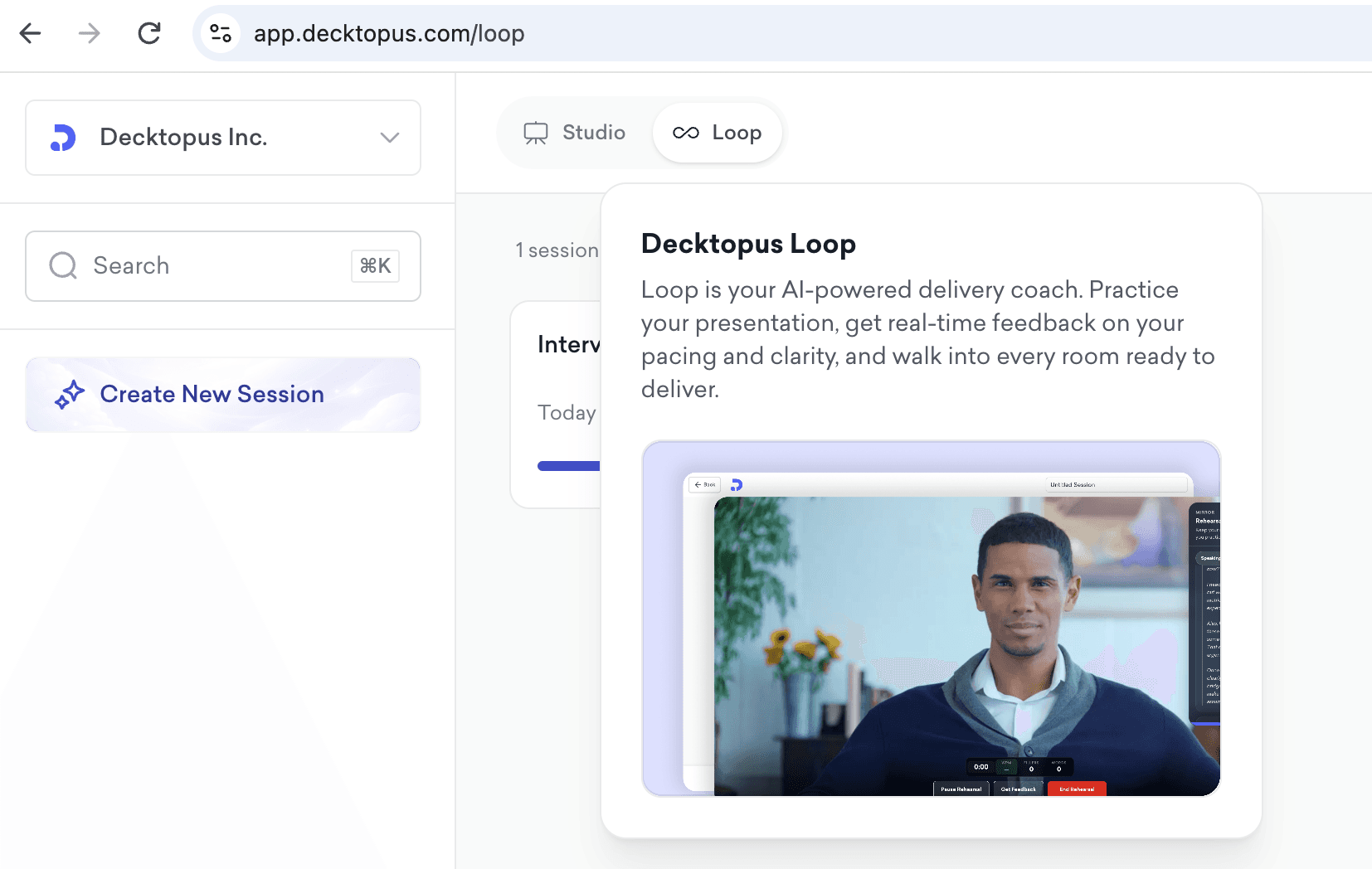
Written communication improves with editing. Spoken communication improves with reps. But most professionals never get structured practice on their spoken delivery outside of major presentations. For the underlying practice method, see how to practice public speaking alone and how to build speaking confidence.
Loop AI Delivery Coach is Decktopus AI's built-in rehearsal environment. Four AI agents simulate high-pressure spoken communication moments before you deliver them live.
The 4 Loop Agents
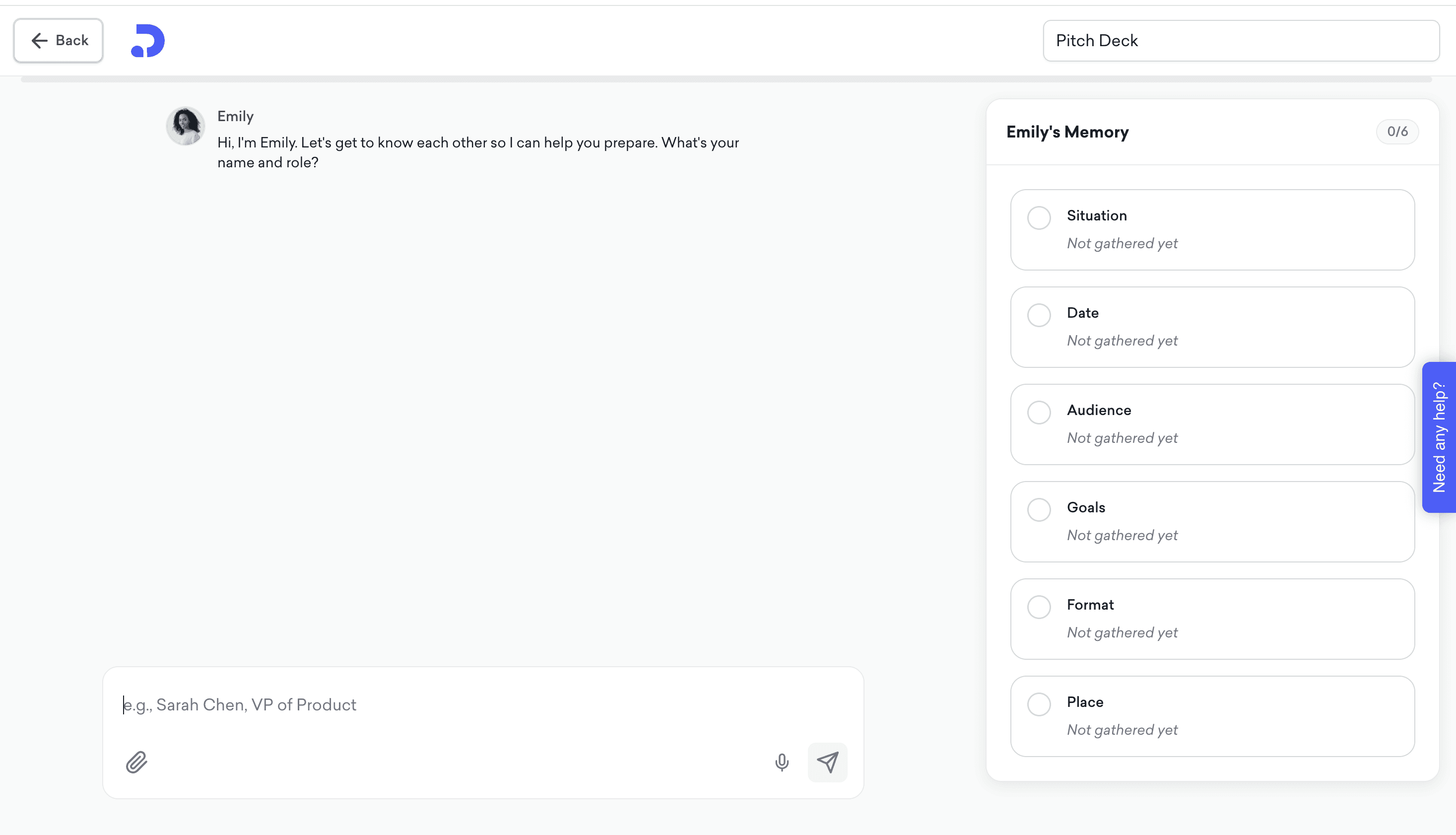
Profiler (Emily) simulates your specific listener. Whether it's a CFO who wants numbers, a design partner who wants context, or a direct report who needs clarity, Emily reacts the way that person would.
Architect (Marcus) scores the structure of what you're saying. Flags when your context is missing, your ask is buried, or your point is meandering.
Red Team fires the pushback you'll actually face. "Why should we prioritize this?" "What's the risk if we don't?" "How does this fit with our other commitments?" Facing these in rehearsal turns them into routine responses.
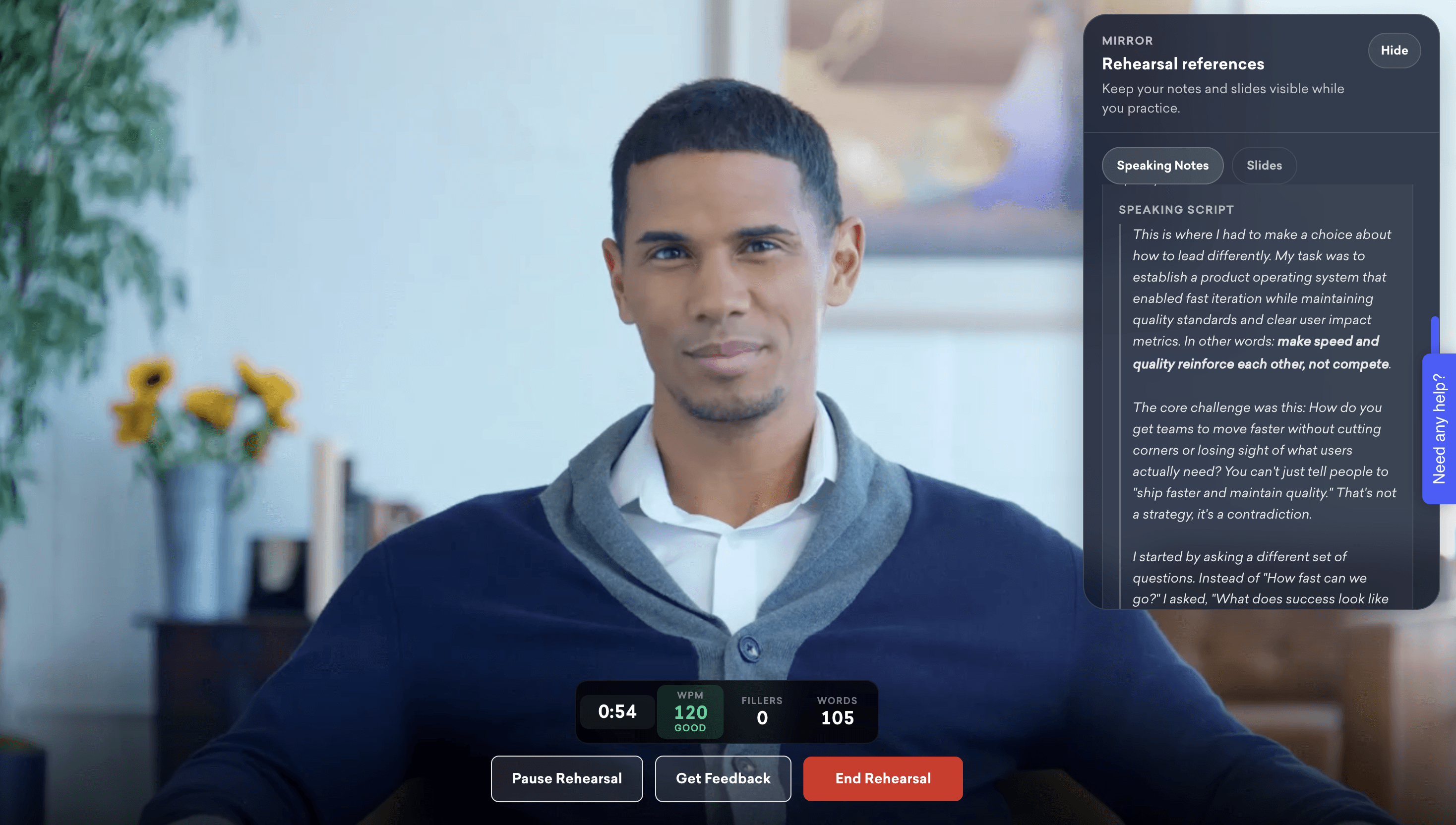
Mirror records your delivery and plays it back with metrics: filler count, pace, pause length, tone. Communication improves fastest when you can hear yourself the way others hear you.
Loop Workflow for Communication Skill Building
Pick a specific upcoming communication moment: a pitch, a difficult conversation, a status update, a presentation
Open Loop, describe the listener and the goal
Run the communication, Emily reacts, Marcus scores structure
Face Red Team pushback until answers feel routine
Review Mirror playback and cut filler, tighten structure
Rotate through different communication types weekly
Most professionals see meaningful communication improvement after 6 to 8 Loop sessions across 4 to 6 weeks.
Practice workplace communication with Loop AI Delivery Coach →
Weekly Communication Improvement Plan
For any career stage:
Monday: Review last week's most challenging communication moment, identify what to improve
Tuesday and Thursday: 15-minute Loop rehearsal on a real upcoming conversation
Wednesday: Write one important email or doc, read it out loud before sending, cut 30%
Friday: Journal one difficult conversation you avoided, plan how to have it next week
Frequently Asked Questions
What is the most important communication skill at work?
Spoken clarity in meetings. Written communication can be edited, but spoken communication happens in real time and shapes how people perceive your competence. Improving spoken clarity is the single highest-leverage communication skill.
How long does it take to improve communication skills at work?
Meaningful improvement in 4 to 8 weeks with 2 to 3 structured practice sessions per week. Full transformation takes 6 to 12 months of consistent practice.
Can communication skills be taught, or are they innate?
They can be taught, and better than most professional skills. Communication improves with structured feedback and reps faster than almost any other career skill.
How do I improve high-stakes communication like raise or interview conversations?
Same underlying skill, higher-pressure moment. See our specific guides on how to negotiate a raise and job interview sample questions.
How do I improve my communication if I'm an introvert?
Introverts often become excellent communicators because they prepare more thoroughly. Focus on structure (CLEAR framework), active listening, and written clarity. Skip the "be more outgoing" advice that trains introverts to perform someone else's style.
What's the fastest way to improve my meeting communication?
Practice before the meeting. Loop AI Delivery Coach lets you rehearse your key point, opening, and answers to likely questions in 10 to 15 minutes before a high-stakes meeting.
How do I handle a coworker who communicates poorly?
Ask clarifying questions instead of getting frustrated. Restate what you heard to confirm understanding. If the pattern is chronic, address it directly in a one-on-one with specific examples.
How do I give difficult feedback at work?
Use the SBI framework: Situation, Behavior, Impact. "In yesterday's client meeting, when you interrupted the client three times, they visibly disengaged and the deal is now at risk." Specific, non-personal, actionable.
How do I communicate better with my manager?
Bring context, options, and a recommendation, not just problems. Managers value people who arrive with "here's the situation, here are three options, I recommend option two because..." over people who arrive with problems and no framing.
What is active listening, really?
Listening to understand, not to respond. Concretely: pause before responding, restate what you heard, ask clarifying questions before offering your take. Most people listen while formulating their next sentence.
How do I improve my written communication at work?
Read your writing out loud before sending. Cut 30% of the words. Move the ask to the top. Use bullet points for anything with more than three items. Ask "what does the reader need to do after reading this?" and lead with that.
Should I use jargon in workplace communication?
Only when your audience uses it and understands it. Jargon between specialists is efficient. Jargon between mixed audiences excludes half the room and reads as insecure.
How do I handle a difficult conversation with a colleague?
Prepare the structure in advance. Use CLEAR. Practice out loud before the conversation. Loop AI Delivery Coach's Red Team can simulate the pushback you're likely to face, so you're not blindsided in the moment.
How do I improve cross-functional communication?
Learn the vocabulary of the other function well enough to translate your work into their language. If you're technical talking to marketing, learn how marketers think about impact. If you're marketing talking to engineering, learn how engineers think about tradeoffs.
What's the biggest mistake in workplace communication?
Assuming the listener has the context you have. Every communication should start by giving the listener enough context to follow. Skipping this is why most workplace messages get misread.
How do I know if my communication is improving?
Look for lagging indicators: fewer misread messages, less back-and-forth to clarify, more people saying "that makes sense" the first time you explain something, more meetings where your input changes the outcome.
Related posts

Job Interview Sample Questions: How to Practice Your Answers (2026)
The 20 most common interview questions, the STAR framework for answers, and the AI practice method that turns rehearsed responses into confident ones.
Business & Strategy

How to Negotiate a Raise: The Script, Practice Method & Tips That Actually Work
A step-by-step script for negotiating a raise, common mistakes to avoid, and the AI practice method that turns a nervous ask into a confident one.
Business & Strategy

How to Deliver an Elevator Pitch That Actually Lands
Master elevator pitch delivery with the DELIVER framework, real examples, and the AI practice method that turns a good pitch into one that gets the next meeting.
Business & Strategy