Business & Strategy
How to Start an Online Executive Coaching Business: Step-by-Step Guide
We start the day with conventional social media strategies and end the day with a brand new social media platform. So how do companies stay alive? By leadership…


Decktopus Content Team
Once upon a time, the world was led by the trade of raw materials just to stay alive and exchange objects. After four industrial revolutions, the whole nature of commerce and living has changed. Regulations are transforming so quickly that every day we wake up to new inventions. We go to sleep by investing in different currencies and wake up to five new cryptocurrencies. We start the day with conventional social media strategies and end the day with a brand new social media platform.
So how do companies stay alive? By leadership. In such a competitive market, every company has to stand out in different ways, and all of them have to work on leadership skills. Leadership, building a culture, and bringing communication to the workplace upgrades sales, efficiency, and happiness at work.
A survey conducted on a Fortune 500 company revealed that coaching affected several metrics in the workplace, including employee engagement, customer satisfaction, and service quality. Having coaches added to the team builds up a culture, helps employees collaborate, come up with new ideas, and serve customers better. Coaching lifts up businesses tremendously.
With the rise of remote work and digital-first business models in recent years, online coaching has gone from niche to mainstream. Let’s explore some commonly asked questions about online coaching.
What is online coaching?
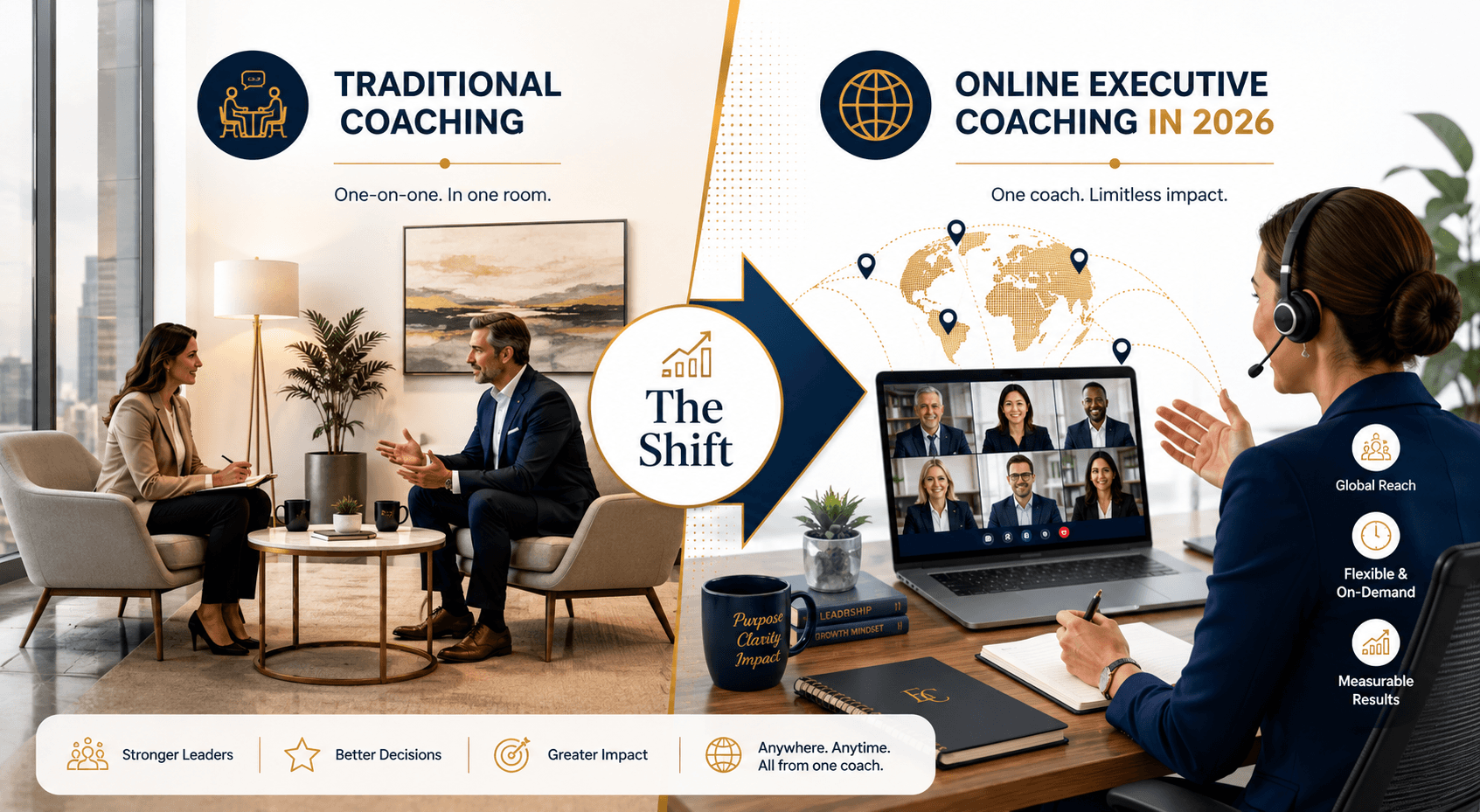
Coaching used to be more likely to be associated with sports. But in recent years, with the growth of soft skill development, coaching has expanded to business, health, and everyday life. Different branches have developed under the name of coaching, such as nutrition coaching, wellness coaching, leadership coaching, executive coaching, pregnancy coaching, relationship coaching, and many more.
Online coaching has become a major industry over the past several years, driven by digitalization and the broader shift to remote work. Studies consistently show that online coaching is as effective as offline coaching. Coaching can be described in three different ways according to the International Coaching Community:
Changing a person to the desired state by leading them to plan and take action
Building awareness and empowering decision-making that will lead to a change
Supporting a person to become any level they desire
Although coaching is not a one-time service, it is a long-lasting process that builds a mindset. The result is directly related to the client. ICF lists the reasons why people seek out coaching services:
Perform better at work
Expand career opportunities
Build higher self-esteem
Develop a clearer understanding of strengths and weaknesses
Build new strategies
Maximize self-potential
For more on how online courses can complement your coaching business, see our guide on how building online courses can boost your coaching business. For deeper guidance on launching courses themselves, see our course creation 101 guide.
What is executive coaching?
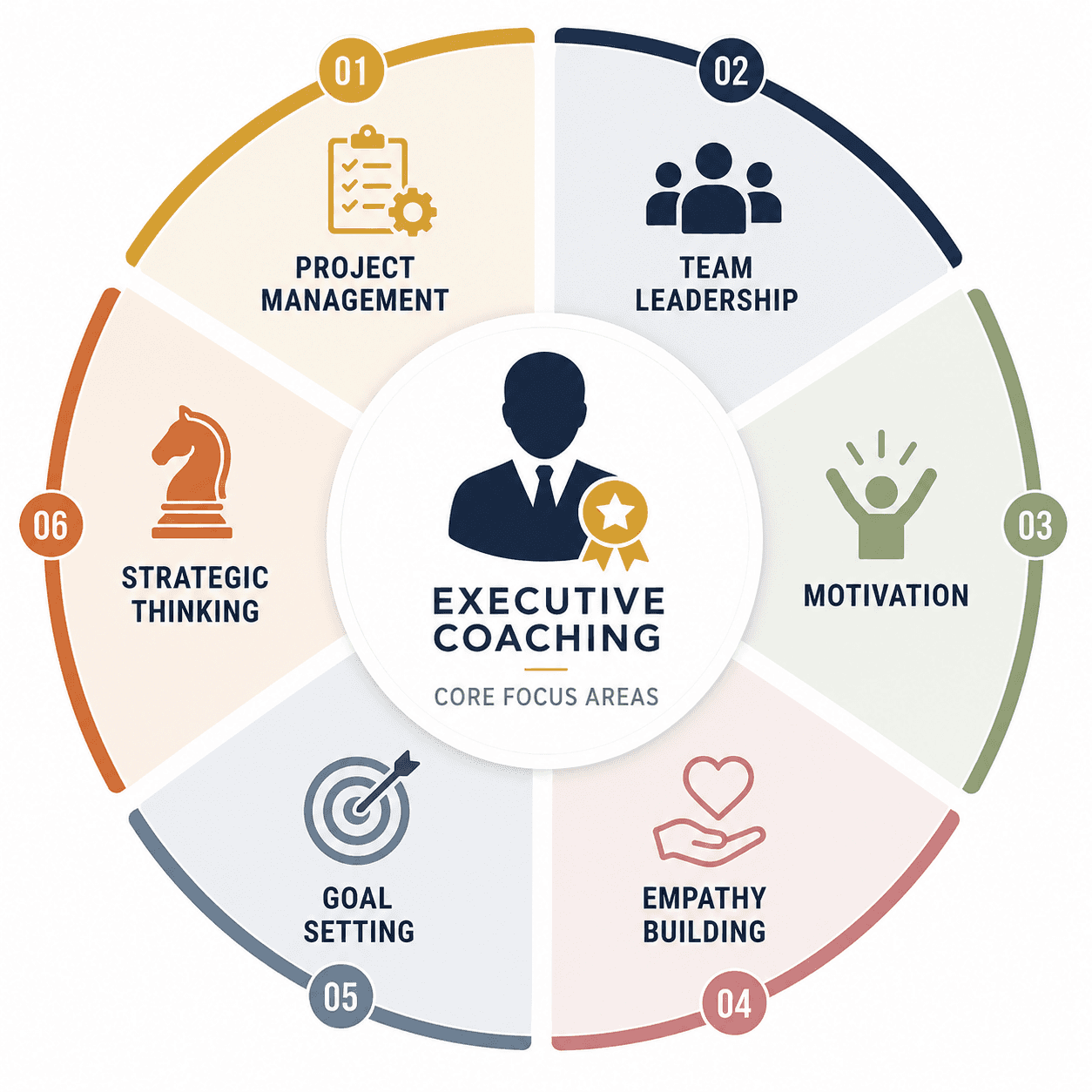
Executive coaching is a branch of coaching focused on the business industry. Executive coaches work directly with CEOs, team leaders, managers, or anyone described as an executive (even if it’s an executive of a 3-person group). They specialize in project management, people and team management, motivation and inspiration, building empathy among teams, and more.
Coaching can be done with 1:1 meetings supported by follow-ups, or as group sessions.
3 Best Executive Coaches in History
1. Damian Goldvarg
Damian Goldvarg is an executive coach with more than 30 years of experience. He spent 20 years coaching Fortune 100 companies. His philosophy is to increase the strengths of each client to develop success.
He is also an academic. He holds a Ph.D. in organizational psychology from Alliant International University in California, served as the president of ICF for two years, and has five books published in two languages: Step for Success: Guide for the Immigrant to the U.S., Coaching Competencies: Following Global Standards, Mentor Coaching in Action, Coaching Supervision, and Professional Coaching Competencies.
2. John Mattone
John Mattone is one of the most famous executive coaches in history because he was the former coach of Apple CEO Steve Jobs and Pepsi CEO Roger Enrico. Behind his fame is a mountain of success and business strategy. He’s known for his four-stage milestones to success.
These stages are Awareness, Assessment, Action, and Achievement. Mattone also is the former CEO of Mattone Global, which he founded to spread his leadership knowledge to other coaches. He coached more than 200 executives and was featured in CNN, Fast Company, Business Week, and more.
In 2015, he was awarded the International Executive Coach Thought Leader of Distinction Award, only given to twenty coaches in history. He has written 9 books, three of which became bestsellers. Our favorite is The Intelligent Leader.
3. Tony Robbins
Tony Robbins is best known for his leadership coaching sessions, but he’s also widely recognized as a successful executive coach. Since the essence of executive coaching is leadership, this overlap makes sense. His client list is unusually broad. He has coached business leaders, top athletes (including tennis star Serena Williams during her career), and music icons like Usher and the rock band Green Day.
Based on his portfolio, Robbins is widely regarded as a strong companion for high-stress, high-performance careers. He’s also been called the CEO whisperer by Fortune. Like other coaches, he has spread his methods through writing, with six bestselling books to his name.
So how does one become a successful coach? Working on your coaching skills can improve your own executive and leadership abilities, and may eventually become a whole new career. Thinking about starting an online coaching business and sharing your experience with others? Here’s your guide.
How to start a coaching business
It’s not super easy to start a whole new career, but coaching has a smoother transition than many other career changes, because experience is a major asset in this field. One should be cautious, though, not to simply impose their own ideas on others. Coaching is different.
There are similarities between coaching and other disciplines like mentoring, counseling, therapy, and training. Mentoring is a senior person giving advice to juniors based on experience as a role model. Counseling is working to solve a specific problem by giving solution advice. Therapy is when the client seeks psychological relief or consultation from a certified therapist.
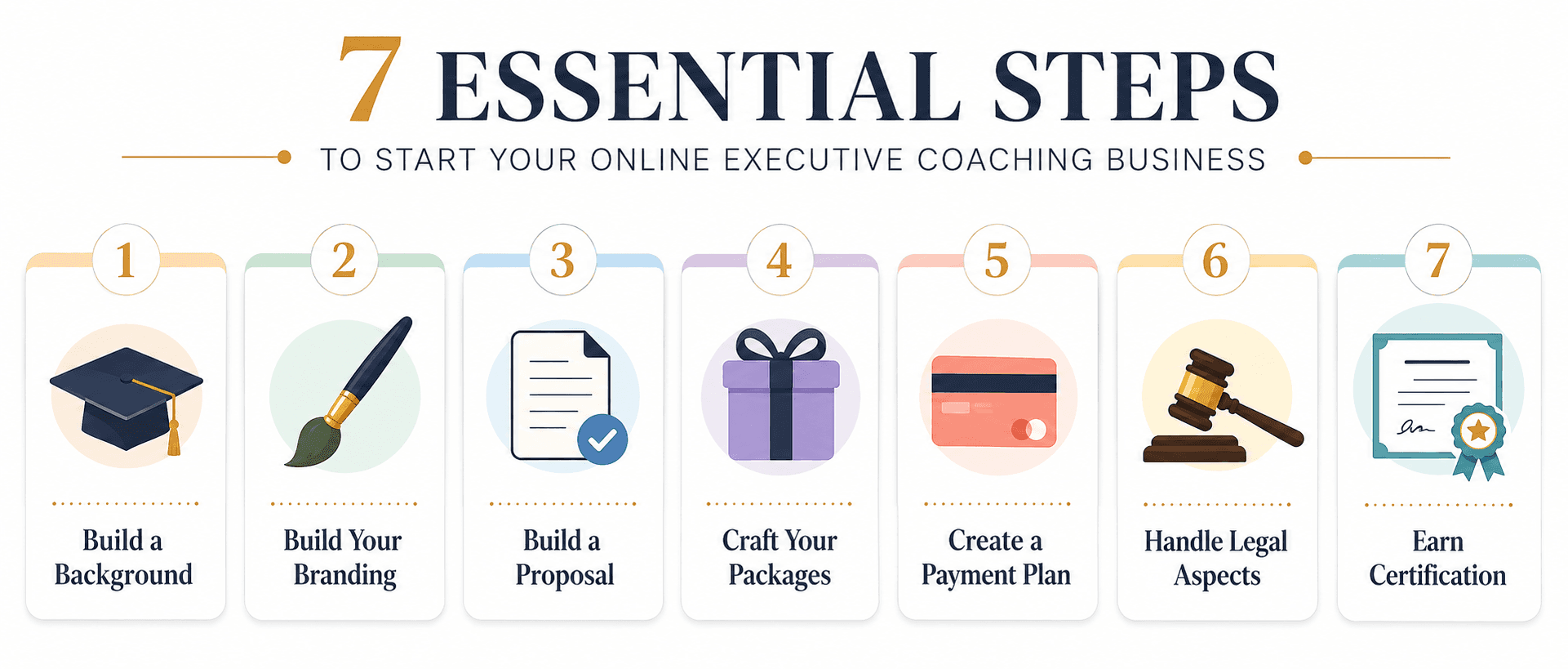
To start your coaching business, here are the things you need to do.
Building a background
Experience is a valuable asset in coaching, but you should also practice the coaching methods and strategies to avoid common mistakes (imposing ideas, giving wrong expectations, mismatched outcomes).
The best way to do this is to become certified by well-known coaching organizations. They provide training as packages and lifetime certification, often including a community. The most respected company for this training is ICF (International Coaching Federation), considered the gold standard in coaching.
Build your branding
Like in every other business, branding is extremely important. To start with your branding, decide on a few things:
Your niche. Decide where your experience is focused and which services you can provide.
Your brand identity. Even though executive coaching is for the business world, your brand should still represent you so potential clients can build a bond with you. Put a little bit of yourself into your brand.
Your business name. At this point you’ll want to verify your chosen brand name is available for registration. If you’re still deciding on a name, a business name generator can help you brainstorm unique options before you commit.
You can learn about formation tools such as Inc Authority and ZenBusiness through SmallBusiness HQ’s guides.
For design support, Decktopus can help. Once you have your brand colors and logo decided, work on a slogan. Use inspirational keywords like “Lift Your Business” or “Upgrade Your Plan” or other words that give positive feelings.
Branding for coaching also benefits from a strong photo set. You don’t need to go to a marketing agency. You can use platforms like Upwork, where you can find freelancers on-demand with a low budget.
For more on framing your professional identity, see our guide on about me presentations.
Build a professional proposal document
After setting up your branding, you need to build a strong business plan and business proposal to start your sales. Your business plan should include the value proposition, niche and market positioning, key partners, key resources, business packages, and channels.
Start with the value proposition. Focus on your key services and the key values you offer. This differs from business packages because in your value proposition you need to address the problems your clients are facing. The best value propositions help people save time or money. So come up with the key pains you want to address in your clients.
For more on writing proposals that close, see our guides on the business proposal and how to prepare a sales proposal step-by-step.
Common reasons executives consult an executive coach include:
Dealing with career changes. Executives often seek coaching at the beginning of new roles when exposed to high stress. Orientation to new responsibilities, leading higher-volume teams for the first time, taking over a struggling division, and similar transitions.
SWOT analysis. Great leaders work on their SWOT charts consistently. The things we get exposed to in our career affect how we deal with daily tasks. To improve their analysis continuously, they go to coaches for an objective third-eye perspective.
Productivity. Productivity is another major challenge everyone faces in their career. Whether you’re building a personal brand or managing 5,000 people, you deal with stress, lower productivity, burnout, and lack of willpower. Business people consult executive coaches to find inspiration and boost productivity.
Goal setting. While growing a company, the most important thing is to set clear goals and KPIs. Coaches help business people during their careers come up with creative KPIs to measure company, career, and team success.
When starting your online executive coaching business, another important step is to define your niche. Common executive coaching niches include technology industry, healthcare industry, government, non-profits, and emerging growth companies.
Key partners and key resources for your business are often the people doing similar jobs. Find those already attracting your potential clients, study their strategies, and partner up to grow together. Offer free consultations to their clients and run promotions.
Craft your business packages
Let’s talk about money. To earn revenue, you need to offer things to your potential clients. Categorize the assets you have, who they will serve, and which assets work best together.
Create at least three packages to offer with different price strategies. Define which offer is better for which client profile. Crafting business packages is bundling different services together.
Name your packages simply: beginner package, weekly coaching, group sessions. These titles give straightforward messages to the people you want to attract.
Create a payment plan
Pricing and offering different payment plans is essential to closing deals. People do not tend to give money in advance, so offer methods to pay in installments. If you’re running your business online, create an online payment page integrated with trustworthy companies like PayPal, Stripe or Whop.
The payment process should be the easiest part of your business. Nobody enjoys complicated and lengthy payment flows.
Legal Aspects
Legal documents may sound boring, but this is a step no small business owner should skip. It protects your business, your assets, your payments, and your client’s trust.
In your proposal document, include disclaimers that limit your claims, such as “Services offered do not guarantee specific outcomes.” In businesses like consulting and online coaching, clients tend to expect guarantees, and when service does not meet expectations, they may want their money back. Create a clear refund strategy. In your terms and conditions, state precisely how you work.
Certification
People value certificates. If you plan to give a group session or group training, offering certificates is a great way to attract customers. Since they receive recognition and accreditation, they’re more likely to choose you over competitors. For certification, get accredited by federations like ICF, or create your own certifications.
Building an Email List
It’s not easy to put yourself out there, especially when millions of others are doing it. Every business owner should grow an audience of their own to market their services. Building this audience requires learning the ways of building brand awareness and generating leads.
Content marketing is one of the best ways to build awareness and generate leads. Building an email list is one of the most important parts of content marketing. After building your company website, create a library of opt-in incentives.
A library of opt-in incentives consists of free resources that may attract your clients’ interest. A good opt-in incentive can be a checklist, a cheat sheet, a test, or a quiz.
For more on lead generation, see our breakdowns of what is lead generation and the best lead generation tools.
Marketing and Sales
After creating your website, your free resource library, and your opt-in incentives, it’s time to start your marketing efforts to drive sales.
Email marketing is a great way to send great offers to your customers. Especially around holidays, business owners can increase sales with special holiday offers. For inspiration on holiday campaigns, see our guide on how to increase your sales this holiday season. For broader email strategy, see our breakdown of tips and advantages of email marketing.
Jump Start Your Business
It’s time to start your business and be proud of the person you become. Do not hesitate to put yourself out there and start your online executive coaching business. Decktopus is always here to help. By becoming our affiliate, you can passively earn income from your audience by referring this tool to your peers and clients.
How to Build Your Executive Coaching Proposal with Decktopus
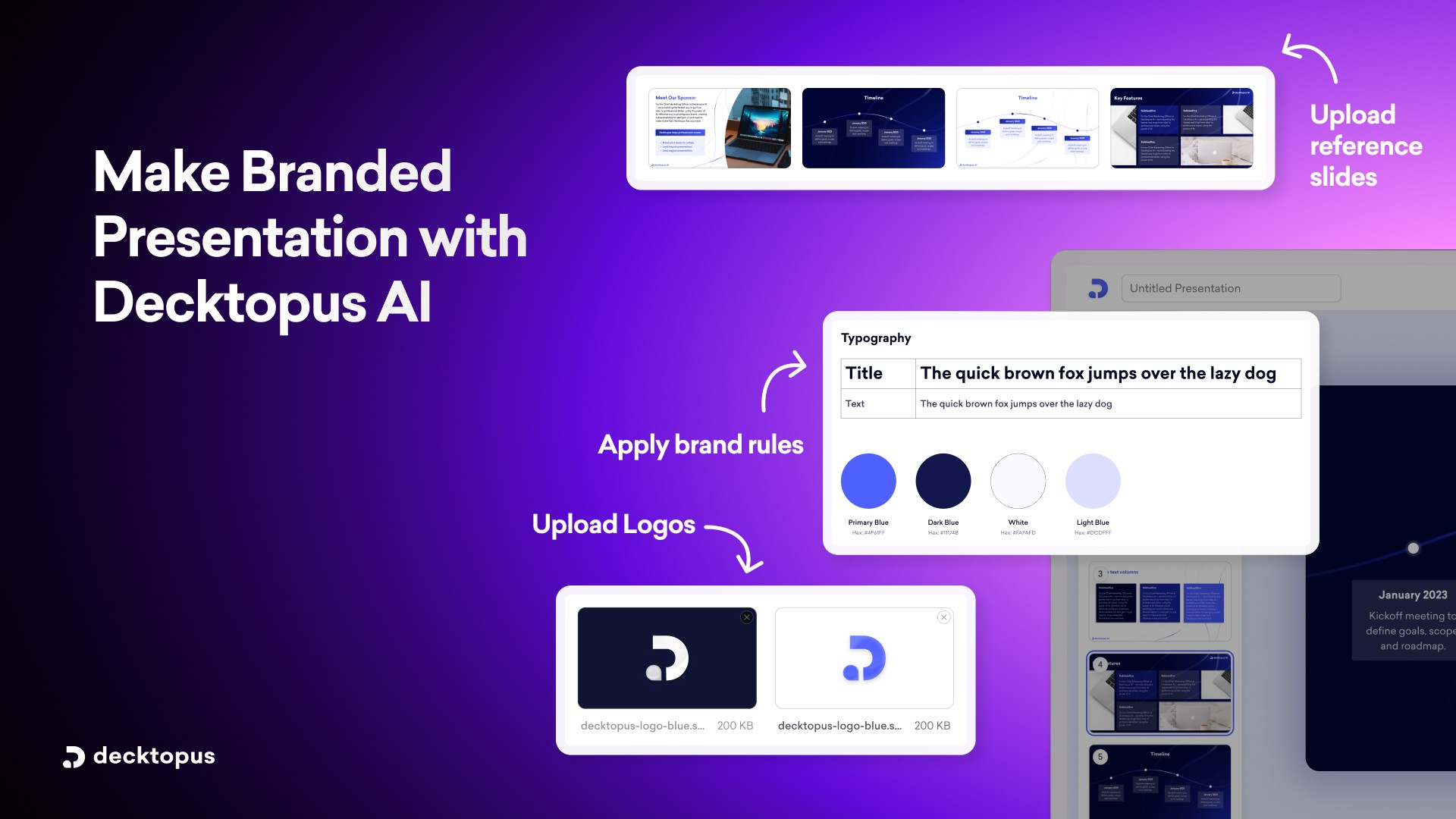
Once you’ve decided your packages, pricing, and approach, the next step is turning your offer into a professional proposal you can send to prospects. This is where Decktopus saves coaches hours of design time.
Here’s how the workflow looks:
1. Describe your topic. Type something like “Executive coaching proposal for a tech startup CEO, focused on leadership development and team scaling.” Decktopus reads your input and generates the full deck structure including About Us, Strategy, Working Schedule, Testimonials, Offer, Guarantee, Signature, and Terms.
2. Choose your style. Pick a brand, reuse a saved look, or start fresh with AI. Decktopus will ask how you want your presentation to look. You can apply a saved Brand Kit, import your brand directly from your company website URL (which pulls in your logo, colors, and fonts), or let AI generate a style from scratch.
3. Review the outline. Decktopus generates a slide structure covering the full proposal flow. Adjust the order or focus before the full deck is built.
4. Refine in the editor. Use the prompt bar with instructions like “make the offer slide more visual,” “tighten the strategy section,” or “add a coaching milestones timeline.” Brand Compliance keeps every slide on-brand.
5. Export or share. Download as PDF or PPT, share via link, or present directly to your prospect.
Your proposal looks professional, fits your brand, and is ready to send in minutes. For more on AI presentation workflows, see our guide on the best AI presentation tools. For framing the pitch underneath the proposal, see our breakdown of the sales pitch and how to write a marketing proposal step-by-step.
Ready to build your first executive coaching proposal? Get started with Decktopus.
Related posts

How to Improve Communication Skills at Work (2026 Practical Guide)
The 5 workplace communication skills that matter most, the CLEAR framework, and the AI practice method that turns weak communicators into strong ones.
Business & Strategy

Job Interview Sample Questions: How to Practice Your Answers (2026)
The 20 most common interview questions, the STAR framework for answers, and the AI practice method that turns rehearsed responses into confident ones.
Business & Strategy

How to Negotiate a Raise: The Script, Practice Method & Tips That Actually Work
A step-by-step script for negotiating a raise, common mistakes to avoid, and the AI practice method that turns a nervous ask into a confident one.
Business & Strategy