Templates & How-to
How to Make a Slideshow: The Complete Guide to Creating a Stunning Slideshow with Photos
Create stunning slideshows with photos in minutes with this easy-to-follow guide. Learn how to make a slideshow on your phone or computer, add text and captions with a video maker, and create a professional presentation that captures the attention of your audience.

Decktopus Content Team
Create stunning slideshows with photos in minutes with this easy-to-follow guide. Learn how to make a slideshow on your phone or computer, add text and captions, and create a professional presentation that captures the attention of your audience.
Looking to create a stunning slideshow for your blog or social media? This guide will show you everything you need to know, from selecting the right software to adding music and graphics. With step-by-step instructions and helpful tips, you’ll be creating professional slideshows in no time!
What is a Slideshow?
A slideshow is a digital presentation of images, videos, and music that can be used to evoke emotions and tell a story. Slideshows make it easy to celebrate important events like birthdays, anniversaries, and memorials, or to present business ideas and showcase your work.
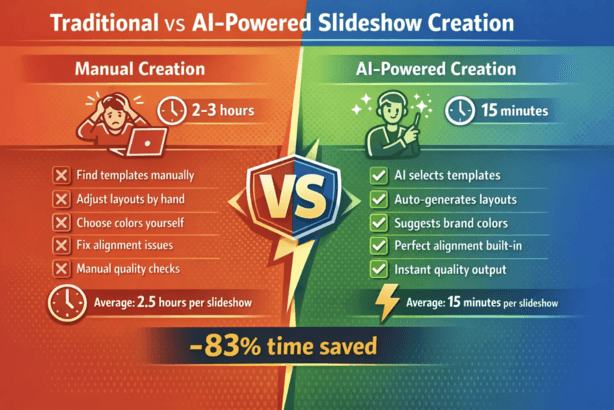
There are many software programs available that can help you create a slideshow with music, images, and visual effects. Modern AI-powered tools like Decktopus make it even easier by automatically generating layouts, suggesting designs, and helping you create professional slideshows in minutes without any design experience.
Why You Should Make a Slideshow
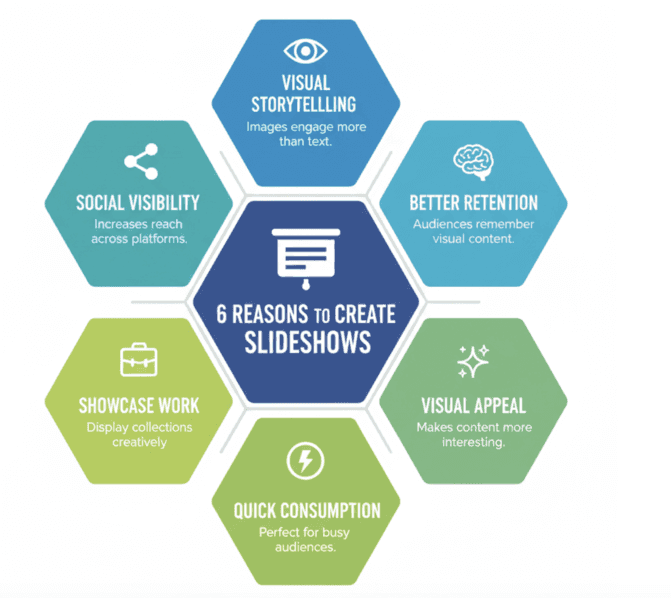
1. Visual Storytelling is More Engaging
Images are always more eye-catching than text alone. A slideshow can be an effective way to tell a story and engage more with your audience. By combining images, videos, text, and music, you create a compelling narrative that captures attention and evokes strong emotions.
2. Better Information Retention
A slideshow helps your audience better understand and remember the information presented. With the right combination of visuals, captions, and text, slideshows create a logical and visually compelling narrative that makes complex information easier to comprehend and remember.
3. Adds Visual Interest to Content
A slideshow can improve the appeal of blog posts, presentations, and social media content by creating an engaging story. Even complex topics become more interesting and digestible when presented through a well-crafted slideshow.
4. Quick Consumption for Busy Audiences
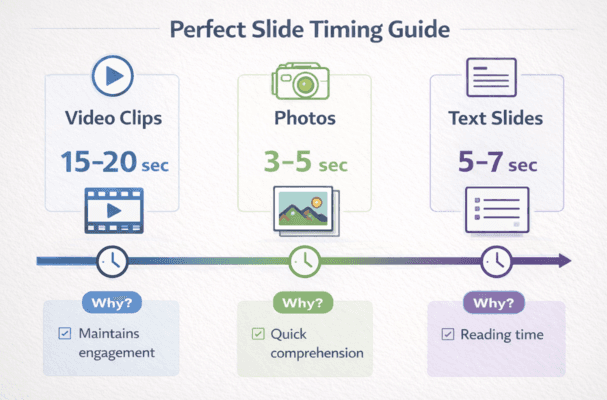
A slideshow helps keep viewers engaged even if they only have a few minutes to spare. By keeping video clips to 20 seconds or less and each photo to three to five seconds, audiences can consume the content quickly while retaining the main points.
5. Perfect for Showcasing Collections
Slideshows are an excellent way to showcase a collection of photos or other visuals in a creative manner. From portfolio presentations to product showcases, slideshows bring motion to static images, allowing them to flow naturally from one to the next.
6. Increases Visibility Across Platforms
Slideshows can be shared on social media, blog platforms, and other channels, which helps increase visibility. Whether you’re promoting a product, creating a tutorial, or showcasing your portfolio, slideshows help you reach a wider audience and garner more attention.
How to Make a Slideshow with Pictures and Music
Step 1: Choose a Professional Slideshow Maker
Creating a stunning slideshow starts with selecting the right tool. Modern slideshow makers provide customization options, access to stock media libraries, and AI-powered features that make creation faster and easier.
Top slideshow makers in 2025:
Decktopus - AI-powered slideshow creation with automatic layouts, brand kit integration, and AI prompt editing. Works entirely online with no downloads required.
Canva - User-friendly design platform with slideshow templates and extensive media library.
Adobe Express - Professional tool with advanced editing features for more complex projects.
CapCut - Mobile-first video editor popular for creating social media slideshows and short-form content.
Google Slides - Free, collaborative option that works well for basic slideshows and presentations.
Step 2: Select or Create Your Content
When creating a slideshow with pictures and music, you can use various content types including images, videos, text, icons, and logos. Choose content that’s appropriate for your slideshow’s purpose.
Content sources:
Upload your own photos and videos
Use royalty-free stock libraries (most modern tools include these)
Create graphics and text overlays
Add brand elements like logos and color schemes
With AI-powered tools like Decktopus, you can simply describe what you need and the AI will help generate layouts and suggest content arrangements. For additional stock content, platforms like Wave.video offer extensive libraries of photos, videos, and audio clips you can use in your slideshows.
Step 3: Choose the Right Format
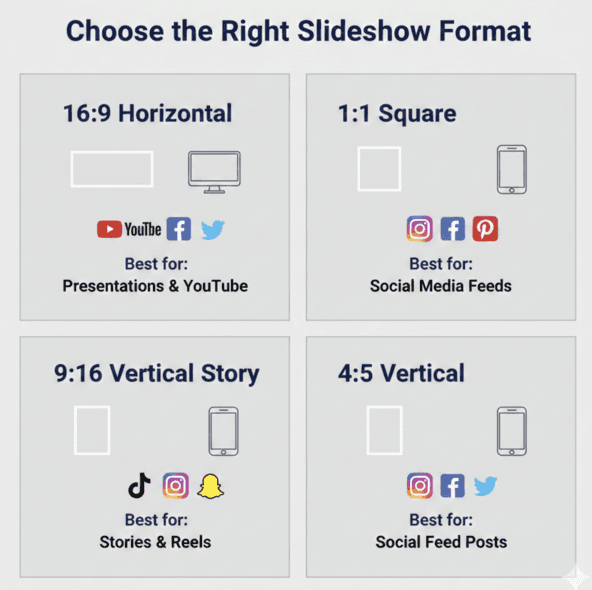
Different platforms require different slideshow formats for optimal viewing:
Horizontal (16:9) - Best for YouTube, desktop viewing, and professional presentations
Square (1:1) - Perfect for Instagram feed posts and Facebook
Vertical Story (9:16) - Ideal for Instagram Stories and Reels, TikTok, and Snapchat
Vertical (4:5) - Suitable for Facebook and Instagram feed posts
Mobile-first formats (9:16 and 4:5) have become increasingly important as most social media consumption happens on phones.
Step 4: Add the Right Amount of Images and Videos
Creating an engaging slideshow is about finding the right balance of content. Most slideshow makers offer stock libraries, but personal content often creates stronger connections with viewers.
In Decktopus, click on Edit Slide in the left menu and click on the Change Image button. You can use the royalty-free photo and gif library, or upload your own photos to your slideshow.
Best practices:
Keep video clips between 15-20 seconds
Display photos for 3-5 seconds each
Use transitions to create a cohesive flow
Don’t overcrowd slides with too many elements
If you need to create more engaging visual content, tools like Renderforest offer animation makers that can help you create dynamic slideshow elements beyond static images. For an actual video clip instead of an animated element, Higgsfield's AI creative suite lets teams use an AI Video Generator to transform a product photo into a short clip for the slideshow.
Step 5: Add Text and Branding
Text helps reinforce your message and ensures key points don’t get missed. Modern slideshow tools make it easy to add text overlays, captions, and branding elements.
How to add text effectively:
Keep text brief and readable (large fonts work best)
Use contrasting colors so text stands out against images
Add captions to videos for accessibility and silent viewing
Include your logo and brand colors for consistency
Use text to highlight important points or calls to action
Web-based platforms like Promo make it easy to add professional text overlays and branding elements to your slideshow videos, with customizable fonts and animation options.
Step 6: Choose Music
Music sets the tone for your slideshow and can significantly impact how viewers feel about your content.
Quick music selection guide:
Use royalty-free music libraries (most tools include these, or try Artlist for high-quality licensed music)
Match the music to your slideshow’s mood and purpose
Keep volume low enough that it doesn’t overpower narration or distract from content
For short slideshows, stick with one song
Avoid recognizable songs that might have specific associations
Step 7: Customize Duration, Style, and Transitions
Fine-tune your slideshow by adjusting timing, visual style, and how slides transition from one to another.
Customization options:
Adjust slide duration (typically 3-5 seconds for photos, 15-20 for videos)
Choose transition effects (fades, slides, zooms)
Modify color schemes to match your brand
Add animations to draw attention to specific elements
Preview your slideshow to ensure smooth fl
Tips and Tricks for Creating a Stunning Slideshow
Don’t Start from Scratch
You don’t need to build a slideshow from a blank canvas. With Decktopus, describe your slideshow topic and get a structured layout generated automatically. Pick a style, apply your brand kit, and start editing from a finished foundation rather than an empty slide.
If you prefer to work from an existing style, you can start from one and customize from there. Either way, the heavy lifting is already done for you.
Describe your topic and let AI generate the full structure
Pick a style: saved brand kit, import from your company website, or AI-generated
Edit any slide with the AI prompt bar or manually
Download as PDF or PowerPoint, or share via a public link
Keep It Concise
Attention spans are short, especially on social media. Keep your slideshow focused and concise.
Aim for 30-60 seconds for social media slideshows
Use 10-15 slides maximum for presentations
Each slide should have one clear message
Remove any content that doesn’t serve your main goal
Optimize for Mobile
Most people will view your slideshow on their phones. Make sure it looks good on small screens.
Use vertical or square formats for social media
Choose large, readable fonts (minimum 30pt)
Ensure important elements aren’t too close to edges
Test your slideshow on a phone before sharing
Use AI to Speed Up Creation
AI-powered slideshow makers can dramatically reduce creation time. The best AI presentation maker like Decktopus uses AI to automatically generate layouts, suggest design improvements, and maintain brand consistency across slides.
AI features to look for:
AI-powered presentation generation from a prompt
Brand kit integration for automatic color, font, and logo application
AI prompt editing to refine any slide instantly
Version history so every change is saved and reversible
Different Slideshow Formats Explained
Understanding slideshow formats helps you create content optimized for each platform:
Horizontal (16:9) is the most popular format for traditional presentations and is best suited for YouTube, Facebook video posts, and Twitter. This format works well on desktop computers and TVs.
Square (1:1) is perfect for Instagram feed posts, Facebook, and Pinterest. Square formats work especially well for slideshows with music, as they’re optimized for mobile devices and take up more screen space in social feeds.
Story (9:16) is ideal for Instagram Stories and Reels, Facebook Stories, TikTok, and Snapchat. This vertical format has become the dominant format for social media as it fills the entire mobile screen.
Vertical (4:5) is suitable for Facebook and Instagram feed posts. This format offers more vertical space than square while still fitting well in social feeds.
Frequently Asked Questions
How do I make a slideshow?
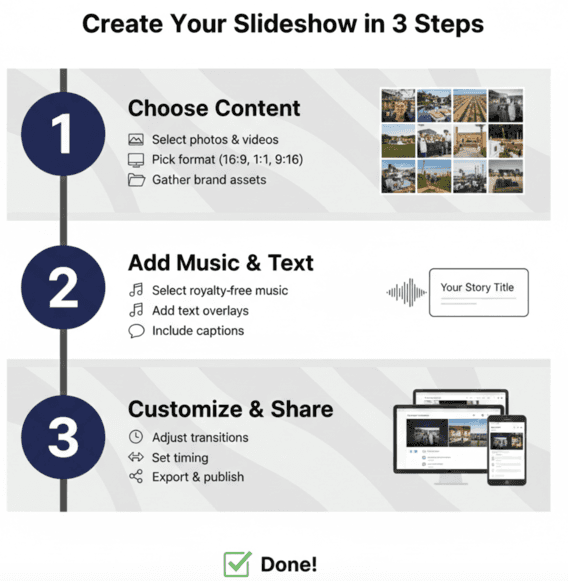
To make a slideshow, gather your photos and choose a slideshow maker like Decktopus, Canva, or Adobe Express. Add your photos to slides, arrange them in your desired order, then add text, transitions, music, and branding elements. Modern AI-powered tools can automate much of this process, creating professional slideshows in minutes.
What is the best slideshow maker?
The best slideshow maker depends on your needs. For AI-powered creation and professional results, Decktopus offers automatic layout generation, brand kit integration, and AI prompt editing. For social media content, CapCut excels at creating short-form videos. For collaborative work, Google Slides is free and easy to use. Consider factors like ease of use, features, price, and whether you need AI assistance.
What are the different formats for a slideshow?
There are four primary formats for slideshows: Horizontal (16:9) for YouTube and presentations, Square (1:1) for Instagram and Facebook feeds, Story (9:16) for Instagram Reels, TikTok, and Stories, and Vertical (4:5) for social media feeds. Choose your format based on where you’ll share the slideshow.
What are the different editing tools for a slideshow?
Modern slideshow makers include tools for adding and editing text, images, audio, and video. Most platforms offer stock libraries for media, text editing with various fonts and styles, audio mixing for music and narration, transition effects, animation tools, and branding features for logos and colors. AI-powered tools also offer automatic layout generation and design suggestions.
How long should a slideshow be?
Slideshow length depends on your purpose. For social media, aim for 30-60 seconds to maintain attention. For presentations, 5-10 minutes is typical. For memorial or celebration slideshows, 3-5 minutes works well. Keep individual photos on screen for 3-5 seconds and video clips to 15-20 seconds maximum.
Creating slideshows is an excellent way to increase the visual impact of your presentations, social media content, and storytelling. With modern AI-powered tools like Decktopus, you can create professional-looking slideshows in minutes without any design experience.
Follow the steps in this guide to choose the right format, add compelling content, select appropriate music, and customize your slideshow for maximum impact. Whether you’re creating content for social media, business presentations, or personal celebrations, a well-crafted slideshow will captivate your audience and make your message memorable.
Ready to create your first slideshow? Start with Decktopus, add your content, and let AI help you create something stunning.
Related posts

How to Build Confidence When Speaking in Public (2026 Guide)
The science behind speaking confidence, the CONFIDENT framework, and the AI practice method that turns nervous presenters into calm, credible speakers.
Templates & How-to

How to Practice Public Speaking Alone (With and Without AI)
The 4 rehearsal methods that actually build public speaking skill, why mirror practice fails, and how AI simulates a real audience for structured feedback.
Templates & How-to

How to Give a TED Talk: Delivery Tips from the Best Speakers (2026)
A structured breakdown of what makes TED talks land, the delivery framework used by top speakers, and the AI practice method that closes the gap.
Templates & How-to