Presentations
How to do a Presentation? Create Effective Presentation
How to do a presentation is essential. There are 30 million presentations made in a day in the world and 15 million of them are considered unsuccessful. In this writing, you will learn how to be in the first half.


Decktopus Content Team
An estimated 30 million presentations are given every day worldwide. Roughly half of them fail - not because the presenter didn't know the material, but because they skipped one or more steps in the actual craft of doing a presentation.
Doing a presentation is not a single skill. It's the combination of six things: choosing your goal, building the deck, structuring the argument, designing the slides, rehearsing the delivery, and closing with a specific ask. Miss any one and the whole thing sags.
This guide walks you through the full playbook - from staring at a blank slide to delivering with confidence.
You'll get:
The 6-step playbook for doing any presentation
The mistakes that quietly ruin otherwise-solid deliveries
The rehearsal method that works better than mirror practice
How to build the whole thing in a fraction of the usual time

The 6-Step Playbook
Step | What to Do |
|---|---|
1. Define the goal | Finish the sentence: "By the end, the audience will [decide/believe/do] X" |
2. Build the outline | Slide-by-slide plan before you open the deck editor |
3. Draft the deck | One idea per slide, minimal text, real evidence |
4. Design the slides | Two-three colors, sans-serif font, consistent layout |
5. Rehearse delivery | Simulated audience, structural feedback, playback |
6. Close with intent | Specific ask, memorized final line, sit down |
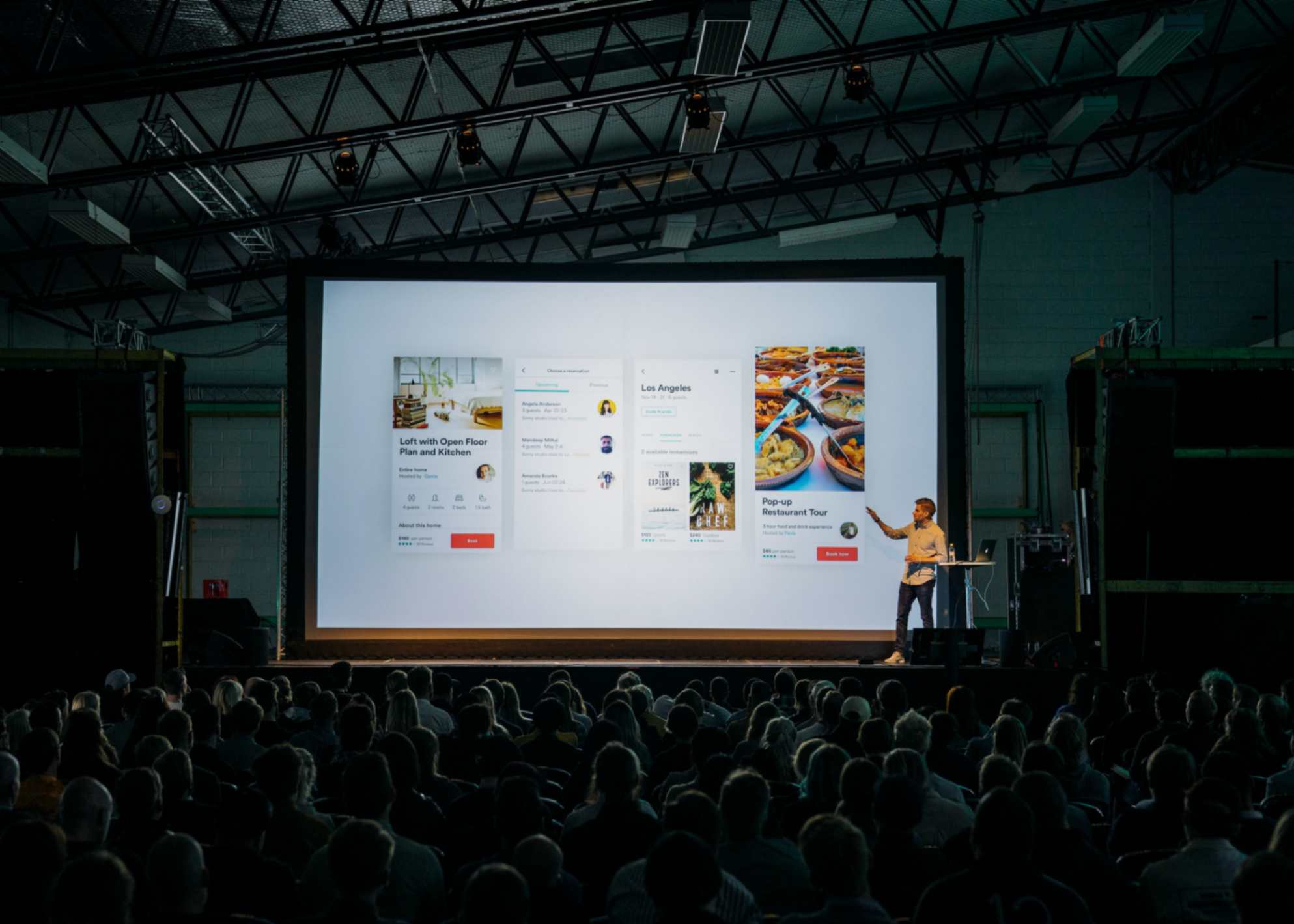
Step 1: Define the Goal
Before you type a single word, finish this sentence: "By the end of this presentation, the audience will [decide / believe / do] X."
If you can't finish that sentence, you're not ready to build. You're ready to think.
Every choice downstream - what to include, what to cut, how to structure, how to close - flows from this sentence.
Step 2: Build the Outline
Never open the deck editor first. Build the outline in a doc or on paper.
Every outline should answer:
What does the audience need to know?
In what order?
What do you want them to do?
Slide-by-slide list with a one-line description each. If a section doesn't move the audience closer to the goal, cut it. Most presentations are 30-40% filler at the outline stage.
Step 3: Draft the Deck
Once the outline is locked, the deck is mechanical.
Rules:
One idea per slide. If you have two, split it.
Minimal text. The slide is a backup singer, not the vocalist.
Real evidence. Every claim needs data, an example, or a specific story.
Visual, not decorative. Charts that make a point beat stock photos that fill space.
Step 4: Design the Slides
Design isn't decoration - it's clarity.
Two or three colors. One primary, one accent, one neutral.
Sans-serif font. Inter, Roboto, Helvetica. Avoid decorative fonts.
Consistent spacing. Same margins, same alignment across every slide.
One layout family. Don't mix six different slide styles.
Most presenters lose 3-4 hours fighting formatting. If you're using Decktopus AI, paste your homepage URL and the deck is on-brand automatically.
Step 5: Rehearse the Delivery
This is where most presenters skimp - and it's the single change that separates good from great.
Mirror practice doesn't work. The mirror doesn't react, doesn't interrupt, doesn't ask hard questions. You need three things:
A simulated audience that responds
Structural feedback on where the delivery drags
Playback so you can hear yourself

How Loop AI Delivery Coach Rehearses You
Loop is Decktopus AI's built-in rehearsal environment. Four AI agents replace the missing pieces of solo practice.
Profiler (Emily) - Simulates your target audience. Reacts the way the actual room will.
Architect (Marcus) - Scores your structure. Flags where the argument stalls or the ask is buried.
Red Team - Fires the hard questions. Turns Q&A from a nightmare into a routine part of the delivery.
Mirror - Records and plays back with metrics: pace, pauses, filler words per minute.
Most presenters see improvement after 2-3 Loop sessions. The difference is measured in fewer fillers, tighter pacing, and calmer delivery.
Rehearse your next presentation with Loop →
Step 6: Close With Intent
The last 90 seconds are 20% of what the audience remembers. Don't waste them.
Memorize the final line cold.
End with a specific ask. Not "any questions?" - "By Friday, review the doc and send one comment."
Sit down. Don't linger. The pause after the ask is the audience deciding to act.
The Mistakes That Ruin Otherwise-Solid Presentations
Reading from the slides - audience checks out immediately
Apologizing for nerves - trains the audience to notice every tremor
Monotone delivery - even brilliant content sounds like a dial tone
The vague close - wastes the moment the audience is most primed to act
Ignoring the room - you present into a void instead of adapting to it
Building the Whole Thing Faster with Decktopus AI
The traditional workflow - outline in a doc, build slides in PowerPoint, design manually, rehearse in your head - takes 8-12 hours for a solid 15-minute presentation.
Decktopus AI collapses this to 1-2 hours:
Outline generated from your topic description
Slides built with one idea each, on-brand automatically
Speaker notes generated per slide
Rehearsal built in with Loop
Export or share as PDF, PPT, or live link
Frequently Asked Questions
How do I do a presentation for the first time?
Start with the goal - one sentence on what you want the audience to think, feel, or do. Build the outline. Draft the deck. Rehearse out loud (not in your head) at least 3 times. Open with a specific hook, close with a specific ask.
How long does it take to prepare a presentation?
Rule of thumb: one hour of prep per minute of high-stakes presentation. A 15-minute presentation is ~15 hours end-to-end. Decktopus AI + Loop collapses this to 2-4 hours.
What's the biggest mistake first-time presenters make?
Skipping rehearsal. Reading through slides in your head isn't rehearsal - it's memorization. Real rehearsal requires audience feedback, either from a human or a tool like Loop.
How do I present without reading from the slides?
Put minimal text on each slide (5-10 words max). Memorize the trigger - the key point - for each slide, not the words. Speak to the audience, glance at the slide as backup.
What's the ideal presentation length?
Match the assigned time. Never longer. If it's your call: 10-20 minutes for internal decisions, 20-45 minutes for conference talks, 15-30 minutes for sales pitches.
How do I handle Q&A?
Prepare for the hard questions in advance (Loop's Red Team helps with this). If you don't know an answer, say so and follow up. Faking answers destroys credibility.
What's the best presentation software?
Decktopus AI for speed and rehearsal, PowerPoint for corporate compatibility, Google Slides for collaboration, Keynote for polish on Mac. Decktopus AI generates the full deck from a topic description in minutes.
How do I present online vs. in person?
The fundamentals are the same. Online adds tech setup, camera framing, and slightly longer pauses to account for audio delay. Test your equipment 30 minutes before you go live.
How do I stop being nervous?
You don't stop being nervous - you reappraise it. Tell yourself "I'm excited" instead of "I'm nervous." Nervousness and excitement produce identical physical symptoms. Multiple studies show this reframe measurably improves performance.
What should my first slide be?
A specific hook - statistic, story, or question. Not "Hi, my name is..." That's what your title slide is for.
What should my last slide be?
A specific ask. What you want the audience to do, by when, in one sentence.
Can AI help me do a presentation?
Yes. Decktopus AI generates the deck from your topic, applies your brand, adds speaker notes, and provides rehearsal feedback via Loop. The strategic thinking stays yours; the mechanical work is automated.
Related Posts
Stay Connected
Related posts

Best TED Talks to Improve Your Presentation Skills
Watch ten of the best TED talks for presentation skills and use a practical exercise from each to improve structure, voice, visuals, and confidence.
Presentations

Decktopus AI Best Practices: The Complete Guide, Tips and Tricks (2026)
A complete guide to using Decktopus AI effectively, from writing better prompts and reviewing outlines to rehearsing with Loop and building carousels.
Presentations
What Makes Slides Look Professional in 2026
Learn the 10 slide design principles top presenters follow, common presentation design mistakes to avoid, and how to apply every principle to your slides in minutes with AI
Presentations