Marketing
The Ultimate Marketing Plan Template: A Step-by-Step Guide to Creating a Winning Strategy
Learn what belongs in a marketing plan, the difference between strategy and plan, the 10-step framework top marketers use, and how to build one fast with Decktopus AI.


Decktopus Content Team
What Is a Marketing Plan Template?
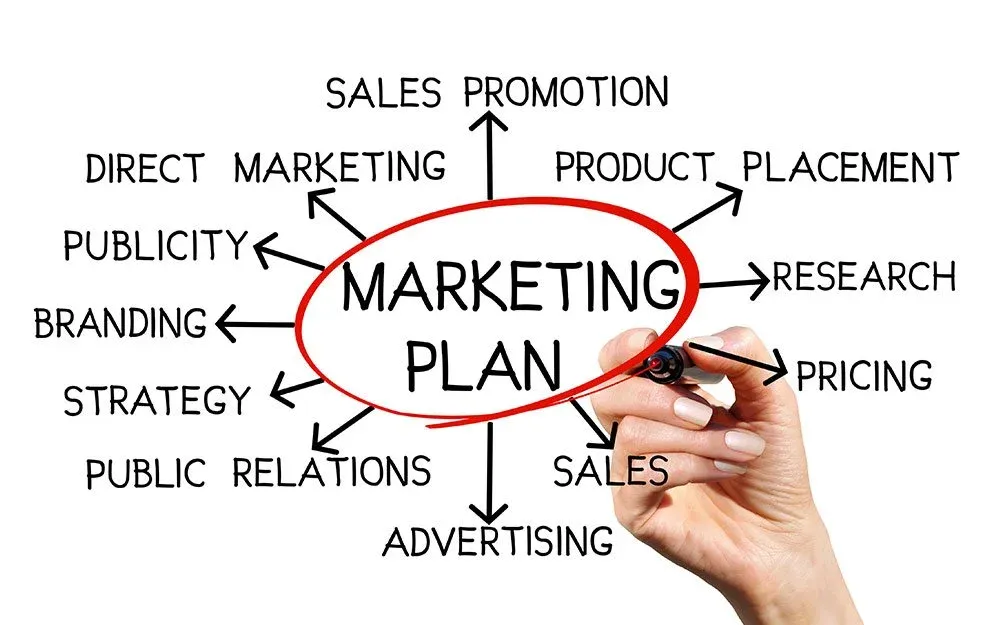
A marketing plan template is a structured document that outlines a business’s marketing goals, target audience, strategies, tactics, budget, and success metrics in one organized framework. It acts as a roadmap that turns high-level strategy into executable campaigns. The main benefit is that it aligns every stakeholder around the same objectives, timelines, and success metrics, making marketing execution faster and more accountable.
According to CoSchedule’s State of Marketing report, marketers who document their strategy are 313% more likely to report success than those who don’t. Despite this, only around 40% of marketing teams have a documented marketing plan in any given year. A structured template closes that gap in an afternoon.
Why Every Business Needs a Marketing Plan
A marketing plan is essential regardless of company size or industry. Here are the top reasons.
Clear focus and direction. A marketing plan defines precise goals, target audiences, and methods so the entire team stays aligned on shared objectives.
Strategic decision-making. With a documented plan, resource allocation, campaign prioritization, and channel selection all get made against a consistent framework rather than gut feel.
Efficient resource allocation. Marketing plans force realistic budgets and honest prioritization, which prevents overspending on low-return channels and underinvesting in the ones that convert.
Competitive advantage. A documented plan forces the team to articulate the value proposition and differentiators clearly. That’s the foundation of any defensible market position.
Target audience engagement. A plan requires you to define the audience in real detail: their pain points, buying behaviors, and messaging preferences. Campaigns built on that foundation convert at higher rates.
For more on positioning, see our guide on competitor analysis.
Marketing Strategy vs. Marketing Plan
These terms are often used interchangeably, but they’re different documents that answer different questions.
[[EMBED:PGRpdiBzdHlsZT0ib3ZlcmZsb3cteDphdXRvO21hcmdpbjoyMHB4IDAiPjx0YWJsZSBzdHlsZT0id2lkdGg6MTAwJTtib3JkZXItY29sbGFwc2U6Y29sbGFwc2U7Zm9udC1zaXplOjE1cHg7bWFyZ2luOjhweCAwIj48dGggc3R5bGU9ImJvcmRlcjoxcHggc29saWQgI2UzZTZlYTtwYWRkaW5nOjEwcHggMTRweDt0ZXh0LWFsaWduOmxlZnQ7YmFja2dyb3VuZDojZjRmNmY4O2ZvbnQtd2VpZ2h0OjYwMCI+PHRyPjx0aCBzdHlsZT0iYm9yZGVyOjFweCBzb2xpZCAjZTNlNmVhO3BhZGRpbmc6MTBweCAxNHB4O3RleHQtYWxpZ246bGVmdDtiYWNrZ3JvdW5kOiNmNGY2Zjg7Zm9udC13ZWlnaHQ6NjAwIj5GZWF0dXJlPC90aD48dGggc3R5bGU9ImJvcmRlcjoxcHggc29saWQgI2UzZTZlYTtwYWRkaW5nOjEwcHggMTRweDt0ZXh0LWFsaWduOmxlZnQ7YmFja2dyb3VuZDojZjRmNmY4O2ZvbnQtd2VpZ2h0OjYwMCI+TWFya2V0aW5nIFN0cmF0ZWd5PC90aD48dGggc3R5bGU9ImJvcmRlcjoxcHggc29saWQgI2UzZTZlYTtwYWRkaW5nOjEwcHggMTRweDt0ZXh0LWFsaWduOmxlZnQ7YmFja2dyb3VuZDojZjRmNmY4O2ZvbnQtd2VpZ2h0OjYwMCI+TWFya2V0aW5nIFBsYW48L3RoPjwvdHI+PC90aGVhZD48dGJvZHk+PHRyPjx0aCBzdHlsZT0iYm9yZGVyOjFweCBzb2xpZCAjZTNlNmVhO3BhZGRpbmc6MTBweCAxNHB4O3RleHQtYWxpZ246bGVmdDtiYWNrZ3JvdW5kOiNmNGY2Zjg7Zm9udC13ZWlnaHQ6NjAwIj5QdXJwb3NlPC90aD48dGQgc3R5bGU9ImJvcmRlcjoxcHggc29saWQgI2UzZTZlYTtwYWRkaW5nOjEwcHggMTRweDt0ZXh0LWFsaWduOmxlZnQ7dmVydGljYWwtYWxpZ246dG9wIj5Mb25nLXRlcm0gZGlyZWN0aW9uPC90ZD48dGQgc3R5bGU9ImJvcmRlcjoxcHggc29saWQgI2UzZTZlYTtwYWRkaW5nOjEwcHggMTRweDt0ZXh0LWFsaWduOmxlZnQ7dmVydGljYWwtYWxpZ246dG9wIj5TaG9ydC10ZXJtIGV4ZWN1dGlvbjwvdGQ+PC90cj48dHI+PHRoIHN0eWxlPSJib3JkZXI6MXB4IHNvbGlkICNlM2U2ZWE7cGFkZGluZzoxMHB4IDE0cHg7dGV4dC1hbGlnbjpsZWZ0O2JhY2tncm91bmQ6I2Y0ZjZmODtmb250LXdlaWdodDo2MDAiPlRpbWVmcmFtZTwvdGg+PHRkIHN0eWxlPSJib3JkZXI6MXB4IHNvbGlkICNlM2U2ZWE7cGFkZGluZzoxMHB4IDE0cHg7dGV4dC1hbGlnbjpsZWZ0O3ZlcnRpY2FsLWFsaWduOnRvcCI+MyB0byA1IHllYXJzPC90ZD48dGQgc3R5bGU9ImJvcmRlcjoxcHggc29saWQgI2UzZTZlYTtwYWRkaW5nOjEwcHggMTRweDt0ZXh0LWFsaWduOmxlZnQ7dmVydGljYWwtYWxpZ246dG9wIj5UeXBpY2FsbHkgMSB5ZWFyIG9yIHF1YXJ0ZXJseTwvdGQ+PC90cj48dHI+PHRoIHN0eWxlPSJib3JkZXI6MXB4IHNvbGlkICNlM2U2ZWE7cGFkZGluZzoxMHB4IDE0cHg7dGV4dC1hbGlnbjpsZWZ0O2JhY2tncm91bmQ6I2Y0ZjZmODtmb250LXdlaWdodDo2MDAiPkZvY3VzPC90aD48dGQgc3R5bGU9ImJvcmRlcjoxcHggc29saWQgI2UzZTZlYTtwYWRkaW5nOjEwcHggMTRweDt0ZXh0LWFsaWduOmxlZnQ7dmVydGljYWwtYWxpZ246dG9wIj5Qb3NpdGlvbmluZywgbWFya2V0IGFwcHJvYWNoLCBhbmQgY29tcGV0aXRpdmUgZWRnZTwvdGQ+PHRkIHN0eWxlPSJib3JkZXI6MXB4IHNvbGlkICNlM2U2ZWE7cGFkZGluZzoxMHB4IDE0cHg7dGV4dC1hbGlnbjpsZWZ0O3ZlcnRpY2FsLWFsaWduOnRvcCI+Q2FtcGFpZ25zLCB0YWN0aWNzLCBidWRnZXRzLCBhbmQgdGltZWxpbmVzPC90ZD48L3RyPjx0cj48dGggc3R5bGU9ImJvcmRlcjoxcHggc29saWQgI2UzZTZlYTtwYWRkaW5nOjEwcHggMTRweDt0ZXh0LWFsaWduOmxlZnQ7YmFja2dyb3VuZDojZjRmNmY4O2ZvbnQtd2VpZ2h0OjYwMCI+TGV2ZWwgb2YgZGV0YWlsPC90aD48dGQgc3R5bGU9ImJvcmRlcjoxcHggc29saWQgI2UzZTZlYTtwYWRkaW5nOjEwcHggMTRweDt0ZXh0LWFsaWduOmxlZnQ7dmVydGljYWwtYWxpZ246dG9wIj5IaWdoLWxldmVsPC90ZD48dGQgc3R5bGU9ImJvcmRlcjoxcHggc29saWQgI2UzZTZlYTtwYWRkaW5nOjEwcHggMTRweDt0ZXh0LWFsaWduOmxlZnQ7dmVydGljYWwtYWxpZ246dG9wIj5HcmFudWxhciBhbmQgYWN0aW9uYWJsZTwvdGQ+PC90cj48dHI+PHRoIHN0eWxlPSJib3JkZXI6MXB4IHNvbGlkICNlM2U2ZWE7cGFkZGluZzoxMHB4IDE0cHg7dGV4dC1hbGlnbjpsZWZ0O2JhY2tncm91bmQ6I2Y0ZjZmODtmb250LXdlaWdodDo2MDAiPldobyBvd25zIGl0PC90aD48dGQgc3R5bGU9ImJvcmRlcjoxcHggc29saWQgI2UzZTZlYTtwYWRkaW5nOjEwcHggMTRweDt0ZXh0LWFsaWduOmxlZnQ7dmVydGljYWwtYWxpZ246dG9wIj5DTU8gb3IgbGVhZGVyc2hpcCB0ZWFtPC90ZD48dGQgc3R5bGU9ImJvcmRlcjoxcHggc29saWQgI2UzZTZlYTtwYWRkaW5nOjEwcHggMTRweDt0ZXh0LWFsaWduOmxlZnQ7dmVydGljYWwtYWxpZ246dG9wIj5NYXJrZXRpbmcgbWFuYWdlciBhbmQgdGVhbTwvdGQ+PC90cj48dHI+PHRoIHN0eWxlPSJib3JkZXI6MXB4IHNvbGlkICNlM2U2ZWE7cGFkZGluZzoxMHB4IDE0cHg7dGV4dC1hbGlnbjpsZWZ0O2JhY2tncm91bmQ6I2Y0ZjZmODtmb250LXdlaWdodDo2MDAiPk91dHB1dDwvdGg+PHRkIHN0eWxlPSJib3JkZXI6MXB4IHNvbGlkICNlM2U2ZWE7cGFkZGluZzoxMHB4IDE0cHg7dGV4dC1hbGlnbjpsZWZ0O3ZlcnRpY2FsLWFsaWduOnRvcCI+U3RhdGVtZW50IG9mIGludGVudDwvdGQ+PHRkIHN0eWxlPSJib3JkZXI6MXB4IHNvbGlkICNlM2U2ZWE7cGFkZGluZzoxMHB4IDE0cHg7dGV4dC1hbGlnbjpsZWZ0O3ZlcnRpY2FsLWFsaWduOnRvcCI+RXhlY3V0YWJsZSByb2FkbWFwPC90ZD48L3RyPjwvdGJvZHk+PC90YWJsZT48L2Rpdj4=]]
In short: the strategy tells you what to do and why. The plan tells you how, when, and with what resources.
Benefits of Using a Marketing Plan Template
Organized framework. A template gives you a proven structure so nothing gets missed.
Clearly stated objectives. The template forces you to define measurable goals that everyone can align around.
Budget allocation. Dedicated budget sections prevent the common mistake of overspending in one area and underfunding another.
Market analysis structure. Built-in sections for market research, competitor analysis, and audience segmentation ensure you make decisions based on data.
Communication tool. A shared template becomes the single source of truth for the marketing team and leadership.
Brand consistency. Standardized language and messaging across channels reinforce the brand.
Time efficiency. A template saves hours of formatting so the team can focus on the actual strategy.

Key Questions to Ask When Building Your Plan
Use these prompts when you’re stuck or want to confirm you’ve covered everything.
Who is my target audience?
What problem does my product or service solve for them?
What are their goals, pain points, and objections?
How does my offering address their issues better than alternatives?
Where do they spend time online and offline?
Who are my direct and indirect competitors?
What makes my product or service different?
Which marketing channels perform best for my brand?
What is my budget and timeline?
How will I measure whether my marketing worked?

What’s Included in a Marketing Plan Template
A comprehensive marketing plan usually includes the following sections.
Executive Summary. A brief overview of the full plan including main objectives, top strategies, and expected results. For deeper guidance, see our guide on how to write an executive summary.
Business Overview. Mission, vision, values, and a summary of products or services.
Market Analysis. Industry overview, competitive analysis, and market trends. Identify the segments you plan to target.
Target Audience. Detailed audience profiles including demographics, psychographics, and buying behavior.
Marketing Goals and Objectives. Measurable, time-bound goals tied to broader business objectives.
Marketing Strategies. The main approaches you’ll use to reach your audience across channels.
Competitor Analysis. Strengths, weaknesses, and gaps for each major competitor. Compare positioning, pricing, offering, and content.
Situational Analysis (SWOT). Internal strengths and weaknesses, external opportunities and threats. See our SWOT analysis template guide for the full framework.
Budget. Allocation across channels, tools, headcount, and campaigns.
Timeline and Milestones. Start and end dates for each initiative, plus checkpoints for progress reviews.
KPIs and Success Metrics. How you’ll measure whether the plan worked.
Types of Marketing Plan Templates
Different plan types serve different goals and time horizons.
Quarterly Marketing Plan
A subset of the annual plan focused on a specific 3-month period. Ideal for businesses that want to break the yearly strategy into smaller, more adaptable chunks.
Digital Marketing Plan for SMEs
Tailored to small and mid-sized businesses. Focuses on the online channels most cost-effective for smaller budgets: SEO, email, social, and content.
Digital Marketing Plan
The broader digital-focused plan for any company size. Covers paid, organic, social, email, content, and web strategy.
Content Marketing Plan
Focused specifically on content strategy including editorial calendar, distribution, and content-led SEO. For deeper guidance, see our comprehensive content strategy guide.
Brand Marketing Plan
Focused on brand positioning, visual identity, messaging, and brand guidelines. Ensures brand consistency across every touchpoint.

The 10-Step Marketing Plan Framework
Here’s the 10-step framework used by top marketers to build a working plan from a blank page.
[[EMBED:PGRpdiBzdHlsZT0ib3ZlcmZsb3cteDphdXRvO21hcmdpbjoyMHB4IDAiPjx0YWJsZSBzdHlsZT0id2lkdGg6MTAwJTtib3JkZXItY29sbGFwc2U6Y29sbGFwc2U7Zm9udC1zaXplOjE1cHg7bWFyZ2luOjhweCAwIj48dGggc3R5bGU9ImJvcmRlcjoxcHggc29saWQgI2UzZTZlYTtwYWRkaW5nOjEwcHggMTRweDt0ZXh0LWFsaWduOmxlZnQ7YmFja2dyb3VuZDojZjRmNmY4O2ZvbnQtd2VpZ2h0OjYwMCI+PHRyPjx0aCBzdHlsZT0iYm9yZGVyOjFweCBzb2xpZCAjZTNlNmVhO3BhZGRpbmc6MTBweCAxNHB4O3RleHQtYWxpZ246bGVmdDtiYWNrZ3JvdW5kOiNmNGY2Zjg7Zm9udC13ZWlnaHQ6NjAwIj5TdGVwPC90aD48dGggc3R5bGU9ImJvcmRlcjoxcHggc29saWQgI2UzZTZlYTtwYWRkaW5nOjEwcHggMTRweDt0ZXh0LWFsaWduOmxlZnQ7YmFja2dyb3VuZDojZjRmNmY4O2ZvbnQtd2VpZ2h0OjYwMCI+RGVzY3JpcHRpb248L3RoPjwvdHI+PC90aGVhZD48dGJvZHk+PHRyPjx0ZCBzdHlsZT0iYm9yZGVyOjFweCBzb2xpZCAjZTNlNmVhO3BhZGRpbmc6MTBweCAxNHB4O3RleHQtYWxpZ246bGVmdDt2ZXJ0aWNhbC1hbGlnbjp0b3AiPjE8L3RkPjx0ZCBzdHlsZT0iYm9yZGVyOjFweCBzb2xpZCAjZTNlNmVhO3BhZGRpbmc6MTBweCAxNHB4O3RleHQtYWxpZ246bGVmdDt2ZXJ0aWNhbC1hbGlnbjp0b3AiPlNldCBjbGVhciBvYmplY3RpdmVzPC90ZD48L3RyPjx0cj48dGQgc3R5bGU9ImJvcmRlcjoxcHggc29saWQgI2UzZTZlYTtwYWRkaW5nOjEwcHggMTRweDt0ZXh0LWFsaWduOmxlZnQ7dmVydGljYWwtYWxpZ246dG9wIj4yPC90ZD48dGQgc3R5bGU9ImJvcmRlcjoxcHggc29saWQgI2UzZTZlYTtwYWRkaW5nOjEwcHggMTRweDt0ZXh0LWFsaWduOmxlZnQ7dmVydGljYWwtYWxpZ246dG9wIj5JZGVudGlmeSB0YXJnZXQgYXVkaWVuY2U8L3RkPjwvdHI+PHRyPjx0ZCBzdHlsZT0iYm9yZGVyOjFweCBzb2xpZCAjZTNlNmVhO3BhZGRpbmc6MTBweCAxNHB4O3RleHQtYWxpZ246bGVmdDt2ZXJ0aWNhbC1hbGlnbjp0b3AiPjM8L3RkPjx0ZCBzdHlsZT0iYm9yZGVyOjFweCBzb2xpZCAjZTNlNmVhO3BhZGRpbmc6MTBweCAxNHB4O3RleHQtYWxpZ246bGVmdDt2ZXJ0aWNhbC1hbGlnbjp0b3AiPkNvbmR1Y3QgYSBTV09UIGFuYWx5c2lzPC90ZD48L3RyPjx0cj48dGQgc3R5bGU9ImJvcmRlcjoxcHggc29saWQgI2UzZTZlYTtwYWRkaW5nOjEwcHggMTRweDt0ZXh0LWFsaWduOmxlZnQ7dmVydGljYWwtYWxpZ246dG9wIj40PC90ZD48dGQgc3R5bGU9ImJvcmRlcjoxcHggc29saWQgI2UzZTZlYTtwYWRkaW5nOjEwcHggMTRweDt0ZXh0LWFsaWduOmxlZnQ7dmVydGljYWwtYWxpZ246dG9wIj5EZXZlbG9wIGtleSBzdHJhdGVnaWVzPC90ZD48L3RyPjx0cj48dGQgc3R5bGU9ImJvcmRlcjoxcHggc29saWQgI2UzZTZlYTtwYWRkaW5nOjEwcHggMTRweDt0ZXh0LWFsaWduOmxlZnQ7dmVydGljYWwtYWxpZ246dG9wIj41PC90ZD48dGQgc3R5bGU9ImJvcmRlcjoxcHggc29saWQgI2UzZTZlYTtwYWRkaW5nOjEwcHggMTRweDt0ZXh0LWFsaWduOmxlZnQ7dmVydGljYWwtYWxpZ246dG9wIj5DcmVhdGUgdGFjdGljYWwgcGxhbnM8L3RkPjwvdHI+PHRyPjx0ZCBzdHlsZT0iYm9yZGVyOjFweCBzb2xpZCAjZTNlNmVhO3BhZGRpbmc6MTBweCAxNHB4O3RleHQtYWxpZ246bGVmdDt2ZXJ0aWNhbC1hbGlnbjp0b3AiPjY8L3RkPjx0ZCBzdHlsZT0iYm9yZGVyOjFweCBzb2xpZCAjZTNlNmVhO3BhZGRpbmc6MTBweCAxNHB4O3RleHQtYWxpZ246bGVmdDt2ZXJ0aWNhbC1hbGlnbjp0b3AiPkFsbG9jYXRlIGJ1ZGdldDwvdGQ+PC90cj48dHI+PHRkIHN0eWxlPSJib3JkZXI6MXB4IHNvbGlkICNlM2U2ZWE7cGFkZGluZzoxMHB4IDE0cHg7dGV4dC1hbGlnbjpsZWZ0O3ZlcnRpY2FsLWFsaWduOnRvcCI+NzwvdGQ+PHRkIHN0eWxlPSJib3JkZXI6MXB4IHNvbGlkICNlM2U2ZWE7cGFkZGluZzoxMHB4IDE0cHg7dGV4dC1hbGlnbjpsZWZ0O3ZlcnRpY2FsLWFsaWduOnRvcCI+RGVmaW5lIG1ldHJpY3MgYW5kIEtQSXM8L3RkPjwvdHI+PHRyPjx0ZCBzdHlsZT0iYm9yZGVyOjFweCBzb2xpZCAjZTNlNmVhO3BhZGRpbmc6MTBweCAxNHB4O3RleHQtYWxpZ246bGVmdDt2ZXJ0aWNhbC1hbGlnbjp0b3AiPjg8L3RkPjx0ZCBzdHlsZT0iYm9yZGVyOjFweCBzb2xpZCAjZTNlNmVhO3BhZGRpbmc6MTBweCAxNHB4O3RleHQtYWxpZ246bGVmdDt2ZXJ0aWNhbC1hbGlnbjp0b3AiPlNldCB0aW1lbGluZSBhbmQgbWlsZXN0b25lczwvdGQ+PC90cj48dHI+PHRkIHN0eWxlPSJib3JkZXI6MXB4IHNvbGlkICNlM2U2ZWE7cGFkZGluZzoxMHB4IDE0cHg7dGV4dC1hbGlnbjpsZWZ0O3ZlcnRpY2FsLWFsaWduOnRvcCI+OTwvdGQ+PHRkIHN0eWxlPSJib3JkZXI6MXB4IHNvbGlkICNlM2U2ZWE7cGFkZGluZzoxMHB4IDE0cHg7dGV4dC1hbGlnbjpsZWZ0O3ZlcnRpY2FsLWFsaWduOnRvcCI+U3BlY2lmeSB0ZWFtIHJlc3BvbnNpYmlsaXRpZXM8L3RkPjwvdHI+PHRyPjx0ZCBzdHlsZT0iYm9yZGVyOjFweCBzb2xpZCAjZTNlNmVhO3BhZGRpbmc6MTBweCAxNHB4O3RleHQtYWxpZ246bGVmdDt2ZXJ0aWNhbC1hbGlnbjp0b3AiPjEwPC90ZD48dGQgc3R5bGU9ImJvcmRlcjoxcHggc29saWQgI2UzZTZlYTtwYWRkaW5nOjEwcHggMTRweDt0ZXh0LWFsaWduOmxlZnQ7dmVydGljYWwtYWxpZ246dG9wIj5SZWd1bGFyIHJldmlldyBhbmQgdXBkYXRlPC90ZD48L3RyPjwvdGJvZHk+PC90YWJsZT48L2Rpdj4=]]
1. Set Clear Objectives
Set SMART goals: specific, measurable, achievable, relevant, and time-bound. Every objective should tie directly to a business goal (revenue, pipeline, retention, market share).
2. Identify Target Audience
Define your audience with real specificity. Demographics, psychographics, behavior, and pain points. Vague audiences produce vague campaigns.
3. Conduct a SWOT Analysis
Analyze internal strengths and weaknesses, then external opportunities and threats. Use the findings to shape the rest of the plan.
4. Develop Key Strategies
Build the overarching strategies that will move you toward each objective. Options include market penetration, product development, diversification, and repositioning.
5. Create Tactical Plans
Translate each strategy into specific tactics. Email campaigns, paid ads, SEO, content production, partnerships, events. This is where the plan becomes actionable.
6. Allocate Budget
Assign budget to each tactic based on expected return. Factor in advertising costs, tools, freelancers, and headcount.
7. Define Metrics and KPIs
Choose measurable indicators that map to your objectives. For example: MQLs, SQLs, CAC, LTV, ROAS, engagement rate, or brand mention volume.
8. Set Timeline and Milestones
Add start and end dates to each initiative. Set milestones to review progress every 30, 60, or 90 days.
9. Specify Team Responsibilities
Assign an owner to every tactic. Ambiguity kills execution.
10. Regular Review and Update
Schedule quarterly or monthly reviews. Compare actual results to KPIs, adjust tactics that aren’t working, and reallocate budget as needed.
How to Build Your Marketing Plan with Decktopus AI
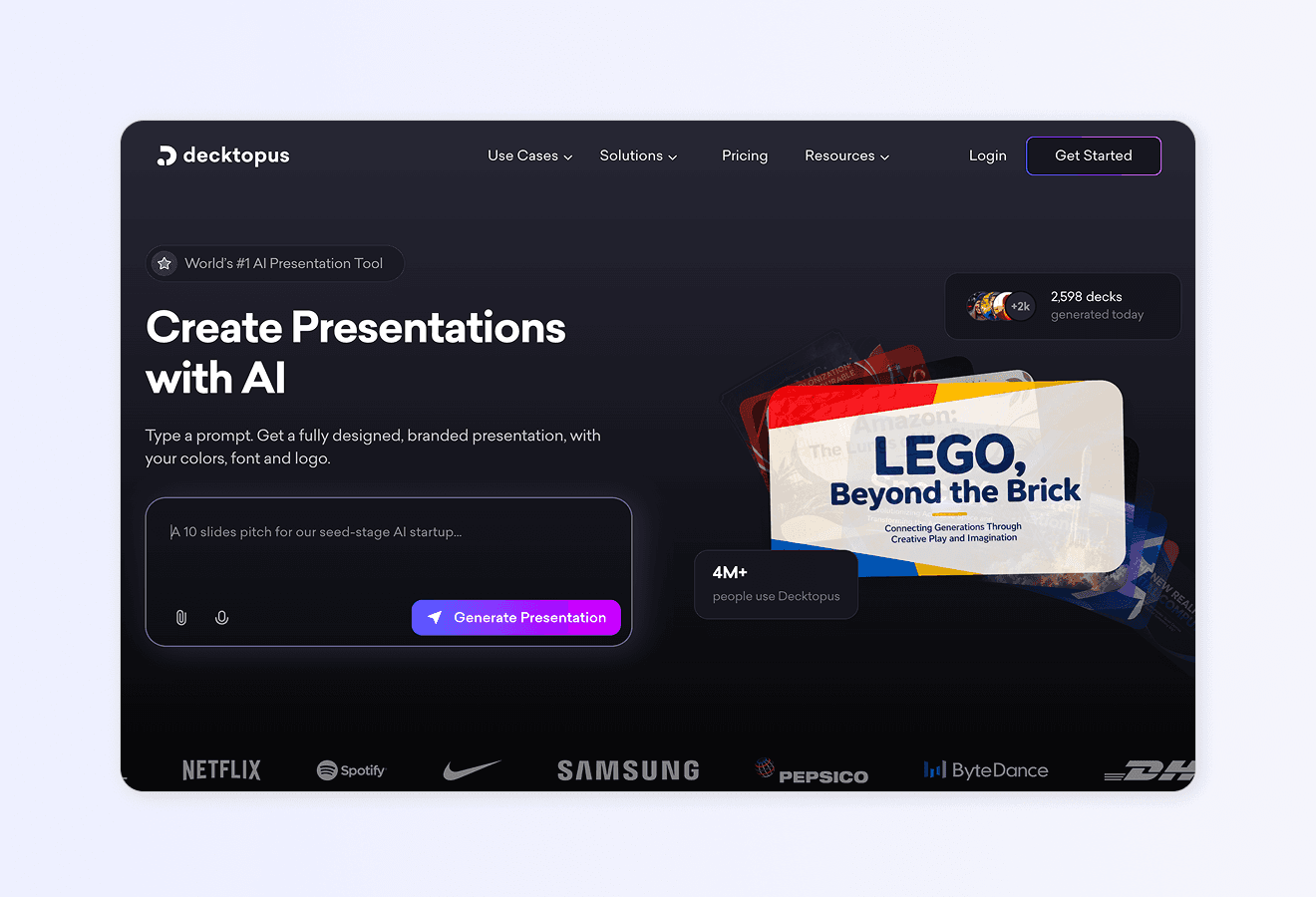
You have the framework. Now build the deliverable. Decktopus generates a full marketing plan presentation from a short description in minutes.
1. Describe your topic. Type something like “2026 Q1 digital marketing plan for a mid-market B2B SaaS company.” Or upload your strategy doc, audience research, or brand guidelines as a supporting file. If you already have an older marketing plan deck, Decktopus’s Beautify feature can redesign it or use it as a source to build a new version.
2. Choose your style. Pick a brand, reuse a saved look, or start fresh with AI. Decktopus will ask how you want your presentation to look. You can apply a saved brand, import your brand directly from your company website URL (which pulls in your logo, colors, and fonts), or let AI generate a style from scratch.
3. Review the outline. Decktopus generates a slide-by-slide structure covering executive summary, market analysis, target audience, SWOT, strategies, tactics, budget, KPIs, and timeline. Adjust before the full deck is built.
4. Refine with Edit with AI. Click Edit with AI and type instructions like “make the SWOT slide into a 2x2 grid,” “add a budget breakdown table by channel,” or “add a Gantt-style timeline for the year.” All edits are tracked with unlimited version history.
5. Export or share. Download as PDF, PPT, or PNG. Share via live link (any updates you make after sharing automatically appear at the same link, so stakeholders always see the latest version). Or present directly.
You can also use the Loop AI Delivery Coach during rehearsal to get real-time feedback before presenting your plan to leadership.
For broader guidance, see our roundup of the best AI presentation tools, our how to do a presentation guide, and our business proposal guide.
Ready to build a marketing plan that gets approved? Get started with Decktopus.
Frequently Asked Questions
What is a marketing plan template?
A marketing plan template is a structured document that outlines a business’s marketing objectives, target audience, strategies, tactics, budget, and success metrics. It converts a marketing strategy into an executable roadmap.
Why is a marketing plan important for businesses?
A marketing plan aligns teams around shared goals, ensures budget goes to the channels that convert, and creates accountability for results. Marketers who document a strategy are 313% more likely to report success than those who don’t.
What should be included in a marketing plan template?
Executive summary, business overview, market analysis, target audience profiles, marketing goals, strategies, competitor analysis, SWOT analysis, tactical plans, budget, timeline, and KPIs.
How do I create a marketing plan using a template?
Follow the 10-step framework: set objectives, identify audience, conduct SWOT, develop strategies, create tactical plans, allocate budget, define KPIs, set timeline, assign responsibilities, and review regularly. Tools like Decktopus can generate the full presentation deck from your inputs in minutes.
Can I use a marketing plan template for different types of businesses?
Yes. The core sections apply to B2B, B2C, service, product, startup, and enterprise businesses. Adjust the tactics and channels to fit your industry and audience.
What is the difference between a marketing plan and a marketing strategy?
A marketing strategy is a long-term document (3 to 5 years) that defines positioning, market approach, and competitive edge. A marketing plan is a short-term document (usually annual or quarterly) that translates the strategy into specific campaigns, budgets, and timelines.
How often should I update my marketing plan?
Review the plan monthly or quarterly against your KPIs. Update tactics that aren’t performing, reallocate budget as needed, and refresh the full plan annually or when major market conditions change.
What are the most common marketing plan mistakes?
Vague objectives, undefined target audience, no budget allocation, no clear KPIs, no accountability owners, and no scheduled review cadence. A structured template prevents all of these.
How long should a marketing plan be?
Most annual marketing plans run 15 to 30 slides or 10 to 25 pages. Quarterly plans are shorter, usually 8 to 15 slides. The right length is whatever covers every section clearly without padding.
Related posts

How AI Voice Agents Help Sales Teams Prepare and Deliver Better Presentations
Learn how AI voice agents help sales teams turn call insights into focused slides, stronger delivery, and more confident customer presentations at every stage.
Marketing

Instagram Carousel Size & Dimensions Guide (2026)
Instagram carousel size in 2026: exact dimensions for square, portrait, and landscape, plus file limits and safe zones, verified across sources.
Marketing

LinkedIn Carousel Size, Dimensions & Format Guide 2026
LinkedIn carousel size in 2026: exact dimensions, file limits, aspect ratios, and formatting rules so your slides never get cropped.
Marketing