Business & Strategy
Preventing Employee Burnout at Scale: 5 Effective Strategies
Discover 5 proven strategies to prevent employee burnout in large teams. Learn to spot warning signs, manage workloads effectively, and create a supportive workplace culture that reduces stress.


Decktopus Content Team
In the past year, 9 out of 10 adults in the UK have experienced high levels of pressure or stress at work. This shows that burnout is not just a word that people hear floating around, but it is a very real issue that is all around them.
Organizations have a responsibility to consider the mental wellbeing of their employees, and if they fail to do so, it can quickly have a negative impact on their company culture.
In fact, 33% of UK workers named burnout as their primary reason for resigning – an alarming statistic that shows that something needs to be done.
The Signs of Employee Burnout
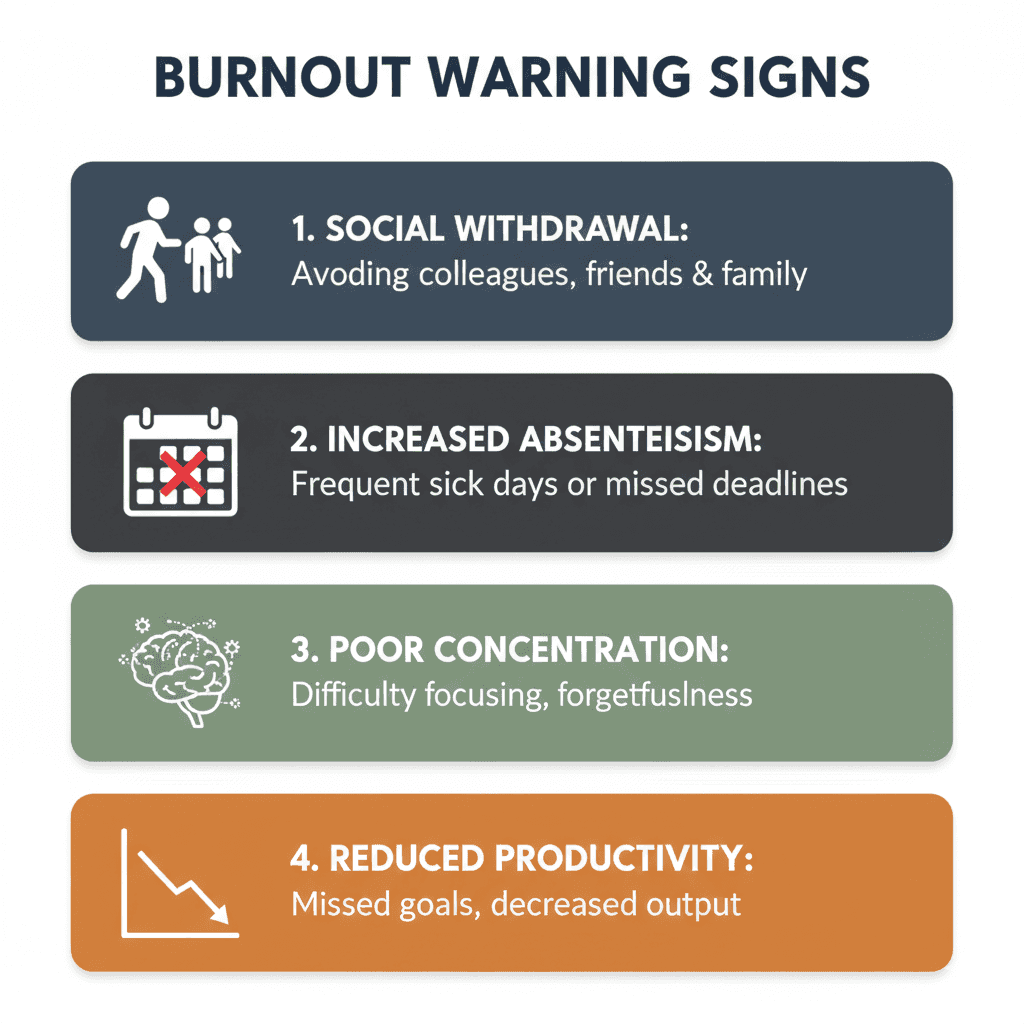
Although so many people face burnout at some point in their careers, the signs still often go unnoticed, especially in organisations with large numbers of employees.
Burnout is a gradual process that often builds up as time goes on, so the signs do not just show up all of a sudden.
Here are some of the key things to look out for:
Withdrawn behaviour: If an employee starts being less forthcoming with ideas, shares less opinions during meetings, or has started to stay out of general office chit-chat, these are all big indicators of burnout and show that they’re disengaging from their team.
More absences than normal: Burnout is now costing businesses in the UK an estimated £102 billion annually. If an employee feels physically exhausted from the mental burnout that has been building up, it is likely to result in them needing to take more time off work.
Poor concentration: Once an employee’s stress levels reach their peak, their brain is likely to have a hundred and one things going on inside, so they’re unlikely to be able to focus at work and may appear as if they are not paying attention to what is happening around them.
Reduced productivity: When energy levels drop and motivation is at an all-time low, the quality of work is bound to take a hit. If an employee who has been busy starts to become noticeably less productive, burnout is a likely cause.
5 Ways to Prevent Burnout in Large Teams
The HR team within an organization has a responsibility to make sure that employees are supported in their roles. If people are overworked and are facing high stress levels, not only does this have an impact on their mental wellbeing, but it can also result in disruption to the team around them.
Let’s discuss five of the most effective strategies that can be implemented to help prevent burnout in large organizations.
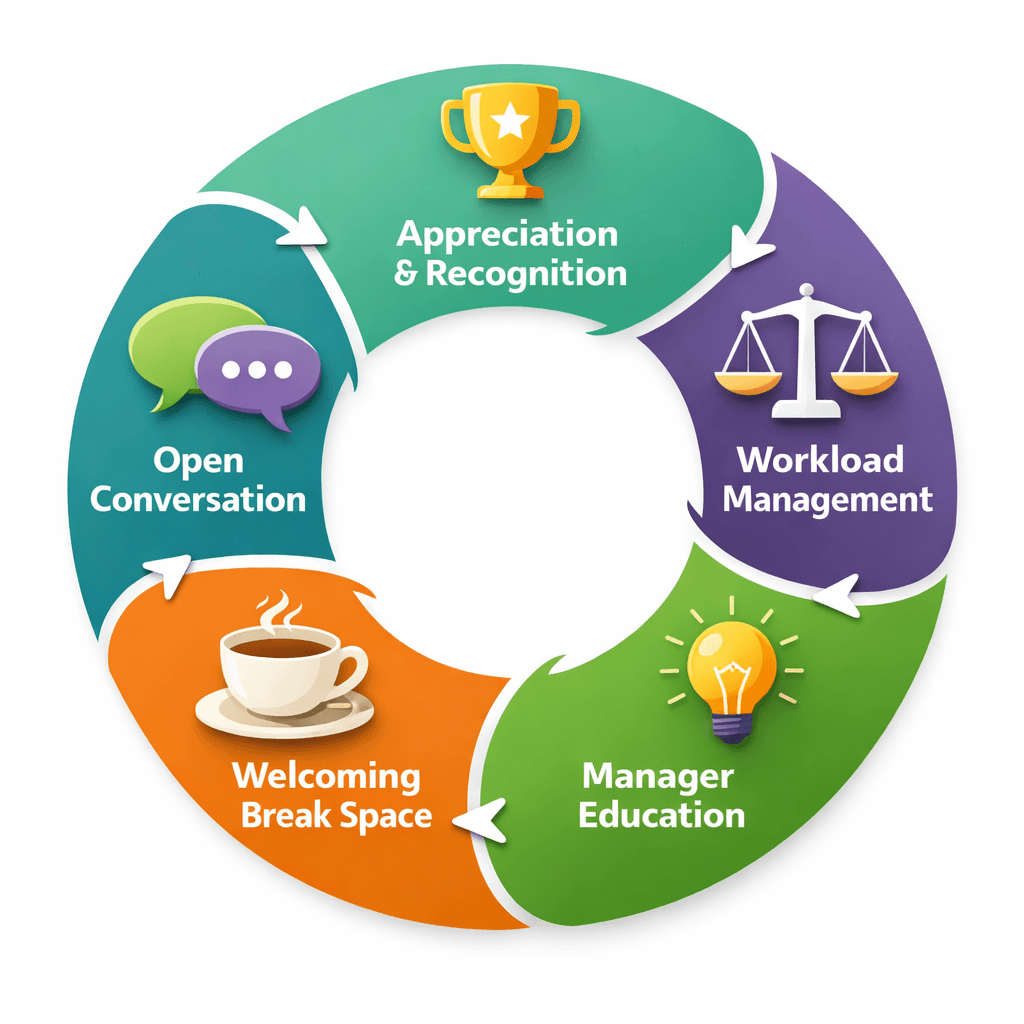
1. Show appreciation for hard work
If an employee has been battling to meet a tight deadline or has tackled a tough client meeting, acknowledgement of their efforts can go a long way.
In large organisations, introducing a peer-to-peer employee recognition scheme can be particularly powerful as it involves people from across the entire workforce.
Creating a team dynamic that celebrates small wins and appreciates those who have gone above and beyond helps boost morale, build working relationships, and maintain motivation.
2. Manage employee workloads
When so many people are working on a project, it can be easy for managers to not see how much pressure is put on certain individuals.
Using scheduling software not only helps better manage project deadlines, but also ensures that nobody’s calendar gets overfilled. Only being able to book in work that fits within an employee’s working hours means everybody has a fair and realistic workload to tackle.
Staff scheduling software like Homebase that shows real-time availability catches an overloaded week before it's assigned, instead of a manager discovering the imbalance after deadlines slip.
3. Educate managers on burnout
Managers are often so busy with their own duties that they can fail to take a step back and consider how a high workload is affecting the mental wellbeing of their team.
To avoid this, managers should undergo a training session or workshop that educates them on burnout. Teaching them how to spot the signs and detailing what steps can be taken to address the situation can build a better support system for employees.
4. Create a welcoming break space
Breaks are a requirement at work, but many employees end up skipping them or just eating lunch at their desk. This can lead to fatigue and disengagement if they are not taking the time away from work that they need to rest.
Turning break spaces into welcoming areas that encourage time away from screens and chit-chat among colleagues can help create a more balanced work environment which shows that breaks are encouraged.
5. Start a conversation
Mental health is still a taboo subject for many, and a lot of employees will feel uncomfortable discussing their stress or worries in a professional environment.
Organisations should make sure that employees have someone to go to if they are struggling. Whether this is their manager, a member of the HR team, or a designated wellbeing team, being able to seek help will lift the weight off their shoulders.
One-on-one appraisals are also a good opportunity for employees to open up, so including a prompt about workload and burnout in the discussion can help get the conversation started.
Maintaining a Happier Workforce
Tight deadlines and stressful days are inevitable, but if they become a daily occurrence, it is not a sustainable way of working.
Creating a work environment that prevents burnout by avoiding overfilling schedules, encouraging regular breaks, making managers aware of the signs, and creating an accessible support system means that employees feel valued and heard in the workplace.
Related posts

How to Improve Communication Skills at Work (2026 Practical Guide)
The 5 workplace communication skills that matter most, the CLEAR framework, and the AI practice method that turns weak communicators into strong ones.
Business & Strategy

Job Interview Sample Questions: How to Practice Your Answers (2026)
The 20 most common interview questions, the STAR framework for answers, and the AI practice method that turns rehearsed responses into confident ones.
Business & Strategy

How to Negotiate a Raise: The Script, Practice Method & Tips That Actually Work
A step-by-step script for negotiating a raise, common mistakes to avoid, and the AI practice method that turns a nervous ask into a confident one.
Business & Strategy