Business & Strategy
What is an Executive Summary?: A Guide to How to Write an Effective Executive Summary
An executive summary is a cruical step for any businesses to take. However, writing executive summaries can be challenging. This post will guide you in this proccess, with the Decktopus!

Decktopus Content Team
An executive summary is a concise and tabloid document that is derived from a longer and comprehensive document. Intended for busy readers, the goal of an ideal executive summary is to deliver the main points, create a shared understanding, and convince the reader to read the full report.

However, creating an executive summary can be challenging. As its name suggests, an executive summary should be short but should include enough information as well. Thus, most businesses, entrepreneurs, and employees use executive summary templates.
In this comprehensive guide, we will walk through what an executive summary is, how to write an executive summary, provide examples of executive summary and executive summary template. With Decktopus, you can easily compose an executive summary within a few seconds!
What is an Executive Summary?
An executive summary or management summary is the overview of a longer and more complicated report. Executive summaries include key points of the report, such as the purpose, major points, results, conclusion, practical implications, discussions, and recommendations mentioned in the report.
An executive summary can be created for many types of reports.
You can create an executive summary of:
Investment Proposal
Project Proposal/ Plan
Research Review
Annual/ Monthly Report
The definition of an executive summary is based on the easiness and function of it. With an executive summary, higher-ups, department leaders, C-level executives, lenders, or supervisors can quickly review the concepts, make decisions, and create action plans. When paired with the best pitch deck generators, you can turn that summary into a full investor-ready presentation in minutes.

What is the difference between executive summary vs. business plan?
All business plans include an executive summary at the beginning of the report. An executive summary is the most important part of the business plan. While reading the executive summary, the reader will decide whether the report is worth reading.
Thus, an executive summary should be intriguing and attention-grabbing.
A business plan is a roadmap for your business. This report consists of the company’s objectives, milestones, progress, and future plans. The report also includes how to meet these objectives and related strategies.
The revisions on the existing strategies and how to implement new strategies about management and marketing should also be included.
Components of a business plan can be listed as:
Mission and Purpose
Company Description and Management
Products or Services Provided
Industry Analysis
Target Market
Marketing Plan
Implementation Timeline
Financial Summary and Funding
These components are explained in detail in a business plan.
All business plans include an executive summary. However, not all executive summaries belong to a business plan.
As it can be understood, a business plan is a comprehensive report on many dimensions of the business. In contrast, an executive summary is the short version of the business plan, including the same headlines. An executive summary is added at the beginning of the business plan as an extensive outline or table of contents.
What is the difference between executive summary vs. abstract?
Abstracts are similar to executive summaries. However, abstracts are more common in science and research. Typically, abstracts are prepared to inform rather than persuade.
An executive summary is an introduction but also a stand-alone document that can be presented separately. It is an informative opening statement for your business plan. But it can also be separated from the business plan to apply for funding or present to the investors.
Purpose of An Executive Summary
You may ask yourself why even write an executive summary. After all, you have already combined a longer report. However, an executive summary has many functions:
Time saver: An executive summary is shorter and quicker to read than the whole report.
Outline: An executive summary will outline all the important parts of the document.
Clarity: Executive summaries highlight the key points. Thus allowing the reader to have a preliminary understanding of the subject before reading the whole report.
Convince: An executive summary should be able to convince readers to read the report it is based on. After looking at your summary, an investor or stakeholder should be interested enough in your plan to read the whole report.
An executive summary is essential for communication inside a company, business, or organization. It is also useful for stakeholders and investors to take a look at the proposal on a larger scale before diving into it in more detail.

Thus, an executive summary, also known as a speed read, will make you stand out from others. Everyone can create a long business plan. However, creating an executive summary will show your skills and knowledge.
An executive summary can be thought of as an elevator pitch. If you can give enough information in a short paper, then the audience will understand that you are truly grasping this subject.
How to Write an Executive Summary?
As mentioned, an executive summary should highlight the document’s main topics. So, there are different types of executive summaries. However, an executive summary should include everything in the business plan or project proposal.
Generally, an exemplary summary includes:
Introduction
Company Description
Need/ Problem
Product/ Services
Competition/ Market Analysis
Marketing Plan
Resources
Financial Planning/ Funding and Budget
Timeline
Conclusion
Each main point should be explained in a short paragraph. An executive summary is usually one to two pages. It shouldn’t be longer than 1000 words. Of course, these are flexible! Depending on your content, you may create a longer or shorter summary. However, be careful that the order of the topics in the full report and the order of the topics in the executive summary are the same!
1) Introduction:
A brief introduction for the purpose of the summary should be given. This short paragraph should include background information on the project or the plan being summarized.
2) Company Description:
The description of the company should include the name of the company, its location, and its mission. Also, you should add the management team, advisors, and the team working on the mentioned project. It is also a good idea to include a brief history of the company, to familiarize readers with previous works of the company.
3) Need/ Problem:
In this section, talk about the gap in the market. This part should identify what kind of need or problem your product will address. What policy problem are your services needed for, and why is this problem important enough to spend resources on. Describe the urgency and need for the solution of this problem in the market.
4) Product/ Services:
Explain what your product or service is. You should explain how this product will correspond or solve the existing problem in the market. You should give justification for your product as the unique solution for the problem and support this with research or feasibility studies.
5) Competition/ Market Analysis:
In this part, you should identify the main competitors in the market. By analyzing their strengths and weaknesses, you can implement new strategies as well. You should describe the market size and growth opportunities present in this industry.

6) Marketing Plan:
In this section, you should outline ley marketing strategies. Marketing strategies should be based on the target audience, marketing platforms, and channels. In addition, you can include pricing strategy in this part as well. Lastly, you can highlight how to measure the effectiveness of the marketing strategies. This can be changes in the number of users or products sold after implementing a marketing strategy.
7) Resources:
You should be able to identify what resources you have now and what you need in the future. These include human capital (team members, advisors), physical resources (equipment, facilities), and technical resources (software, tools). Depending on your project, you may highlight some more than others.
8) Financial Planning/ Funding and Budget:
In this part, you should answer the necessary budget for your project or business. Create a financial plan on how much financial support you need and how you plan to use these resources. In addition, mention your current budget, funding, and support if you have any on this business or project plan. Don’t forget to mention how readers will benefit from supporting this business plan.
9) Timeline:
In this part, give a time window for the completion of your project or business. You can give information on how long the service/ product creation will take when to apply specific marketing strategies, and how much time is needed to reach specific milestones. You can easily create a visually pleasing timeline with the timeline templates by Decktopus!
10) Conclusion:
In this last section, you should end strongly with a few sentences. You should encourage readers to take a look at the longer business plan and invest in your project. It may be favorable to imply the value and potential favors of this project/ business. Call to action!
Tips for Writing an Executive Summary
[[EMBED:PGRpdiBzdHlsZT0ib3ZlcmZsb3cteDphdXRvO21hcmdpbjoyMHB4IDAiPjx0YWJsZSBzdHlsZT0id2lkdGg6MTAwJTtib3JkZXItY29sbGFwc2U6Y29sbGFwc2U7Zm9udC1zaXplOjE1cHg7bWFyZ2luOjhweCAwIj48dHI+PHRoIHN0eWxlPSJib3JkZXI6MXB4IHNvbGlkICNlM2U2ZWE7cGFkZGluZzoxMHB4IDE0cHg7dGV4dC1hbGlnbjpsZWZ0O2JhY2tncm91bmQ6I2Y0ZjZmODtmb250LXdlaWdodDo2MDAiPlRpcHM8L3RoPjx0aCBzdHlsZT0iYm9yZGVyOjFweCBzb2xpZCAjZTNlNmVhO3BhZGRpbmc6MTBweCAxNHB4O3RleHQtYWxpZ246bGVmdDtiYWNrZ3JvdW5kOiNmNGY2Zjg7Zm9udC13ZWlnaHQ6NjAwIj5BcHBsaWNhdGlvbjwvdGg+PC90cj48dHI+PHRkIHN0eWxlPSJib3JkZXI6MXB4IHNvbGlkICNlM2U2ZWE7cGFkZGluZzoxMHB4IDE0cHg7dGV4dC1hbGlnbjpsZWZ0O3ZlcnRpY2FsLWFsaWduOnRvcCI+UmV2aWV3IGV4ZWN1dGl2ZSBzdW1tYXJ5IGV4YW1wbGVzPC90ZD48dGQgc3R5bGU9ImJvcmRlcjoxcHggc29saWQgI2UzZTZlYTtwYWRkaW5nOjEwcHggMTRweDt0ZXh0LWFsaWduOmxlZnQ7dmVydGljYWwtYWxpZ246dG9wIj5CZWZvcmUgc3RhcnRpbmcgdG8gZm9ybSBhbiBleGVjdXRpdmUgc3VtbWFyeSwgZXhhbWluZSBvdGhlciBzdW1tYXJpZXM8L3RkPjwvdHI+PHRyPjx0ZCBzdHlsZT0iYm9yZGVyOjFweCBzb2xpZCAjZTNlNmVhO3BhZGRpbmc6MTBweCAxNHB4O3RleHQtYWxpZ246bGVmdDt2ZXJ0aWNhbC1hbGlnbjp0b3AiPk91dGxpbmU8L3RkPjx0ZCBzdHlsZT0iYm9yZGVyOjFweCBzb2xpZCAjZTNlNmVhO3BhZGRpbmc6MTBweCAxNHB4O3RleHQtYWxpZ246bGVmdDt2ZXJ0aWNhbC1hbGlnbjp0b3AiPkJlZm9yZSBzdGFydGluZywgY3JlYXRlIGFuIG91dGxpbmUgYmFzZWQgb24geW91ciBvd24gcHJvamVjdC4gT3VyIG91dGxpbmUgY2FuIGJlIGEgc3RhcnRpbmcgcG9pbnQgYXMgd2VsbCE8L3RkPjwvdHI+PHRyPjx0ZCBzdHlsZT0iYm9yZGVyOjFweCBzb2xpZCAjZTNlNmVhO3BhZGRpbmc6MTBweCAxNHB4O3RleHQtYWxpZ246bGVmdDt2ZXJ0aWNhbC1hbGlnbjp0b3AiPkF0dGVuZCB0aGUgdG9uZSBvZiB3cml0aW5nL2xhbmd1YWdlPC90ZD48dGQgc3R5bGU9ImJvcmRlcjoxcHggc29saWQgI2UzZTZlYTtwYWRkaW5nOjEwcHggMTRweDt0ZXh0LWFsaWduOmxlZnQ7dmVydGljYWwtYWxpZ246dG9wIj5UaGUgd3JpdGluZyB0b25lIHNob3VsZCBiZSBhY3RpdmUsIHByb2Zlc3Npb25hbCwgYW5kIHNpbXBsZS48L3RkPjwvdHI+PHRyPjx0ZCBzdHlsZT0iYm9yZGVyOjFweCBzb2xpZCAjZTNlNmVhO3BhZGRpbmc6MTBweCAxNHB4O3RleHQtYWxpZ246bGVmdDt2ZXJ0aWNhbC1hbGlnbjp0b3AiPlVzZSB2aXN1YWxzPC90ZD48dGQgc3R5bGU9ImJvcmRlcjoxcHggc29saWQgI2UzZTZlYTtwYWRkaW5nOjEwcHggMTRweDt0ZXh0LWFsaWduOmxlZnQ7dmVydGljYWwtYWxpZ246dG9wIj5JZiB5b3UgY2FuLCB2aXN1YWxpemUgdGhlIGluZm9ybWF0aW9uIGZvciBtb3JlIGNsYXJpdHkuIEZvciBleGFtcGxlLCB1c2UgYSB0aW1lbGluZSBpbmZvZ3JhcGhpYyBmb3IgYmV0dGVyIHVuZGVyc3RhbmRpbmcuPC90ZD48L3RyPjx0cj48dGQgc3R5bGU9ImJvcmRlcjoxcHggc29saWQgI2UzZTZlYTtwYWRkaW5nOjEwcHggMTRweDt0ZXh0LWFsaWduOmxlZnQ7dmVydGljYWwtYWxpZ246dG9wIj5SZXJlYWQgYW5kIHJldmlzZTwvdGQ+PHRkIHN0eWxlPSJib3JkZXI6MXB4IHNvbGlkICNlM2U2ZWE7cGFkZGluZzoxMHB4IDE0cHg7dGV4dC1hbGlnbjpsZWZ0O3ZlcnRpY2FsLWFsaWduOnRvcCI+QWZ0ZXIgY29tcGxldGluZyB5b3VyIHN1bW1hcnksIHJlcmVhZCBpdCEgTG9vayBmb3IgdHlwb3MgYW5kIGdyYW1tYXIgbWlzdGFrZXMuIEtlZXAgdGhlIHNlbnRlbmNlcyBzaG9ydCBhbmQgY29uY2lzZS48L3RkPjwvdHI+PC90YWJsZT48L2Rpdj4=]]
Here are other useful tips that are worth considering before finalizing your executive summary:
[[EMBED:PGlmcmFtZSBzcmM9Imh0dHBzOi8vd3d3LnlvdXR1YmUuY29tL2VtYmVkL3ZienBRZkRJTUc0IiB0aXRsZT0iWW91VHViZSB2aWRlbyIgZnJhbWVib3JkZXI9IjAiIGFsbG93PSJhY2NlbGVyb21ldGVyO2F1dG9wbGF5O2NsaXBib2FyZC13cml0ZTtlbmNyeXB0ZWQtbWVkaWE7Z3lyb3Njb3BlO3BpY3R1cmUtaW4tcGljdHVyZSIgYWxsb3dmdWxsc2NyZWVuIHN0eWxlPSJ3aWR0aDoxMDAlO2FzcGVjdC1yYXRpbzoxNi85O2JvcmRlcjowO2JvcmRlci1yYWRpdXM6MTJweDttYXJnaW46OHB4IDAiPjwvaWZyYW1lPg==]]
How can Decktopus Help?
Decktopus is an AI presentation tool that helps you turn your executive summary into a structured, ready-to-present format quickly. Whether you’re presenting to investors, leadership, or a funding committee, getting from your written summary to a professional presentation used to take hours. With Decktopus it takes minutes.
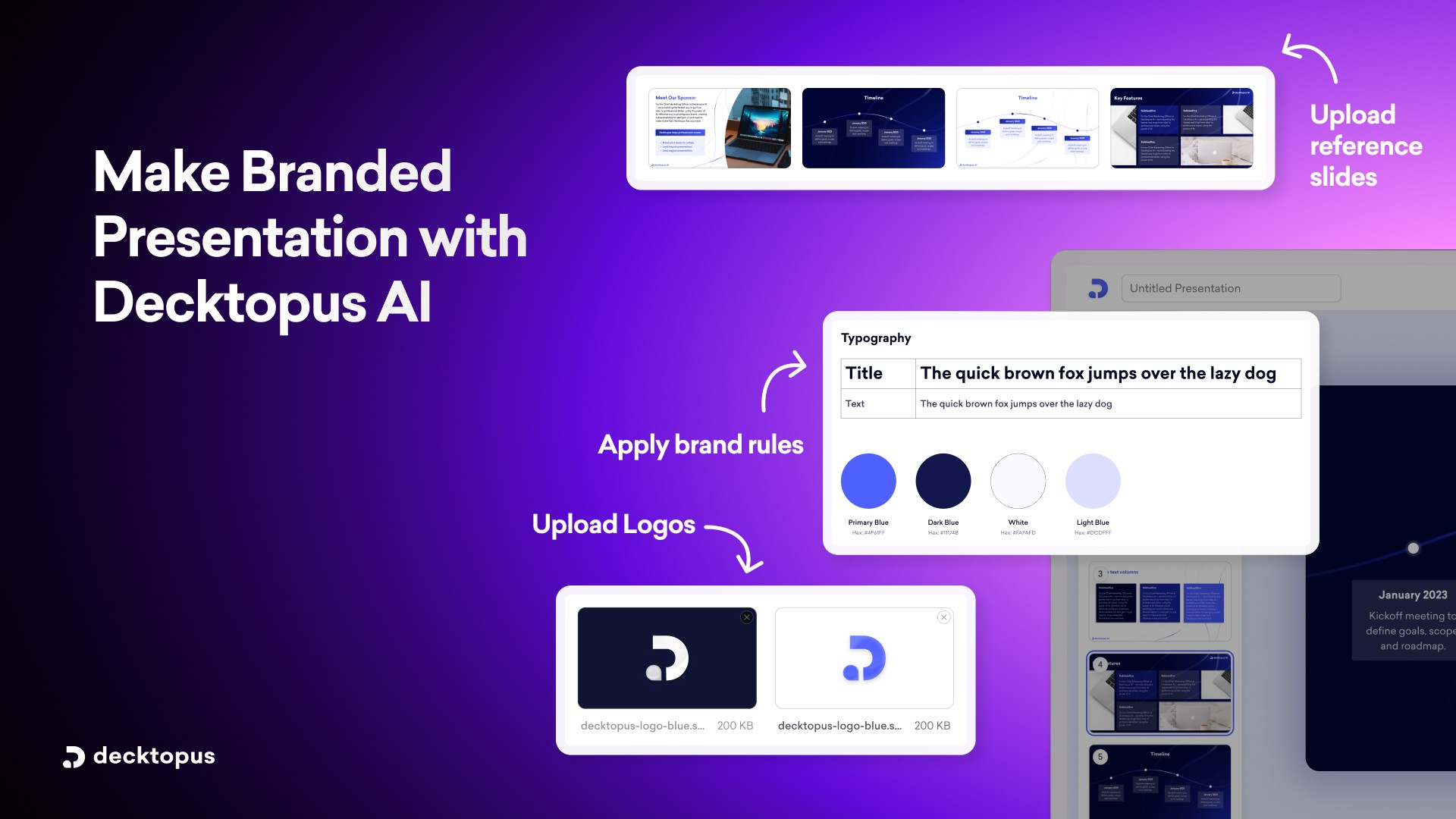
Describe your executive summary topic or upload your draft document, and Decktopus AI generates a complete, structured presentation around it. Content, layout, and design are handled automatically. You focus on the substance. The formatting takes care of itself.
For teams that regularly produce executive summaries, the brand kit means every presentation automatically matches your colors, fonts, and logo. No manual formatting, no design work, no off-brand slides going to stakeholders.
Decktopus Executive Summary Maker
Using Decktopus to create an executive summary presentation is straightforward. Describe your topic — for example “Executive summary for a SaaS product launch proposal” — or upload your existing summary document. Decktopus AI reads the context and generates a complete, structured presentation with the right sections, content, and layout already in place.
From there you can refine any slide by typing what you want changed, adjust the theme, or add charts and visuals directly on the canvas. When you’re ready, export to PDF or PPT, or share a live link directly with your stakeholders.
[[EMBED:PGRpdiBzdHlsZT0iYmFja2dyb3VuZDpsaW5lYXItZ3JhZGllbnQoMTM1ZGVnLCM0ZjYxZmYsIzdDM0FFRCk7Ym9yZGVyLXJhZGl1czoxNnB4O3BhZGRpbmc6MzJweCAyOHB4O3RleHQtYWxpZ246Y2VudGVyO21hcmdpbjoyOHB4IDA7Y29sb3I6I2ZmZiI+PGRpdiBzdHlsZT0iZm9udC1zaXplOjIycHg7Zm9udC13ZWlnaHQ6NzAwO2xpbmUtaGVpZ2h0OjEuMzttYXJnaW4tYm90dG9tOjhweCI+Q3JlYXRlIHlvdXIgbmV4dCBwcmVzZW50YXRpb24gd2l0aCBBSTwvZGl2PjxkaXYgc3R5bGU9ImZvbnQtc2l6ZToxNXB4O2xpbmUtaGVpZ2h0OjEuNTtvcGFjaXR5Oi45MjttYXJnaW46MCBhdXRvIDIwcHg7bWF4LXdpZHRoOjUyMHB4Ij5UdXJuIGFueSB0b3BpYyBpbnRvIGEgcG9saXNoZWQsIG9uLWJyYW5kIGRlY2sgaW4gbWludXRlcyB3aXRoIERlY2t0b3B1cy48L2Rpdj48YSBocmVmPSJodHRwczovL2FwcC5kZWNrdG9wdXMuY29tL3JlZ2lzdGVyIiB0YXJnZXQ9Il9ibGFuayIgcmVsPSJub29wZW5lciIgc3R5bGU9ImRpc3BsYXk6aW5saW5lLWJsb2NrO2JhY2tncm91bmQ6I2ZmZjtjb2xvcjojNGY2MWZmO3BhZGRpbmc6MTRweCAzMnB4O2JvcmRlci1yYWRpdXM6MTBweDtmb250LXdlaWdodDo2MDA7Zm9udC1zaXplOjE1cHg7dGV4dC1kZWNvcmF0aW9uOm5vbmUiPkdldCBTdGFydGVkIEZyZWU8L2E+PC9kaXY+]]
Here’s what Decktopus includes:
AI presentation generation from a topic description or uploaded document
Prompt-based editing: refine any slide by typing what you want changed
Brand kit: set your colors, fonts, and logo once, every presentation stays consistent
Chart maker for visualizing financial data and timelines
AI image generator for custom visuals
PDF to presentation import
Built-in delivery coaching to practice your executive summary presentation before the meeting
Version history: restore any previous slide version for free
Export to PDF or PPT, or present directly from Decktopus
Frequently Asked Questions

1) How to use an executive summary template?
The fastest way to build an executive summary presentation is with Decktopus. Describe your executive summary topic, upload any relevant documents, and the AI generates a complete, structured presentation around it automatically. If your team has a brand kit set up, every slide matches your company colors, fonts, and logo from the start. Need to adjust anything? Type what you want changed and the slide updates instantly.
2) Where can I find executive summary samples/ examples?
Executive summary examples are available across a range of business writing resources and presentation tools online. The most useful ones are structured around real use cases: project proposals, business plans, investment briefs, and research reports. Decktopus lets you go further by generating a complete executive summary presentation from your own content, so you are not just looking at an example but actually building your own in minutes.
3) How to create an executive summary slide?
When it comes to creating executive summary slides, Decktopus is the fastest way to get from raw information to a ready-to-present deck. Describe your executive summary topic, upload your documents, and the AI builds a complete, structured presentation around it automatically. With a brand kit set up, every slide your team produces stays consistent and on-brand without any manual formatting.
Related posts

How to Improve Communication Skills at Work (2026 Practical Guide)
The 5 workplace communication skills that matter most, the CLEAR framework, and the AI practice method that turns weak communicators into strong ones.
Business & Strategy

Job Interview Sample Questions: How to Practice Your Answers (2026)
The 20 most common interview questions, the STAR framework for answers, and the AI practice method that turns rehearsed responses into confident ones.
Business & Strategy

How to Negotiate a Raise: The Script, Practice Method & Tips That Actually Work
A step-by-step script for negotiating a raise, common mistakes to avoid, and the AI practice method that turns a nervous ask into a confident one.
Business & Strategy