Get 66% off →
AI & Tools
AI Checker 2026: How AI Detection Works and the 5 Best Tools
Learn how AI checkers work, why they can be wrong, the 5 best AI detection tools, and a responsible framework for using them fairly.


Decktopus Content Team
What Is an AI Checker?
How AI Checkers Work
Can AI Checkers Be Wrong?
Top 5 AI Checkers
The 5-Step Responsible AI Checking Framework
Common Mistakes to Avoid
How to Present AI Policy and Findings with Decktopus AI
FAQ
Conclusion
Stay Connected
What Is an AI Checker?
An AI checker is a tool that estimates whether a piece of text was written by a person or generated by an AI system. The main benefit: schools, publishers, and businesses get a quick signal before they review content more closely.
OpenAI shut down its own AI text classifier in 2023, citing its low rate of accuracy. That is a strong reminder that AI checkers give probabilities, not proof.
Schools, marketing agencies, and businesses now use AI checkers to review essays, articles, and other content. This guide explains how they work, where they fall short, and which tools are popular.
How AI Checkers Work
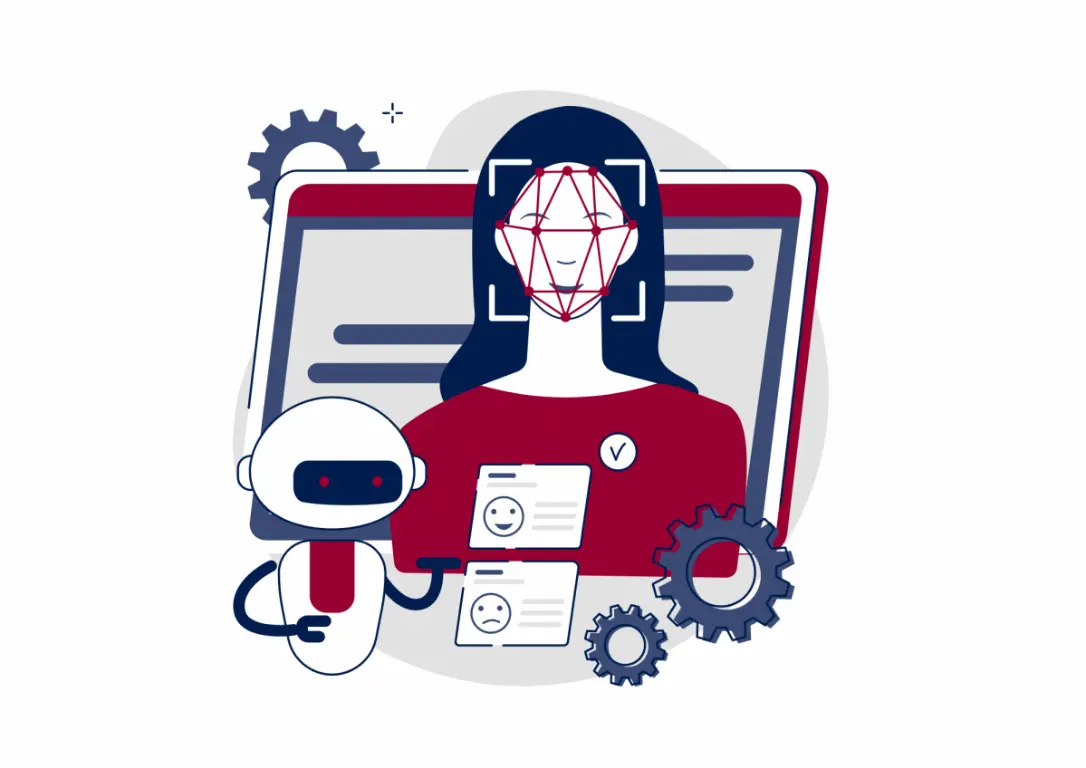
AI checkers look for language patterns, writing styles, and other signals common in AI-generated text. They use classifiers trained on large sets of human-written and AI-written text.
Using machine learning and natural language processing, the classifier scores how likely it is that a text came from an AI tool. Two signals matter most.
Burstiness
Burstiness measures how much sentence length and structure vary. Human writing usually mixes short and long sentences, while AI text tends to be more uniform.
Low burstiness can suggest a text is AI-generated.
Perplexity
Perplexity measures how predictable a text is. AI-generated text is usually smooth and easy to read but more predictable.
Human writing tends to have higher perplexity, with more creative choices and more small errors.
Signal | AI-Generated Text | Human Text |
|---|---|---|
Burstiness | Uniform sentence length | Mixed short and long sentences |
Perplexity | Predictable word choices | Less predictable, more varied |
Errors | Few typos | Occasional typos and quirks |
[[EMBED:PGlmcmFtZSBzcmM9Imh0dHBzOi8vd3d3LnlvdXR1YmUuY29tL2VtYmVkL1BsOU5xbFRTQ2FjIiB0aXRsZT0iWW91VHViZSB2aWRlbyIgZnJhbWVib3JkZXI9IjAiIGFsbG93PSJhY2NlbGVyb21ldGVyO2F1dG9wbGF5O2NsaXBib2FyZC13cml0ZTtlbmNyeXB0ZWQtbWVkaWE7Z3lyb3Njb3BlO3BpY3R1cmUtaW4tcGljdHVyZSIgYWxsb3dmdWxsc2NyZWVuIHN0eWxlPSJ3aWR0aDoxMDAlO2FzcGVjdC1yYXRpbzoxNi85O2JvcmRlcjowO2JvcmRlci1yYWRpdXM6MTJweDttYXJnaW46OHB4IDAiPjwvaWZyYW1lPg==]]
Here is a presentation version of this guide, created with Decktopus AI:
[[EMBED:PGRpdiBzdHlsZT0ibWFyZ2luOjIwcHggMCI+PGlmcmFtZSBhbGxvd2Z1bGxzY3JlZW4gc3JjPSJodHRwczovL2RlY2t0b3AudXMvelBBNUR5LS1YP2VtYmVkZGVkPXRydWUiIHN0eWxlPSJwb3NpdGlvbjogYWJzb2x1dGU7IHRvcDogMDsgbGVmdDogMDsgd2lkdGg6IDEwMCU7IGhlaWdodDoxMDAlOyBib3JkZXI6bm9uZSI+PC9pZnJhbWU+PC9kaXY+]]
Can AI Checkers Be Wrong?
Yes. AI checkers rely on probabilities, so they cannot guarantee 100% accuracy, and they sometimes flag human writing as AI-generated.
AI models are improving quickly. As AI writing gets more human-like, telling them apart gets harder.
Unusual syntax or grammar. Uncommon sentence patterns can look like AI output to a checker.
Writing style. Some people naturally write in patterns similar to AI.
Repeated phrases. Repeating similar sentences can make a checker think your writing is AI-generated. This is one of the most common causes of false positives.
Top 5 AI Checkers
[[EMBED:PGRpdiBzdHlsZT0ib3ZlcmZsb3cteDphdXRvO21hcmdpbjoyMHB4IDAiPjx0YWJsZSBzdHlsZT0id2lkdGg6MTAwJTtib3JkZXItY29sbGFwc2U6Y29sbGFwc2U7Zm9udC1zaXplOjE1cHg7bWFyZ2luOjhweCAwIj48dHI+PHRoIHN0eWxlPSJib3JkZXI6MXB4IHNvbGlkICNlM2U2ZWE7cGFkZGluZzoxMHB4IDE0cHg7dGV4dC1hbGlnbjpsZWZ0O2JhY2tncm91bmQ6I2Y0ZjZmODtmb250LXdlaWdodDo2MDAiPlRvcCA1IEFJIENoZWNrZXJzPC90aD48L3RyPjx0cj48dGQgc3R5bGU9ImJvcmRlcjoxcHggc29saWQgI2UzZTZlYTtwYWRkaW5nOjEwcHggMTRweDt0ZXh0LWFsaWduOmxlZnQ7dmVydGljYWwtYWxpZ246dG9wIj5XaW5zdG9uIEFJPC90ZD48L3RyPjx0cj48dGQgc3R5bGU9ImJvcmRlcjoxcHggc29saWQgI2UzZTZlYTtwYWRkaW5nOjEwcHggMTRweDt0ZXh0LWFsaWduOmxlZnQ7dmVydGljYWwtYWxpZ246dG9wIj5PcmlnaW5hbGl0eSBBSTwvdGQ+PC90cj48dHI+PHRkIHN0eWxlPSJib3JkZXI6MXB4IHNvbGlkICNlM2U2ZWE7cGFkZGluZzoxMHB4IDE0cHg7dGV4dC1hbGlnbjpsZWZ0O3ZlcnRpY2FsLWFsaWduOnRvcCI+U2FwbGluZyBBSSBEZXRlY3RvcjwvdGQ+PC90cj48dHI+PHRkIHN0eWxlPSJib3JkZXI6MXB4IHNvbGlkICNlM2U2ZWE7cGFkZGluZzoxMHB4IDE0cHg7dGV4dC1hbGlnbjpsZWZ0O3ZlcnRpY2FsLWFsaWduOnRvcCI+R1BUWmVybzwvdGQ+PC90cj48dHI+PHRkIHN0eWxlPSJib3JkZXI6MXB4IHNvbGlkICNlM2U2ZWE7cGFkZGluZzoxMHB4IDE0cHg7dGV4dC1hbGlnbjpsZWZ0O3ZlcnRpY2FsLWFsaWduOnRvcCI+Q29weWxlYWtzPC90ZD48L3RyPjwvdGFibGU+PC9kaXY+]]
Accuracy claims, features, and pricing change often, so test tools yourself and check each website for current plans.
1. Winston AI
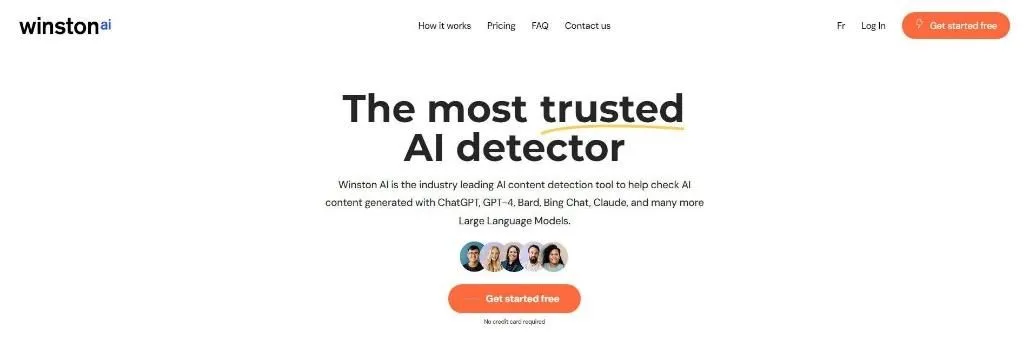
Winston AI is a popular AI content detector that reports high accuracy in its own testing. It aims to identify content from models behind tools like Bard (now Google Gemini), ChatGPT, GPT4, and other large language models.
Shareable PDF reports
Team workspaces
OCR to scan text from images and handwriting
2. Originality AI
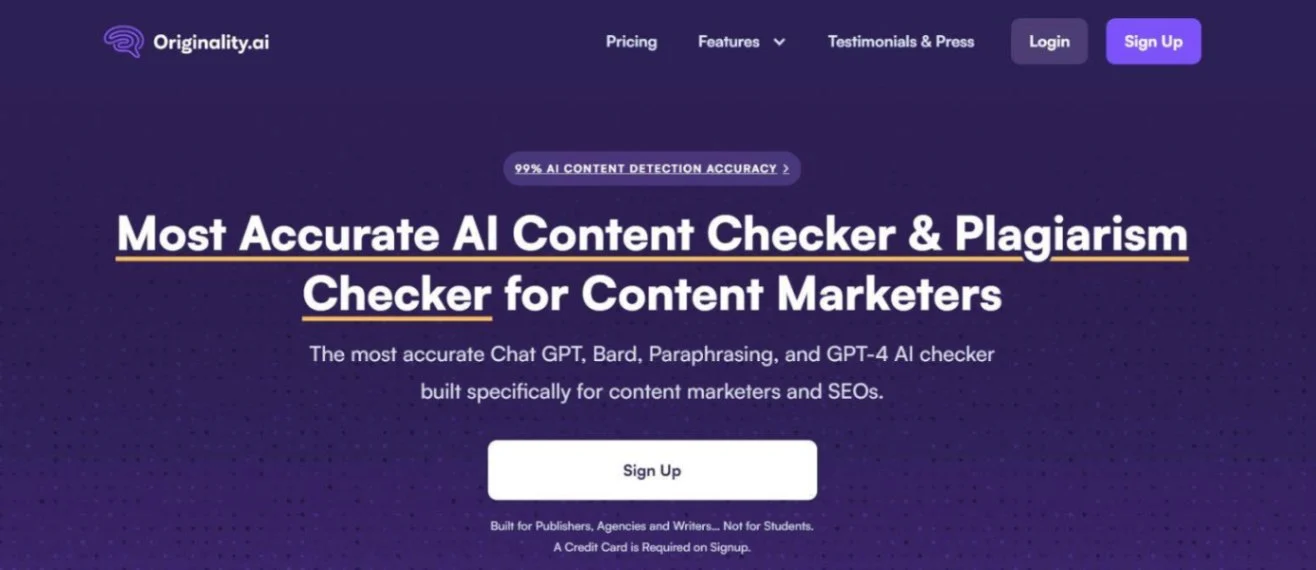
Originality AI is built for people who need to check content quickly, such as publishers and SEO teams.
Fast AI content detection
Chrome extension
Highlights the parts of text that triggered the detector
3. Sapling AI Detector
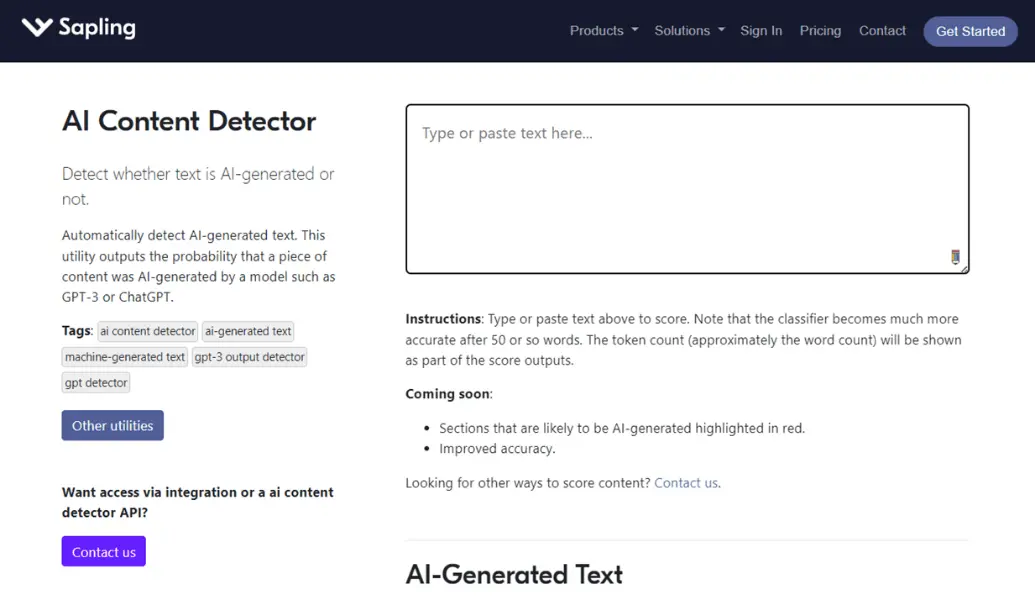
Sapling combines a grammar checker, rewriter, and AI detector. It shows the share of a text that looks AI-generated and highlights it.
Shows an overall AI percentage
Works on short texts
No sign-up needed for basic checks
4. GPTZero
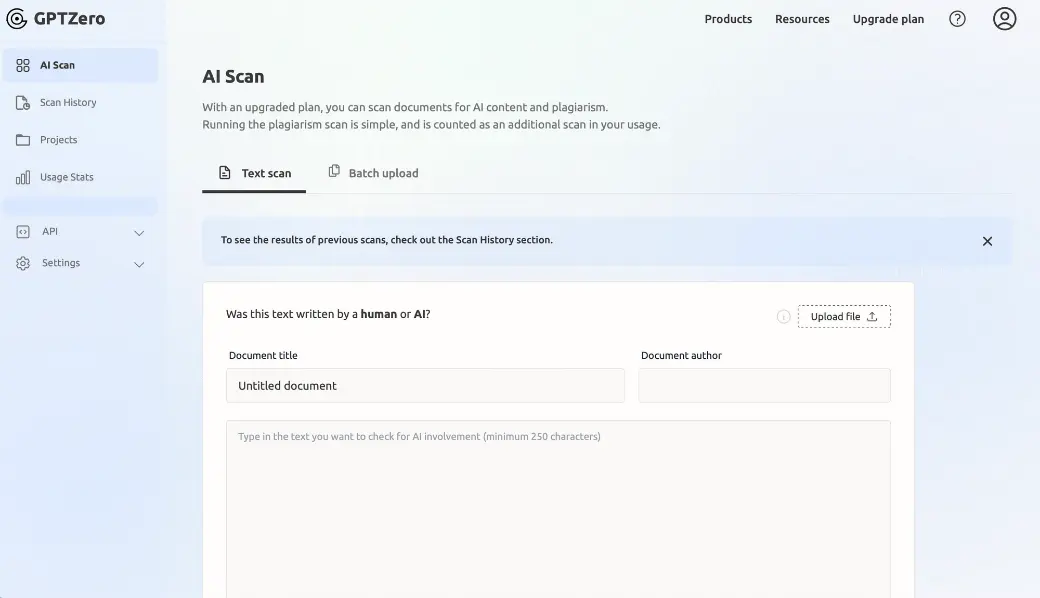
GPTZero is an AI detector designed with ease of use in mind. It is popular with educators and schools.
Simple interface
Batch file screening
Enhanced detection algorithms for education on paid plans
5. Copyleaks
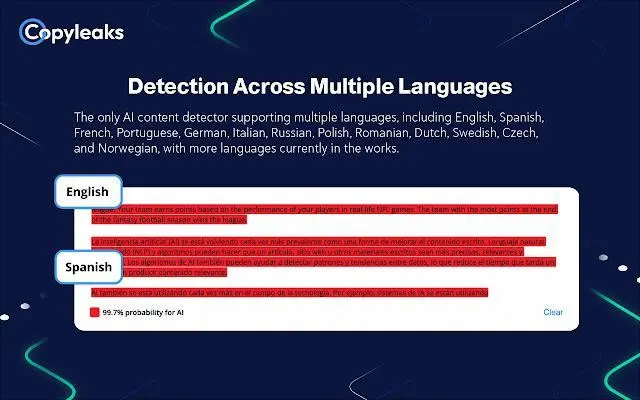
Copyleaks helps people, organizations, and schools detect AI-generated and paraphrased text.
Supports more than 30 languages
Chrome extension
Integrations with learning platforms like Moodle, Canvas, and Blackboard
Tool | Best For | Notable Feature |
|---|---|---|
Winston AI | Publishers and teams | PDF reports and OCR |
Originality AI | SEO and content teams | Highlights flagged passages |
Sapling | Quick checks | No sign-up for basic use |
GPTZero | Educators | Batch file screening |
Copyleaks | Schools and enterprises | LMS integrations and many languages |
The 5-Step Responsible AI Checking Framework
Use this framework to use AI checkers fairly.
Set a clear policy. Decide where AI use is allowed and where it is not.
Use more than one tool. Compare results instead of trusting a single score.
Treat scores as signals. A high score is a reason to look closer, not proof.
Review the context. Look at drafts, sources, and writing history.
Talk before you act. Give people a chance to explain their process.
Common Mistakes to Avoid
Treating scores as proof. AI checkers can be wrong in both directions.
Checking very short texts. Short passages give unreliable results.
Ignoring non-native writers. Simple, regular writing can be flagged unfairly.
No clear AI policy. People cannot follow rules that are not written down.
Relying on one tool. Cross-check important decisions.
How to Present AI Policy and Findings with Decktopus AI
Schools and companies often need to explain their AI policy or share review findings. A clear presentation makes those rules easy to understand.
Decktopus AI is an AI presentation platform, not an AI checker. It generates complete decks from a short prompt, like the one embedded above.
AI Presentation Generation. Type "AI use policy for our marketing team with dos, don'ts, and review steps" and get a full deck.
Reviewable AI outline. Make sure policy, examples, and review steps each have a slide.
Edit with AI. Refine wording with plain-language prompts.
Live link and embed. Share the deck or embed it on your intranet, like the example in this post.
Task | Manual Way | With Decktopus AI |
|---|---|---|
Explaining an AI policy | Long document | Short, clear deck |
Sharing with staff | Email attachments | Live link or embed |
Updating the policy | Resend files | Updates at the same URL |
Who This Is For
Marketers sharing AI content guidelines
Agencies explaining AI policy to clients
Customer success teams training teams on AI use
Founders setting company AI rules
Step-by-Step: Build Your AI Policy Deck
Describe your topic. Type something like "AI use policy presentation for a content team with allowed uses, review steps, and examples." Or upload your notes or files with the paperclip icon, and use Beautify to Use as a Resource (prompt required) or Redesign.
Choose your style. Pick a saved brand or style, import your brand from your website URL, or create a new style from a Minimal, Bold, or Dark base (or Let AI pick).
Review the AI-generated outline. Edit, reorder, duplicate, or delete slide cards, and use Adjust to change your style.
Generate the full presentation. Approve the outline and get the complete deck with content, layout, and design.
Refine with Edit with AI or Edit Text. Try "Add a do and don't table," "Add a slide explaining how AI checkers work," or "Add a closing slide with who to contact." Preview and undo, use Edit Text for manual edits (5 credits per edit), and restore any past version.
Add images. Generate AI images, upload photos, or search Unsplash and Freepik.
Rehearse with Loop AI Delivery Coach. Work through The Profiler, The Architect, The Red Team, and The Mirror.
Export or share. Export to PDF, PPT, or PNG, share a live link, embed it, or present in Presentation Mode. Business plan users can add a custom domain. Turn on the email gate and track engagement with Deck Analytics.
Ready to explain your AI policy clearly? Get started with Decktopus AI.
FAQ
What is an AI checker used for?
To estimate whether content was written by a person or generated by AI.
Are AI checkers 100% accurate?
No. They rely on probabilities and can produce false positives and false negatives.
How do AI checkers work?
They analyze signals like perplexity and burstiness using classifiers trained on human and AI text.
What is perplexity in AI detection?
A measure of how predictable a text is. AI text is usually more predictable.
What is burstiness in AI detection?
A measure of variation in sentence length and structure. Human writing usually varies more.
Can AI checkers detect paraphrased AI text?
Some tools, like Copyleaks, aim to detect paraphrased content, but accuracy varies.
Why did an AI checker flag my human writing?
Repetitive phrasing, very regular sentences, or unusual syntax can trigger false positives.
Which AI checker is best for teachers?
GPTZero and Copyleaks are popular in education, partly for their classroom integrations.
Can AI checkers detect content from newer models?
They try to keep up, but newer models are often harder to detect.
Should I use more than one AI checker?
Yes, for important decisions. Comparing results reduces the risk of a single wrong score.
Is Decktopus AI an AI checker?
No. Decktopus AI is an AI presentation platform that generates decks from your topic.
How do I write content that reads as human?
Write from your own experience, vary sentence length, and add specific examples and opinions.
Conclusion
AI checkers are useful signals as AI-written content becomes more common. But they are not perfect, so use them carefully and fairly.
Pick tools that fit your needs, follow the 5-Step Responsible AI Checking Framework, and avoid treating scores as proof. Clear policies make everything easier.
When you need to present your AI policy or findings, get started with Decktopus AI.
Stay Connected
Follow Decktopus AI for more AI and presentation tips:
Related posts

8 AI Startups That Nailed Their Branding with a .AI Domain
Artificial intelligence continues to reshape the way we live and work. As an essential tool now powering a great number of industries, it’s no surprise that AI is driving a new era of search, too.
AI & Tools

5 Best AI Audio Enhancement Tools in 2026
Compare the 5 best AI audio enhancement tools for removing background noise and improving voice clarity, plus a clean audio workflow and tips.
AI & Tools
10 Best AI Image Generators from Text (2026)
Turn text into scroll-stopping visuals in seconds. Discover the top AI image generators of 2026, compare features, and see why Decktopus stands out for branded and presentation-ready images.
AI & Tools