Business & Strategy
How We Work Together: Synonyms for Working Together and Ways to Work Together Effectively
Discover the power of working together and how it strengthens bonding within teams. This guide includes essential tips for effective collaboration and team building.

Decktopus Content Team
In many professions, the key to success is having the capacity to collaborate well. Collaboration is essential whether you’re running a corporate team, managing the difficulties of working remotely, encouraging teamwork in a classroom, or organizing activities in a nonprofit.
[[EMBED:PGRpdiBzdHlsZT0iYmFja2dyb3VuZDpsaW5lYXItZ3JhZGllbnQoMTM1ZGVnLCM0ZjYxZmYsIzdDM0FFRCk7Ym9yZGVyLXJhZGl1czoxNnB4O3BhZGRpbmc6MzJweCAyOHB4O3RleHQtYWxpZ246Y2VudGVyO21hcmdpbjoyOHB4IDA7Y29sb3I6I2ZmZiI+PGRpdiBzdHlsZT0iZm9udC1zaXplOjIycHg7Zm9udC13ZWlnaHQ6NzAwO2xpbmUtaGVpZ2h0OjEuMzttYXJnaW4tYm90dG9tOjhweCI+Q3JlYXRlIHlvdXIgbmV4dCBwcmVzZW50YXRpb24gd2l0aCBBSTwvZGl2PjxkaXYgc3R5bGU9ImZvbnQtc2l6ZToxNXB4O2xpbmUtaGVpZ2h0OjEuNTtvcGFjaXR5Oi45MjttYXJnaW46MCBhdXRvIDIwcHg7bWF4LXdpZHRoOjUyMHB4Ij5UdXJuIGFueSB0b3BpYyBpbnRvIGEgcG9saXNoZWQsIG9uLWJyYW5kIGRlY2sgaW4gbWludXRlcyB3aXRoIERlY2t0b3B1cy48L2Rpdj48YSBocmVmPSJodHRwczovL2FwcC5kZWNrdG9wdXMuY29tL3JlZ2lzdGVyIiB0YXJnZXQ9Il9ibGFuayIgcmVsPSJub29wZW5lciIgc3R5bGU9ImRpc3BsYXk6aW5saW5lLWJsb2NrO2JhY2tncm91bmQ6I2ZmZjtjb2xvcjojNGY2MWZmO3BhZGRpbmc6MTRweCAzMnB4O2JvcmRlci1yYWRpdXM6MTBweDtmb250LXdlaWdodDo2MDA7Zm9udC1zaXplOjE1cHg7dGV4dC1kZWNvcmF0aW9uOm5vbmUiPkdldCBTdGFydGVkIEZyZWU8L2E+PC9kaXY+]]
We can maximize our teamwork by defining what true collaboration entails and investigating the methods and resources that make it possible. This blog explores the fundamentals of teamwork, its advantages, and doable strategies to improve cooperation in a variety of contexts.

What does “Working Together” Mean?
Collaborating, or working together, entails people or organizations coming together to accomplish a common objective. In order to achieve successful results, it entails sharing duties, ideas, and resources.
Corporate Professionals and Teams
Corporate teams can increase productivity and accomplish project goals by collaborating to integrate varied abilities. To guarantee effective communication and well-coordinated efforts, it consists of frequent meetings, brainstorming sessions, and collaboration tools.
Remote and Hybrid Workers
Working together in distant and hybrid environments requires utilizing digital communication to bridge physical distances. Maintaining solid relationships and team cohesion is facilitated by the use of instant messaging apps, project management software, and video conferencing. To establish secure, direct connections between remote team members, organizations often rely on a P2P VPN.
What Are the Benefits of Working Together?
Cooperation, or working together, has many advantages that directly address the objectives and difficulties of different professional personas, such as corporate professionals, remote workers, educators, and nonprofit organizations. The main advantages for each group are as follows:
For Teams and Corporate Professionals:
Benefits:
Enhanced Productivity
Processes are streamlined through collaboration, resulting in more effective and efficient task completion. Teams can increase production by utilizing the strengths of each individual member.
Improved Interaction
Collaborating with others promotes candid communication, lessens miscommunication, and creates a happy workplace.
Resolving Conflicts
As a team works toward a common objective, collaborative environments foster problem-solving and conflict resolution.
Motivation and Engagement
When workers work together, they are more motivated and engaged because they realize that their efforts are important and have an impact.
Remote and Hybrid Workers
Benefits:
Overcoming Distance
Project management software and video conferencing are examples of collaboration solutions that assist close the physical distance and promote productive communication.
Establishing Trust
Mutual trust and goodwill are fostered among remote team members through frequent virtual encounters and cooperative projects.
Time Zone Management
Time zone disparities can be more easily managed thanks to asynchronous communication enabled by collaborative tools.
High Level of Involvement
By fostering a sense of community and preventing feelings of isolation, collaboration boosts the engagement of distant employees.
Educators and Academic Teams
Benefits:
Improved Learning
Working together, instructors and students create a dynamic learning environment that improves comprehension and memory of the material.
Engaging in Active Participation
Learning becomes more engaging when students actively participate in group projects and activities.
Simplified Project Administration
Collaboration technologies make it easier for teachers to oversee projects and guarantee that work is done to a high standard and on schedule.
Creative Methods of Instruction
Educators can apply creative teaching strategies that accommodate a range of learning preferences by utilizing collaborative approaches.
Nonprofit and Volunteer Organizations:
Benefits:
Effective Coordination
By managing and coordinating the efforts of several volunteers, collaboration tools make sure that everyone is pursuing the same objectives.
Management of Resources
Better resource management results from effective teamwork, ensuring that all available resources are used effectively.
Volunteer Engagement
Knowing that their efforts are having an impact keeps volunteers inspired and involved in collaborative settings.

Collaborating with other professionals can yield numerous advantages that are customized to suit the unique requirements of various professional groups.
Collaboration is essential to overcoming obstacles and succeeding, whether it is in corporate settings to increase productivity, in academic settings to retain participation in remote teams, or in nonprofit organizations to coordinate activities.
What Qualities Are Needed for Working Together?
A collection of essential traits that allow individuals and teams to function well together are necessary for effective collaboration. These attributes are critical for conquering obstacles and reaching objectives in a variety of professional contexts, such as academic institutions, corporate settings, remote work, and nonprofit organizations.
1. Communication
Effective teamwork requires open and transparent communication. It guarantees that everyone in the team can effectively communicate, convey ideas, offer criticism, and share information.
Resolving disagreements, making decisions, and upholding a pleasant work atmosphere are all facilitated by effective communication.
2. Trust
Building trust among team members creates a secure and encouraging atmosphere where people are willing to take chances and share their thoughts. Mutual regard, dependability, and consistency are the foundations of trust.
3. Flexibility
Adaptability and receptivity to new ideas are essential for teamwork. Teams that are flexible are better able to deal with change, get beyond challenges, and come up with creative solutions. It also aids in accommodating various viewpoints and working methods, as well as managing diverse teams.
4. Responsibility
Reliability and accountability are essential elements of productive teamwork. Each team member needs to be accountable for their own assignments and deliverables, making sure they fulfill deadlines and put in a reasonable amount of work toward the group’s goal.
This trait facilitates effective project management and the accomplishment of organizational objectives.
5. Active Listening
Active listening entails giving someone your whole attention, comprehending their viewpoints, and intelligently answering. This characteristic improves communication between people, lessens miscommunication, and promotes an inclusive and respectful society
6. Empathy
Team members that possess empathy are able to relate to and comprehend one other’s emotions and experiences. It facilitates a collaborative and encouraging environment, which makes it simpler to settle disputes, forge lasting bonds, and collaborate amicably.

Approaches to Working Together
Diverse strategies that capitalize on the skills and talents of the team as a whole are necessary for effective collaboration. The following are important strategies that incorporate necessary components, such knowledge, morale, and feedback, to increase output and accomplish common objectives:
Feedback and Open Communication
To make sure that everyone’s voice is heard, place an emphasis on regular feedback loops and open lines of contact. This strategy promotes a climate of mutual respect and ongoing progress by encouraging the sharing of ideas and offering constructive feedback.
Collaborative Thinking and Problem-Solving
Foster cooperative thought processes that facilitate group ideation and cooperative problem-solving. This methodology fosters creativity and motivates group members to investigate diverse viewpoints, resulting in enhanced efficacy.
Enhancing Productivity Through Streamlined Processes
Put in place effective processes and instruments that optimize work and boost output. Teams can concentrate their efforts on productive tasks that lead to project success and raise morale by streamlining processes.
Utilizing Diverse Expertise
Make use of the team members’ varied expertise and skill sets. Teams can approach problems with a holistic view and provide creative solutions that are crucial to the project’s success by utilizing each member’s area of expertise.
Boosting Morale and Team Spirit
Encourage an environment at work that is upbeat and encourages teamwork. In order to increase motivation and dedication to common objectives, acknowledge accomplishments, commemorate significant anniversaries, and provide chances for team building.

These methods not only promote efficient teamwork but also help create a supportive and united workplace environment where cooperation thrives. Teams can overcome obstacles more skillfully and succeed more fully when these tactics are combined.
Top 10 Collaboration Tools for Remote Teams: Features, Pricing, and Reviews
Effective collaboration solutions are crucial for distant teams to remain in communication, productivity, and alignment in the modern digital world.
To assist remote teams in selecting the best collaboration tool for their requirements, this evaluation contrasts and assesses the top ten options, emphasizing each tool’s capabilities, advantages, and applications.
1. Decktopus
Features:
Decktopus is an AI presentation tool built for teams that need to produce consistent, professional presentations quickly. Describe your topic and Decktopus AI generates a complete, structured presentation with content, layout, and design handled automatically. Teams can collaborate by sharing live links, co-editing slides, and iterating with prompt-based edits without any design work.
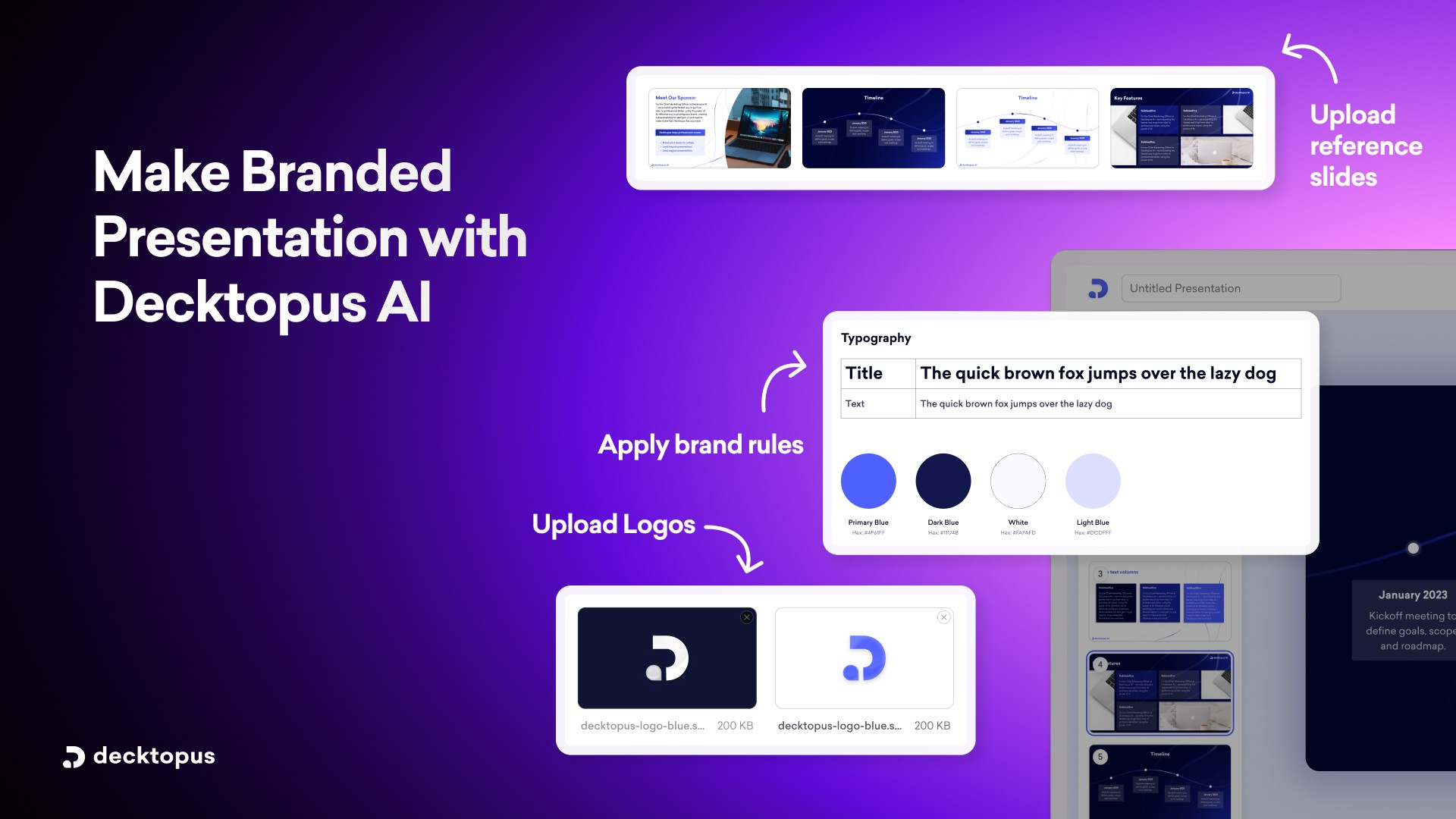
The brand kit is the standout feature for teams working together. Set your colors, fonts, and logo once and every presentation any team member creates automatically matches your brand standards. No manual formatting, no off-brand slides going out to clients or stakeholders.
[[EMBED:PGRpdiBzdHlsZT0iYmFja2dyb3VuZDpsaW5lYXItZ3JhZGllbnQoMTM1ZGVnLCM0ZjYxZmYsIzdDM0FFRCk7Ym9yZGVyLXJhZGl1czoxNnB4O3BhZGRpbmc6MzJweCAyOHB4O3RleHQtYWxpZ246Y2VudGVyO21hcmdpbjoyOHB4IDA7Y29sb3I6I2ZmZiI+PGRpdiBzdHlsZT0iZm9udC1zaXplOjIycHg7Zm9udC13ZWlnaHQ6NzAwO2xpbmUtaGVpZ2h0OjEuMzttYXJnaW4tYm90dG9tOjhweCI+Q3JlYXRlIHlvdXIgbmV4dCBwcmVzZW50YXRpb24gd2l0aCBBSTwvZGl2PjxkaXYgc3R5bGU9ImZvbnQtc2l6ZToxNXB4O2xpbmUtaGVpZ2h0OjEuNTtvcGFjaXR5Oi45MjttYXJnaW46MCBhdXRvIDIwcHg7bWF4LXdpZHRoOjUyMHB4Ij5UdXJuIGFueSB0b3BpYyBpbnRvIGEgcG9saXNoZWQsIG9uLWJyYW5kIGRlY2sgaW4gbWludXRlcyB3aXRoIERlY2t0b3B1cy48L2Rpdj48YSBocmVmPSJodHRwczovL2FwcC5kZWNrdG9wdXMuY29tL3JlZ2lzdGVyIiB0YXJnZXQ9Il9ibGFuayIgcmVsPSJub29wZW5lciIgc3R5bGU9ImRpc3BsYXk6aW5saW5lLWJsb2NrO2JhY2tncm91bmQ6I2ZmZjtjb2xvcjojNGY2MWZmO3BhZGRpbmc6MTRweCAzMnB4O2JvcmRlci1yYWRpdXM6MTBweDtmb250LXdlaWdodDo2MDA7Zm9udC1zaXplOjE1cHg7dGV4dC1kZWNvcmF0aW9uOm5vbmUiPkdldCBTdGFydGVkIEZyZWU8L2E+PC9kaXY+]]
Benefits:
AI generation: describe a topic and get a complete, structured presentation in minutes
Brand kit: every team presentation automatically matches your colors, fonts, and logo
Prompt-based editing: refine any slide by typing what you want changed, no design skills needed
Real-time collaboration: share live links and co-edit presentations with teammates
Delivery coaching: practice presentations and get real-time feedback before the actual meeting
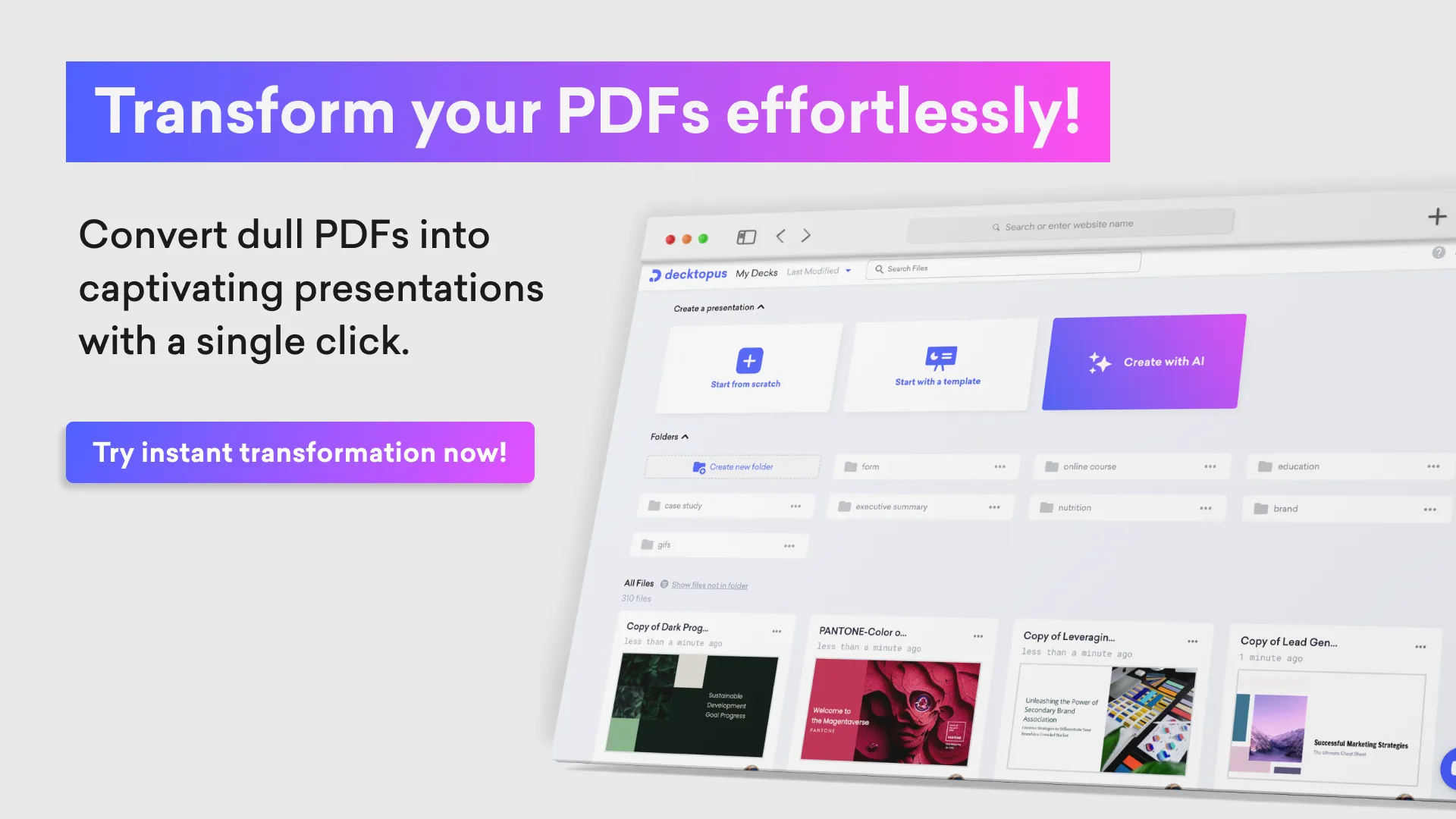
Export to PDF or PPT, or present directly from Decktopus
Use Cases:
Corporate Teams
Sales teams, marketing managers, and executives use Decktopus to produce client-facing and internal presentations quickly. The brand kit ensures every presentation from every team member stays consistent without a design review cycle. Real-time collaboration means teams can iterate on presentations together without emailing files back and forth.
Remote and Hybrid Workers
For distributed teams, Decktopus removes the friction of keeping everyone’s slides on-brand. Share a live link instead of a file, co-edit from anywhere, and use delivery coaching to practice before presenting to clients or leadership from a remote setup.
Educators
Teachers and academic teams use Decktopus to turn lesson topics and research into structured, ready-to-present slides quickly. Students can use it to build presentation projects without spending time on design. Describe the topic, get the structure, focus on the content.
Nonprofit Organizations
Nonprofits use Decktopus to produce consistent, professional presentations for donor pitches, volunteer briefings, and board updates without a design team. The brand kit keeps everything on-brand automatically, and presentations can be shared via live link without requiring recipients to have any software installed.

With its effective presentation management, secure document handling, and real-time collaboration features, Decktopus stands out as a full solution for remote teams looking to improve their collaborative efforts.
With its robust capabilities and easy-to-use design, it’s a priceless tool for improving collaboration and efficiency in today’s remote work environment
2. Slack
Features:
Slack facilitates team communication and collaboration by providing file sharing, instant chat, and integration features.
Benefits:
Fast file sharing and real-time chat.
Connectivity to external programs for improved capabilities.
Organized team conversations through channel-based communication.
Use Cases:
Perfect for distant teams that require quick file exchanges and communication.
efficiently supports team coordination and project management.
3. Zoom
Features:
For easy remote communication, Zoom offers webinars, virtual conference rooms, and video conferencing. To get the most out of those calls, teams can use an AI note taker for zoom that automatically transcribes meetings and surfaces action items, so nothing discussed gets lost after the call ends.
Benefits:
Superior audio and video conferencing.
Recording and screen sharing features.
Interactive meetings can be held in breakout rooms with virtual backgrounds.
Use Cases:
Enables customer presentations and remote team meetings.
Efficiently supports virtual events and webinars.
4. Microsoft Teams
Features:
Chat, video conferencing, and file storage
Integration with Microsoft Office apps
Team channels and private messaging
Benefits:
Seamless integration with Microsoft Office
Document collaboration and version control
Organized team communication
Pricing: Free tier available, paid plans start at $5 per user/month
Use Cases:
Corporate teams using Office 365
Project management and team communication
5. Google Workspace (formerly G Suite)
Features:
Email, cloud storage, document editing
Real-time collaboration on documents
Shared calendars and video conferencing
Benefits:
Integrated productivity tools
Seamless collaboration on documents
Enhanced communication with shared calendars
Pricing: Plans start at $6 per user/month
Use Cases:
Remote teams using Google’s ecosystem
Collaborative editing and document sharing
6. Trello
Features:
Visual project management with boards, lists, and cards
Task assignment and progress tracking
Integration with other productivity tools
Benefits:
Customizable project management
Efficient task tracking and collaboration
Enhanced productivity with integrations
Pricing: Free tier available, paid plans start at $10 per user/month
Use Cases:
Agile project management
Team collaboration on tasks and workflows
7. Asana
Features:
Task and project management
Project timelines and workload management
Collaboration features for team communication
Benefits:
Organized task management
Enhanced project planning
Efficient team collaboration
Pricing: Free tier available, paid plans start at $10.99 per user/month
Use Cases:
Project planning and task management
Cross-functional team collaboration
8. Monday.com
Features:
Customizable workflows
Task tracking and automation
Integration with third-party apps
Benefits:
Visual project management
Efficient task automation
Enhanced productivity with integrations
Pricing: Plans start at $8 per user/month
Use Cases:
Team collaboration on projects
Workflow management and task automation
9. Dropbox Business
Features:
Secure cloud storage and file synchronization
Collaboration tools for teams
Integration with productivity tools
Benefits:
Secure file sharing and collaboration
Efficient document management
Enhanced productivity with integrations
Pricing: Plans start at $15 per user/month
Use Cases:
File storage and collaboration
Secure document sharing across remote teams
10. Miro
Features:
Online collaborative whiteboard
Templates for brainstorming and planning
Integration with productivity tools
Benefits:
Real-time collaboration on virtual whiteboards
Enhanced brainstorming and planning
Integration with other tools for productivity
Pricing: Free tier available, paid plans start at $8 per user/month
Use Cases:
Visual collaboration and brainstorming
Remote workshops and team brainstorming sessions
11. Titanapps
Features:
Task and project management for teams
Workflow automation and collaboration tools
Integration with productivity apps, including a Jira task checklist
Benefits:
Streamlines project tracking and daily workflows
Enhances team collaboration across departments
Ready-to-use Jira task checklist for faster setup
Use Cases:
Coordinating remote teams and managing complex projects
Simplifying Jira task tracking with prebuilt checklist templates
Expert Tips and Best Practices for Fostering Effective Team Collaboration
We offer professional advice and industry best practices to improve cooperation, coordination, and teamwork inside your company. It can be beneficial to address important factors that are important for fostering a cohesive and effective team environment by incorporating insights from industry professionals.
These are key tactics that stress the value of acceptance, self-worth, and using digital platforms like websites to increase cooperation.
1. Cultivate Acceptance Within the Team
Promote an atmosphere in which each team member feels appreciated and welcomed for their own contributions. This encourages transparency and trust, which results in more creative solutions and improved team dynamics.
2. Boost Self-Esteem to Enhance Performance
Team members’ strong sense of self-worth is essential to sustaining their drive and output. Enhance your self-esteem by giving yourself praise, acknowledging your accomplishments, and providing professional development opportunities.
3. Emphasize Clear Communication
Good communication is essential to productive teamwork. To enable smooth communication across geographic boundaries, make use of collaboration websites, video conferencing software, and team messaging apps.
4. Utilize Collaborative Websites and Tools
Use digital platforms and tools for cooperation to increase team output. These resources offer a single information hub that encourages accountability and openness.
5. Encourage Regular Feedback
Feedback given on a regular basis fosters team growth. Giving constructive criticism improves congruence with team goals and objectives and raises self-esteem.
6. Foster a Sense of Belonging
Team morale and productivity are impacted by a strong sense of belonging. This sense is strengthened via team-building exercises, inclusive decision-making, and acknowledging individual contributions.
By putting these professional advice and best practices into practice, cooperation, communication, and collaboration may all be improved.
Teams can overcome obstacles and accomplish goals more quickly by putting an emphasis on acceptance, self-worth, open communication, and the use of collaborative websites and tools.
This promotes success and innovation in any kind of business.
Collaboration Strategies for Educators: Enhancing Student Engagement and Academic Success”
In the education sector, effective collaboration is essential for fostering a dynamic learning environment. Here are some tailored strategies for educators and academic personnel to enhance collaboration and increase active participation in educational settings:
1. Organize Course Presentations and Documents
For educators, keeping all course presentations and documents in an organized manner is crucial. Using digital tools like Decktopus allows for systematic storage and easy retrieval of teaching materials.
This organization not only saves time but also ensures that all resources are readily accessible for both educators and students, no matter where they are.
2. Promote Student Collaboration on Presentations
Encouraging students to work together on presentations can significantly enhance their learning experience. Collaborative tools enable students to co-edit documents in real-time, share feedback, and collectively create high-quality presentations.
This teamwork fosters a sense of responsibility, improves communication skills, and deepens understanding of the subject matter.
3. Increase Active Participation
Active participation is key to effective learning. By incorporating collaborative projects and group activities into the curriculum, educators can engage students more effectively.
Tools that support interactive features, such as live polls and Q&A sessions, can make lessons more engaging and ensure that students remain attentive and involved.
Mobile-friendly platforms can further enhance participation by allowing students to collaborate and engage from their mobile devices.

4. Streamline Communication
Clear and consistent communication is essential in an academic setting. Using platforms that integrate messaging, announcements, and document sharing helps maintain an open line of communication between educators and students.
Online forums can provide a space for ongoing discussions, allowing students to ask questions and engage in academic debates outside of class time.
5. Leverage Technology for Educational Collaboration
Technology offers numerous opportunities to enhance educational collaboration. Virtual classrooms, shared digital workspaces, and online discussion forums provide platforms for continuous learning and interaction.
These tools enable students and educators to collaborate beyond the physical classroom, facilitating a more flexible and inclusive learning environment.
Effective collaboration is essential across various industries, from corporate teams and remote workers to educators and nonprofits. Understanding the specific goals and challenges of each sector allows for tailored strategies to enhance teamwork, communication, and productivity.
Decktopus is a standout tool for achieving these goals. Its robust organizational structure and user-friendly interface help teams create and manage presentations seamlessly.
By keeping documents organized, managing permissions, and enabling real-time co-editing, Decktopus boosts team engagement and ensures alignment.
Whether improving student engagement, enhancing communication among remote workers, or coordinating nonprofit efforts, the right tools and strategies make all the difference.
Decktopus is a valuable asset for fostering effective collaboration and driving success across various sectors, helping organizations overcome challenges and achieve their goals.
FAQ
1) What is the meaning of working together?
Working together means collaborating with others towards common goals, sharing ideas, resources, and responsibilities for collective success. It enhances problem-solving, innovation, and productivity.
2) What is the process of working together?
The process involves goal setting, planning, communication, collaboration, feedback, and evaluation to achieve shared objectives effectively.
3) How can we work together?
Effective teamwork involves clear communication, mutual respect, and tools that reduce friction. For presentations specifically, Decktopus helps teams collaborate without the usual back-and-forth on formatting and design. The brand kit ensures everyone’s output stays consistent automatically.
4) Is working together fun?
Working together fosters fun through relationship-building, celebrating achievements, creative collaboration, learning opportunities, and maintaining a positive team environment.
5) What is an example of working together?
A marketing team uses Decktopus to produce a campaign results presentation. Each team member describes their section, the AI generates structured slides around it, and the brand kit ensures every slide matches company colors and fonts without anyone doing manual formatting. The final presentation is shared via live link with stakeholders.
6) What is the key to working together?
Effective communication is key. Clear, respectful communication ensures alignment, understanding of roles, and efficient collaboration, fostering teamwork and success.
Related posts

How to Improve Communication Skills at Work (2026 Practical Guide)
The 5 workplace communication skills that matter most, the CLEAR framework, and the AI practice method that turns weak communicators into strong ones.
Business & Strategy

Job Interview Sample Questions: How to Practice Your Answers (2026)
The 20 most common interview questions, the STAR framework for answers, and the AI practice method that turns rehearsed responses into confident ones.
Business & Strategy

How to Negotiate a Raise: The Script, Practice Method & Tips That Actually Work
A step-by-step script for negotiating a raise, common mistakes to avoid, and the AI practice method that turns a nervous ask into a confident one.
Business & Strategy