Marketing
Master the 4 Ps of Marketing: Strategy Simplified
Learn the 4 Ps of Marketing (Product, Price, Place, Promotion), the history behind the framework, how modern brands apply each element, and how to build your marketing plan deck fast.

Decktopus Content Team
What Are the 4 Ps of Marketing?
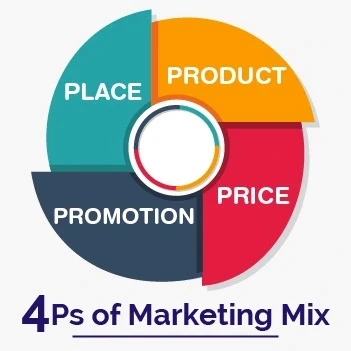
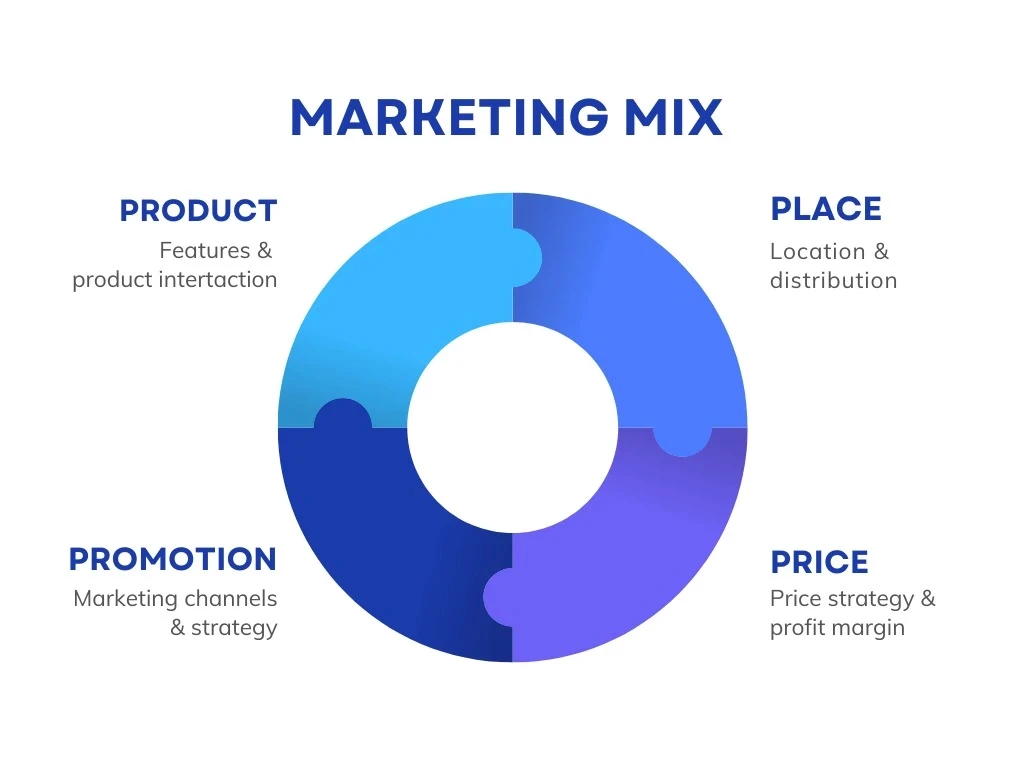
The 4 Ps of Marketing (also called the Marketing Mix) are the four foundational elements that every marketing strategy is built on: Product, Price, Place, and Promotion. Together they describe what you’re selling, how much it costs, where customers can access it, and how you communicate its value. The main benefit of using the framework is that it forces you to think holistically about a launch or campaign instead of over-investing in one dimension (like promotion) while neglecting the others.
The 4 Ps framework has remained one of the most-taught marketing frameworks in business schools for over 60 years, since E. Jerome McCarthy introduced it in his 1960 textbook Basic Marketing: A Managerial Approach. Research from the American Marketing Association and countless case studies show that businesses using structured marketing frameworks like the 4 Ps consistently outperform ad-hoc marketers on customer acquisition cost, retention, and lifetime value. Nearly every modern marketing strategy, from small business promotion to global brand campaigns, still traces back to this framework.
For deeper marketing strategy guidance, see our guides on effective marketing strategies, what makes for a good marketing strategy, and the strategy of marketing.
The History Behind the 4 Ps
E. Jerome McCarthy, a professor of marketing at Michigan State University, introduced the 4 Ps in 1960 as a simplified framework for teaching marketing decisions. Before McCarthy, marketing was often taught through longer, more academic lists of variables that made it hard for practitioners to apply consistently.
McCarthy’s insight: nearly every marketing decision falls into one of four buckets. That simplification turned marketing from a scattered discipline into a repeatable process. Philip Kotler, one of the most influential modern marketing thinkers, later expanded on the 4 Ps and helped popularize them in his textbook Marketing Management, which is still one of the most-used marketing texts in the world.
Sixty-plus years later, the 4 Ps have survived digital transformation, social media, the rise of e-commerce, mobile marketing, and AI-driven personalization. That longevity isn’t accidental. It’s because the four categories map to fundamental customer decisions: what to buy, how much to pay, where to buy it, and why to buy it now. Those decisions haven’t changed. Only the channels have.
Deep Dive: Product
Product refers to the goods or services a business offers to meet customer needs and wants. It covers the tangible item, the service experience, the design, the features, the packaging, the branding, the warranty, and the after-sale support. Everything the customer receives (or perceives they receive) falls under Product.
What Product Decisions Cover
Core product features and functionality
Design and user experience
Quality standards
Product line breadth (how many variants, sizes, tiers)
Packaging and unboxing
Branding and product identity
Warranty and support
Positioning against competitors
Real-World Examples
Apple’s iPhone. More than a smartphone. Apple treats every detail (industrial design, materials, packaging, first-boot experience, accessories) as part of the product. The result: a premium product that commands premium pricing and drives fierce brand loyalty.
Tesla’s electric vehicles. More than cars. Tesla positions its vehicles as a shift in the automotive industry, wrapping performance, technology, sustainability, and software into one product story. The product itself is the marketing.
Patagonia’s outdoor gear. Product decisions include ethical sourcing, repair services, and lifetime durability. Patagonia’s product philosophy (buy less, buy better) is inseparable from the physical items they sell.
Common Product Mistakes
Building a product without understanding the customer’s actual pain point
Adding features that impress the product team but confuse the buyer
Ignoring quality and support (they show up in reviews, retention, and lifetime value)
Underinvesting in packaging and unboxing (the first physical touchpoint)
For more on positioning your product, see our guides on go-to-market strategy and market analysis.
Deep Dive: Price
Price is the amount customers pay for the product or service, and how that price is structured, communicated, and adjusted over time. Price isn’t just a number. It’s a signal. Premium pricing signals quality. Discount pricing signals accessibility. Free trials signal confidence. Subscription pricing signals commitment.
What Price Decisions Cover
Base list price
Pricing tiers (good, better, best)
Discounts, promotions, and bundling
Subscription vs. one-time purchase models
Freemium vs. paid-only models
Regional pricing adjustments
Payment terms and financing options
Perceived value vs. actual price
Common Pricing Strategies
Cost-plus pricing: cost of goods plus a target margin
Value-based pricing: what customers will pay based on perceived value
Competitive pricing: matching or undercutting competitors
Penetration pricing: low price to grab market share, then raise later
Skimming pricing: high launch price for early adopters, then lower over time
Freemium pricing: free tier plus paid upgrades
Subscription pricing: recurring revenue instead of one-time transactions
Real-World Examples
Walmart. Everyday low pricing. Walmart competes on price and price alone. The entire supply chain, store layout, and vendor relationships are engineered to support that pricing position.
Dollar Shave Club. Subscription pricing disrupted the razor market. By selling directly to consumers at a lower monthly cost, they took market share from Gillette without competing on identical products.
Apple. Premium skimming. Apple prices at the top of the market and rarely discounts. The result: consistent margins and strong brand perception.
Netflix. Subscription pricing with tiered plans. Netflix’s price tiers (basic, standard, premium) match different customer segments while locking in recurring revenue.
Common Pricing Mistakes
Pricing based on cost alone without considering perceived value
Racing to the bottom in discount wars that erode margin permanently
Not testing price elasticity before committing to a model
Ignoring international pricing power differences
Changing prices too often, which signals instability to customers
Deep Dive: Place
Place refers to the channels through which customers access and buy your product or service. In 1960, that meant retail stores, warehouses, and distributors. Today it means physical retail, e-commerce, marketplaces, direct-to-consumer sites, mobile apps, wholesale, subscription boxes, and everything in between.
What Place Decisions Cover
Distribution channels (direct, retail, wholesale, digital)
E-commerce and mobile presence
Marketplace strategy (Amazon, Etsy, industry-specific platforms)
Physical retail footprint
Logistics and supply chain
Inventory management
Fulfillment speed and cost
International expansion decisions
Real-World Examples
Coca-Cola. Massive global distribution network. Coca-Cola is available in over 200 countries through vending machines, convenience stores, restaurants, grocery stores, and even airline meal service. That ubiquity is a competitive moat.
Starbucks. Strategic placement in high-traffic locations: airports, malls, downtown intersections, and grocery stores. The company’s “3rd place” positioning (home, work, Starbucks) depends on physical placement decisions.
Amazon. Combines a massive online marketplace with fulfillment infrastructure (Prime, same-day delivery, warehouses) to make Place its biggest advantage. See our guide on the ecommerce market for more.
Warby Parker. Started direct-to-consumer online, then added physical stores strategically. This omnichannel approach lets them own the customer relationship while offering the try-in-person experience.
Common Place Mistakes
Trying to be everywhere at once instead of dominating a focused set of channels
Underinvesting in the digital storefront while overspending on physical retail
Slow fulfillment that kills e-commerce conversion
Ignoring international logistics complexity when expanding globally
For related guidance, see our guide on small business marketing.
Deep Dive: Promotion
Promotion covers the marketing communication activities used to inform, persuade, and remind customers about your product or service. This is the “P” most people think of when they hear “marketing,” but it’s only one of four. Without a strong product, sensible pricing, and accessible placement, no amount of promotion saves a bad strategy.
What Promotion Decisions Cover
Advertising (digital, print, TV, out-of-home)
Content marketing (blog, video, podcast, social)
Public relations
Social media marketing
Email marketing
SEO and paid search
Sales promotions (coupons, discounts, contests)
Personal selling and sales enablement
Influencer partnerships and affiliate marketing
Events and sponsorships
Real-World Examples
Nike. Iconic promotional campaigns (“Just Do It”) built around athlete sponsorships and emotional storytelling. Nike doesn’t sell shoes. It sells motivation.
Old Spice. Reinvented an aging brand with viral video advertising (“The Man Your Man Could Smell Like”). Promotion changed the brand’s perception and audience in under a year.
Dove. Real Beauty campaign shifted the entire beauty industry conversation. Promotion here wasn’t about selling more soap. It was about redefining the category.
Coca-Cola. Consistent brand promotion for over 100 years. Coca-Cola’s promotional consistency has built one of the most recognizable brand identities on Earth.
Common Promotion Mistakes
Spending on channels the target audience doesn’t use
Focusing only on top-of-funnel awareness while neglecting conversion and retention
Chasing viral moments instead of building consistent brand equity
Underinvesting in email marketing and other high-ROI channels
Not measuring ROI properly across channels
For more on promotion, see our guides on marketing campaign, 11 marketing tips for startups, and how to use AI in digital marketing
[[EMBED:PGlmcmFtZSBzcmM9Imh0dHBzOi8vd3d3LnlvdXR1YmUuY29tL2VtYmVkL01jbzh2QkF3T21BIiB0aXRsZT0iWW91VHViZSB2aWRlbyIgZnJhbWVib3JkZXI9IjAiIGFsbG93PSJhY2NlbGVyb21ldGVyO2F1dG9wbGF5O2NsaXBib2FyZC13cml0ZTtlbmNyeXB0ZWQtbWVkaWE7Z3lyb3Njb3BlO3BpY3R1cmUtaW4tcGljdHVyZSIgYWxsb3dmdWxsc2NyZWVuIHN0eWxlPSJ3aWR0aDoxMDAlO2FzcGVjdC1yYXRpbzoxNi85O2JvcmRlcjowO2JvcmRlci1yYWRpdXM6MTJweDttYXJnaW46OHB4IDAiPjwvaWZyYW1lPg==]]
The 4 Ps at a Glance
[[EMBED:PGRpdiBzdHlsZT0ib3ZlcmZsb3cteDphdXRvO21hcmdpbjoyMHB4IDAiPjx0YWJsZSBzdHlsZT0id2lkdGg6MTAwJTtib3JkZXItY29sbGFwc2U6Y29sbGFwc2U7Zm9udC1zaXplOjE1cHg7bWFyZ2luOjhweCAwIj48dGggc3R5bGU9ImJvcmRlcjoxcHggc29saWQgI2UzZTZlYTtwYWRkaW5nOjEwcHggMTRweDt0ZXh0LWFsaWduOmxlZnQ7YmFja2dyb3VuZDojZjRmNmY4O2ZvbnQtd2VpZ2h0OjYwMCI+PHRyPjx0aCBzdHlsZT0iYm9yZGVyOjFweCBzb2xpZCAjZTNlNmVhO3BhZGRpbmc6MTBweCAxNHB4O3RleHQtYWxpZ246bGVmdDtiYWNrZ3JvdW5kOiNmNGY2Zjg7Zm9udC13ZWlnaHQ6NjAwIj5QPC90aD48dGggc3R5bGU9ImJvcmRlcjoxcHggc29saWQgI2UzZTZlYTtwYWRkaW5nOjEwcHggMTRweDt0ZXh0LWFsaWduOmxlZnQ7YmFja2dyb3VuZDojZjRmNmY4O2ZvbnQtd2VpZ2h0OjYwMCI+Rm9jdXM8L3RoPjx0aCBzdHlsZT0iYm9yZGVyOjFweCBzb2xpZCAjZTNlNmVhO3BhZGRpbmc6MTBweCAxNHB4O3RleHQtYWxpZ246bGVmdDtiYWNrZ3JvdW5kOiNmNGY2Zjg7Zm9udC13ZWlnaHQ6NjAwIj5LZXkgRGVjaXNpb25zPC90aD48dGggc3R5bGU9ImJvcmRlcjoxcHggc29saWQgI2UzZTZlYTtwYWRkaW5nOjEwcHggMTRweDt0ZXh0LWFsaWduOmxlZnQ7YmFja2dyb3VuZDojZjRmNmY4O2ZvbnQtd2VpZ2h0OjYwMCI+Q29tbW9uIE1ldHJpY3M8L3RoPjwvdHI+PC90aGVhZD48dGJvZHk+PHRyPjx0ZCBzdHlsZT0iYm9yZGVyOjFweCBzb2xpZCAjZTNlNmVhO3BhZGRpbmc6MTBweCAxNHB4O3RleHQtYWxpZ246bGVmdDt2ZXJ0aWNhbC1hbGlnbjp0b3AiPlByb2R1Y3Q8L3RkPjx0ZCBzdHlsZT0iYm9yZGVyOjFweCBzb2xpZCAjZTNlNmVhO3BhZGRpbmc6MTBweCAxNHB4O3RleHQtYWxpZ246bGVmdDt2ZXJ0aWNhbC1hbGlnbjp0b3AiPldoYXQgeW91IHNlbGw8L3RkPjx0ZCBzdHlsZT0iYm9yZGVyOjFweCBzb2xpZCAjZTNlNmVhO3BhZGRpbmc6MTBweCAxNHB4O3RleHQtYWxpZ246bGVmdDt2ZXJ0aWNhbC1hbGlnbjp0b3AiPkZlYXR1cmVzLCBxdWFsaXR5LCBkZXNpZ24sIGJyYW5kaW5nLCBwYWNrYWdpbmc8L3RkPjx0ZCBzdHlsZT0iYm9yZGVyOjFweCBzb2xpZCAjZTNlNmVhO3BhZGRpbmc6MTBweCAxNHB4O3RleHQtYWxpZ246bGVmdDt2ZXJ0aWNhbC1hbGlnbjp0b3AiPkN1c3RvbWVyIHNhdGlzZmFjdGlvbiwgTlBTLCByZXBlYXQgcHVyY2hhc2UgcmF0ZTwvdGQ+PC90cj48dHI+PHRkIHN0eWxlPSJib3JkZXI6MXB4IHNvbGlkICNlM2U2ZWE7cGFkZGluZzoxMHB4IDE0cHg7dGV4dC1hbGlnbjpsZWZ0O3ZlcnRpY2FsLWFsaWduOnRvcCI+UHJpY2U8L3RkPjx0ZCBzdHlsZT0iYm9yZGVyOjFweCBzb2xpZCAjZTNlNmVhO3BhZGRpbmc6MTBweCAxNHB4O3RleHQtYWxpZ246bGVmdDt2ZXJ0aWNhbC1hbGlnbjp0b3AiPldoYXQgY3VzdG9tZXJzIHBheTwvdGQ+PHRkIHN0eWxlPSJib3JkZXI6MXB4IHNvbGlkICNlM2U2ZWE7cGFkZGluZzoxMHB4IDE0cHg7dGV4dC1hbGlnbjpsZWZ0O3ZlcnRpY2FsLWFsaWduOnRvcCI+QmFzZSBwcmljZSwgcHJpY2luZyB0aWVycywgZGlzY291bnRzLCBwcmljaW5nIG1vZGVsPC90ZD48dGQgc3R5bGU9ImJvcmRlcjoxcHggc29saWQgI2UzZTZlYTtwYWRkaW5nOjEwcHggMTRweDt0ZXh0LWFsaWduOmxlZnQ7dmVydGljYWwtYWxpZ246dG9wIj5Qcm9maXQgbWFyZ2luLCBwcmljZSBlbGFzdGljaXR5LCBhdmVyYWdlIG9yZGVyIHZhbHVlPC90ZD48L3RyPjx0cj48dGQgc3R5bGU9ImJvcmRlcjoxcHggc29saWQgI2UzZTZlYTtwYWRkaW5nOjEwcHggMTRweDt0ZXh0LWFsaWduOmxlZnQ7dmVydGljYWwtYWxpZ246dG9wIj5QbGFjZTwvdGQ+PHRkIHN0eWxlPSJib3JkZXI6MXB4IHNvbGlkICNlM2U2ZWE7cGFkZGluZzoxMHB4IDE0cHg7dGV4dC1hbGlnbjpsZWZ0O3ZlcnRpY2FsLWFsaWduOnRvcCI+V2hlcmUgY3VzdG9tZXJzIGJ1eTwvdGQ+PHRkIHN0eWxlPSJib3JkZXI6MXB4IHNvbGlkICNlM2U2ZWE7cGFkZGluZzoxMHB4IDE0cHg7dGV4dC1hbGlnbjpsZWZ0O3ZlcnRpY2FsLWFsaWduOnRvcCI+RGlzdHJpYnV0aW9uIGNoYW5uZWxzLCBlLWNvbW1lcmNlLCByZXRhaWwsIGxvZ2lzdGljczwvdGQ+PHRkIHN0eWxlPSJib3JkZXI6MXB4IHNvbGlkICNlM2U2ZWE7cGFkZGluZzoxMHB4IDE0cHg7dGV4dC1hbGlnbjpsZWZ0O3ZlcnRpY2FsLWFsaWduOnRvcCI+QXZhaWxhYmlsaXR5LCBjb252ZXJzaW9uIHJhdGUsIGRlbGl2ZXJ5IHNwZWVkPC90ZD48L3RyPjx0cj48dGQgc3R5bGU9ImJvcmRlcjoxcHggc29saWQgI2UzZTZlYTtwYWRkaW5nOjEwcHggMTRweDt0ZXh0LWFsaWduOmxlZnQ7dmVydGljYWwtYWxpZ246dG9wIj5Qcm9tb3Rpb248L3RkPjx0ZCBzdHlsZT0iYm9yZGVyOjFweCBzb2xpZCAjZTNlNmVhO3BhZGRpbmc6MTBweCAxNHB4O3RleHQtYWxpZ246bGVmdDt2ZXJ0aWNhbC1hbGlnbjp0b3AiPkhvdyB5b3UgY29tbXVuaWNhdGUgdmFsdWU8L3RkPjx0ZCBzdHlsZT0iYm9yZGVyOjFweCBzb2xpZCAjZTNlNmVhO3BhZGRpbmc6MTBweCAxNHB4O3RleHQtYWxpZ246bGVmdDt2ZXJ0aWNhbC1hbGlnbjp0b3AiPkFkdmVydGlzaW5nLCBjb250ZW50IG1hcmtldGluZywgUFIsIHNvY2lhbCBtZWRpYSwgZW1haWwsIFNFTzwvdGQ+PHRkIHN0eWxlPSJib3JkZXI6MXB4IHNvbGlkICNlM2U2ZWE7cGFkZGluZzoxMHB4IDE0cHg7dGV4dC1hbGlnbjpsZWZ0O3ZlcnRpY2FsLWFsaWduOnRvcCI+Q3VzdG9tZXIgYWNxdWlzaXRpb24gY29zdCAoQ0FDKSwgUk9BUywgYnJhbmQgYXdhcmVuZXNzLCBlbmdhZ2VtZW50IHJhdGU8L3RkPjwvdHI+PC90Ym9keT48L3RhYmxlPjwvZGl2Pg==]]
How the 4 Ps Work Together
The 4 Ps aren’t independent levers. They’re interlocking pieces of one system. A change in any one P forces adjustments in the others.
A premium product needs premium pricing. Discounting a premium product cheapens the brand.
A premium price needs premium placement. You can’t sell a luxury handbag in a discount store.
Premium placement needs targeted promotion. Prestige brands don’t run mass-market TV ads. They partner with high-end publications, influencers, and events.
Promotion volume depends on price margin. High-margin products can afford heavy promotion. Low-margin products need efficient, targeted campaigns.
Great marketing plans align all four Ps behind a single strategic position. When one P contradicts the others, customers get confused and campaigns underperform.
For related frameworks, see our marketing plan template guide.
The Evolution: From 4 Ps to 7 Ps and Beyond
While McCarthy’s 4 Ps still form the foundation, marketing has evolved. Modern extensions include:
The 7 Ps (Extended Marketing Mix)
Bernard Booms and Mary Bitner added three more Ps in 1981, specifically for service-based businesses:
People: the employees, customer service reps, and human touchpoints that shape the brand experience
Process: the systems and workflows that deliver the product or service consistently
Physical evidence: the tangible elements that support intangible services (packaging, receipts, environment)
The 4 Cs (Customer-Centric Framework)
Robert Lauterborn proposed the 4 Cs in 1990, reframing the 4 Ps from the customer’s perspective:
Consumer wants and needs (replaces Product)
Cost (replaces Price)
Convenience (replaces Place)
Communication (replaces Promotion)
Digital-Era Additions
Modern marketers often add:
Personalization (AI-driven customer targeting)
Participation (community-led marketing)
Predictive (data-driven forecasting)
None of these replace the 4 Ps. They extend them for specific contexts. For most businesses, mastering the original 4 Ps still delivers the most impact.
For more on modern strategy, see our guides on ai marketing strategy, how to use AI in digital marketing, and b2b marketing.
How to Apply the 4 Ps to Your Business Step by Step
Here’s a practical process for applying the 4 Ps framework to any product launch, campaign, or strategy refresh.
Step 1: Define Your Target Customer
Before you optimize any P, you need to know who you’re optimizing for. Build a specific customer profile: demographics, psychographics, buying behavior, pain points, and desired outcomes. See our guides on segmentation and targeting, demographic segmentation, and psychographic segmentation.
Step 2: Analyze the Product
Ask what your product actually delivers to that customer. Not features. Outcomes. What problem does it solve? What alternatives exist? Where do you win, and where do you lose?
Step 3: Set Your Pricing Strategy
Determine what customers will pay based on perceived value, competitor pricing, and your cost structure. Choose a pricing model (subscription, one-time, freemium, tiered) that matches the buying behavior of your target customer.
Step 4: Choose Your Distribution Channels
Decide where your customers already shop and how they prefer to buy. E-commerce, retail, direct sales, marketplaces, or hybrid. Pick channels you can dominate rather than being average across too many.
Step 5: Build Your Promotion Plan
Map the channels your target customer actually uses. Prioritize the top 2 to 3 channels (rather than spreading thin) and build campaigns that move customers from awareness to purchase.
Step 6: Align All Four Ps
Review the plan for consistency. Does the promotion match the pricing tier? Does the place match the brand positioning? Does the product match the promise made in promotion? Alignment is where most strategies win or lose.
Step 7: Measure and Iterate
Track the right metrics for each P (from the table above). Review quarterly. Adjust based on what the data shows.
For a full marketing plan structure, see our marketing plan template.
Common Mistakes When Applying the 4 Ps
Treating the Ps as independent. They’re not. Every P affects every other P. A change to product forces changes to price. A change to place forces changes to promotion.
Overinvesting in Promotion. Most struggling businesses assume their problem is not enough marketing. Usually the problem is product, price, or place. More promotion just amplifies the underlying misalignment.
Copying competitors instead of understanding customers. Just because a competitor uses a certain pricing model or channel doesn’t mean it’s right for you. Start with the customer, not the competitor.
Not adjusting for digital. The 4 Ps were built in 1960. E-commerce, mobile, and social have changed how each P plays out. Apply the framework, but interpret it for modern channels.
Neglecting Place in a digital world. Distribution still matters, even online. Which marketplaces you show up on, how fast you ship, and how easy your checkout is all affect conversion as much as promotion does.
Skipping segmentation. Trying to appeal to everyone means appealing to no one. Choose a target segment and build the 4 Ps around them. See our guide on what is segmentation analysis.
Not measuring. Without metrics, you can’t tell which P is underperforming. Every P needs clear KPIs and a review cadence.
How to Build Your Marketing Plan Deck with Decktopus AI
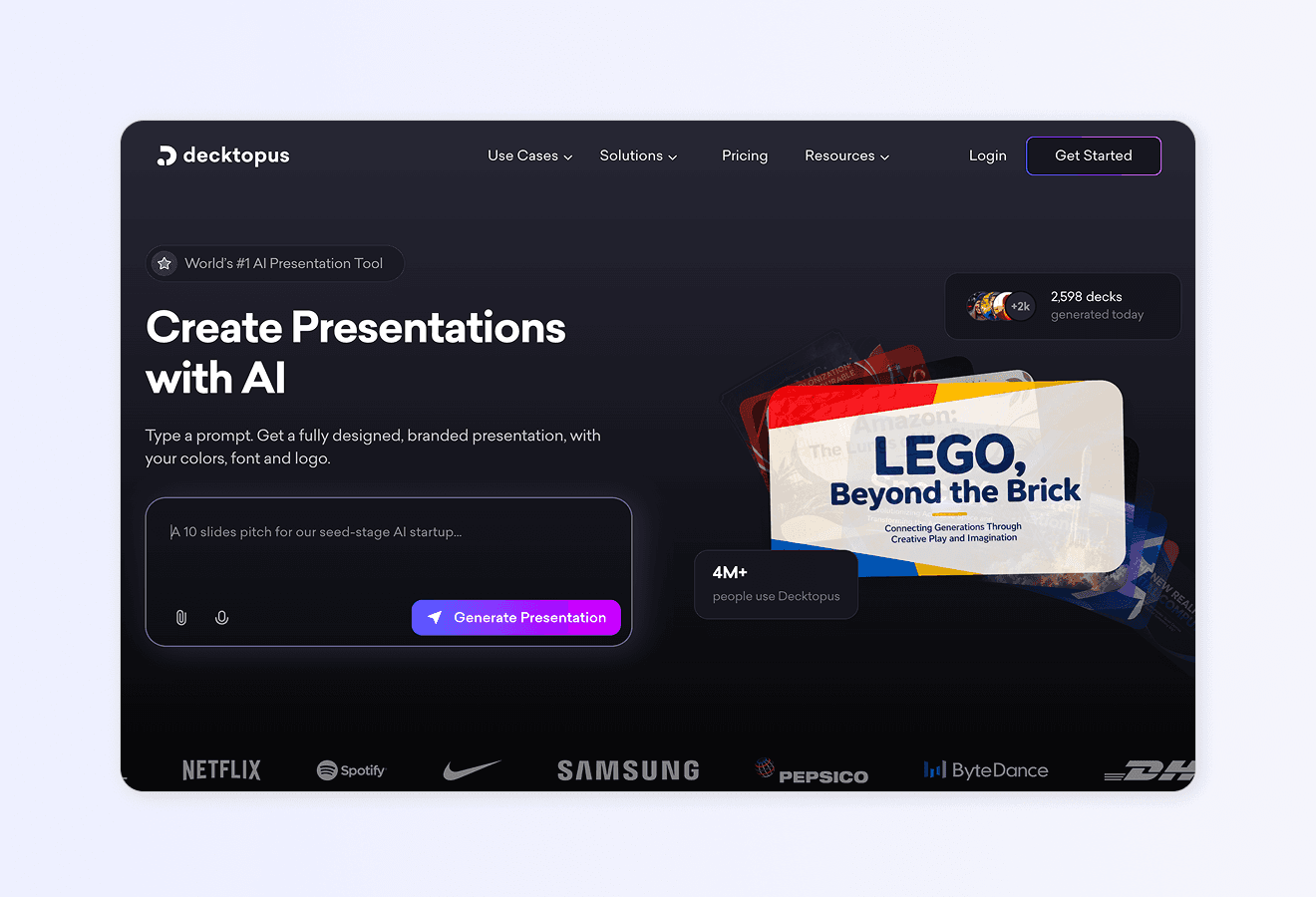
Once you’ve built your 4 Ps strategy, you still need to communicate it to your team, leadership, or investors. Decktopus AI generates a full marketing plan deck from a short description in minutes.
1. Describe your topic. Type something like “2026 marketing plan for a B2B SaaS product targeting mid-market HR teams, applying the 4 Ps framework.” Or upload your existing marketing plan, one-pager, or strategy notes as a supporting file. If you already have an older marketing plan deck, Decktopus AI’s Beautify feature can redesign it or use it as a source.
2. Choose your style. Pick a brand, reuse a saved look, or start fresh with AI. Decktopus AI will ask how you want your presentation to look. You can apply a saved brand, import your brand directly from your company website URL (which pulls in your logo, colors, and fonts), or let AI generate a style from scratch.
3. Review the outline. Decktopus AI generates a slide-by-slide structure covering executive summary, target audience, product positioning, pricing strategy, distribution channels, promotion plan, budget, KPIs, and timeline. Adjust before the full deck is built.
4. Refine with Edit with AI. Click Edit with AI and type instructions like “add a competitive matrix on slide 6,” “make the pricing slide more visual,” or “add a channel breakdown table for promotion.” All edits are tracked with unlimited version history.
5. Export or share. Download as PDF, PPT, or PNG. Share via live link. Any updates you make afterward automatically appear at the same URL, so stakeholders always see the latest version. Or present directly to leadership or the marketing team.
You can also use the Loop AI Delivery Coach during rehearsal for real-time feedback before your quarterly marketing review or leadership presentation.
For broader guidance, see the best AI presentation tools, our guide on how to do a presentation, and our marketing plan template walk-through.
Ready to build a marketing plan deck that gets approved? Get started with Decktopus AI.
Frequently Asked Questions
What are the 4 Ps of Marketing?
The 4 Ps are Product, Price, Place, and Promotion. Product covers what you sell. Price covers what customers pay. Place covers where customers can access and buy it. Promotion covers how you communicate its value. Together they form the Marketing Mix, the foundational framework for building any marketing strategy.
Who created the 4 Ps of Marketing?
E. Jerome McCarthy, a professor at Michigan State University, introduced the 4 Ps in his 1960 textbook Basic Marketing: A Managerial Approach. Philip Kotler later popularized the framework in his own marketing textbook, which is still one of the most-used marketing texts in the world.
Why are the 4 Ps of Marketing important?
They force you to think about marketing holistically. Most struggling businesses over-invest in one P (usually Promotion) while neglecting the others. The 4 Ps framework surfaces those gaps and helps you build strategies where all four elements work together.
How do the 4 Ps of Marketing work together?
Every P affects every other P. Premium products need premium prices, premium places to sell them, and premium-appropriate promotion. Change one P and you have to adjust the others to keep the strategy internally consistent.
What is the difference between the 4 Ps and the 7 Ps?
The 7 Ps extend the 4 Ps with three more elements (People, Process, Physical evidence) developed by Booms and Bitner in 1981, specifically for service-based businesses. For most product-based businesses, the 4 Ps still cover the core decisions.
What are the 4 Cs of Marketing?
The 4 Cs (Consumer wants and needs, Cost, Convenience, Communication) are a customer-centric reframing of the 4 Ps proposed by Robert Lauterborn in 1990. They shift the framework from the seller’s perspective to the buyer’s perspective. Many modern marketers use the 4 Cs alongside the 4 Ps.
Are the 4 Ps of Marketing still relevant in 2026?
Yes. Channels have changed dramatically since 1960, but the four categories still describe every fundamental marketing decision. What to sell (Product). What to charge (Price). Where to sell it (Place). How to communicate (Promotion). Digital, AI, and social have only added new tactics inside each P.
How do I apply the 4 Ps to a small business?
Start with your target customer. Then work through each P: what product delivers the most value for that customer, what price they’ll pay, where they already shop or search, and which promotion channels they actually use. Focus on 2 to 3 promotion channels rather than spreading thin. See our guide on small business marketing.
How do I measure the 4 Ps?
Each P has its own metrics. Product: customer satisfaction, NPS, repeat purchase rate. Price: margin, price elasticity, average order value. Place: availability, conversion rate, delivery speed. Promotion: customer acquisition cost, return on ad spend, brand awareness, engagement rate. Track them together to see which P is underperforming.
Can the 4 Ps be applied to B2B marketing?
Yes. The 4 Ps apply across B2B and B2C, with different tactics. B2B Place often means field sales and partner networks. B2B Promotion leans heavily on content, sales enablement, and account-based marketing. B2B Pricing usually involves negotiated contracts, tiered plans, and enterprise deals. See our guides on B2B marketing and B2B marketing strategy examples.
What tool should I use to build a marketing plan around the 4 Ps?
Decktopus AI generates a full marketing plan deck from a short description in minutes, structured around your 4 Ps and ready to present to leadership. For more, see our marketing plan template.
What is the most important P in marketing?
Product. Everything else is downstream. If the product doesn’t solve a real problem, no amount of clever pricing, distribution, or promotion will make the business succeed long-term. Great marketing amplifies a great product. It can’t rescue a bad one.
Conclusion
The 4 Ps of Marketing (Product, Price, Place, and Promotion) remain the most durable framework in the marketing discipline because they map directly to how customers actually make purchasing decisions. What am I buying? What does it cost? Where can I get it? Why should I care?
Sixty-plus years after McCarthy introduced the framework, the tactics inside each P have transformed. E-commerce reshaped Place. Subscription models redefined Price. Digital and AI multiplied Promotion channels. Product itself now includes software, services, and experiences alongside physical goods. But the four categories haven’t gone away. If anything, the digital era has made mastering all four Ps more important, not less, because customers now see through single-dimension strategies faster than ever.
Whether you’re launching a startup, refreshing an established brand, running a small business, or leading a global marketing team, the 4 Ps give you a shared vocabulary and a repeatable process. Start with your customer. Align each P around them. Measure the results. Adjust when the data tells you to. Great marketing isn’t magic. It’s the disciplined application of a framework that has worked for over half a century, applied to the channels that work today.
For more resources, see our guides on effective marketing strategies, ai marketing strategy, and our marketing plan template.
Related posts

How AI Voice Agents Help Sales Teams Prepare and Deliver Better Presentations
Learn how AI voice agents help sales teams turn call insights into focused slides, stronger delivery, and more confident customer presentations at every stage.
Marketing

Instagram Carousel Size & Dimensions Guide (2026)
Instagram carousel size in 2026: exact dimensions for square, portrait, and landscape, plus file limits and safe zones, verified across sources.
Marketing

LinkedIn Carousel Size, Dimensions & Format Guide 2026
LinkedIn carousel size in 2026: exact dimensions, file limits, aspect ratios, and formatting rules so your slides never get cropped.
Marketing