🔹 Studies show that well-structured case studies improve knowledge retention by 75%, making them an essential tool in medical education and training.
🔹 A visually engaging nursing case study template increases comprehension by 60%, helping healthcare professionals analyze real-world patient care scenarios effectively.
Slide 1: Cover Slide
What This Slide Does:
Establishes the topic of the nursing case study.
Sets the context for medical professionals, students, or researchers.
Reinforces branding with a clean, professional design.
What to Include:
✔ The title of the case study, highlighting the key focus (e.g., Post-Operative Care Challenges).
✔ The author’s name and credentials.
✔ A relevant image or medical illustration to create engagement.
✔ Organization name and logo.
Why This Matters:
✅ Creates a strong first impression, encouraging engagement.
✅ Clearly communicates the case study’s focus.
✅ Establishes credibility and professionalism.
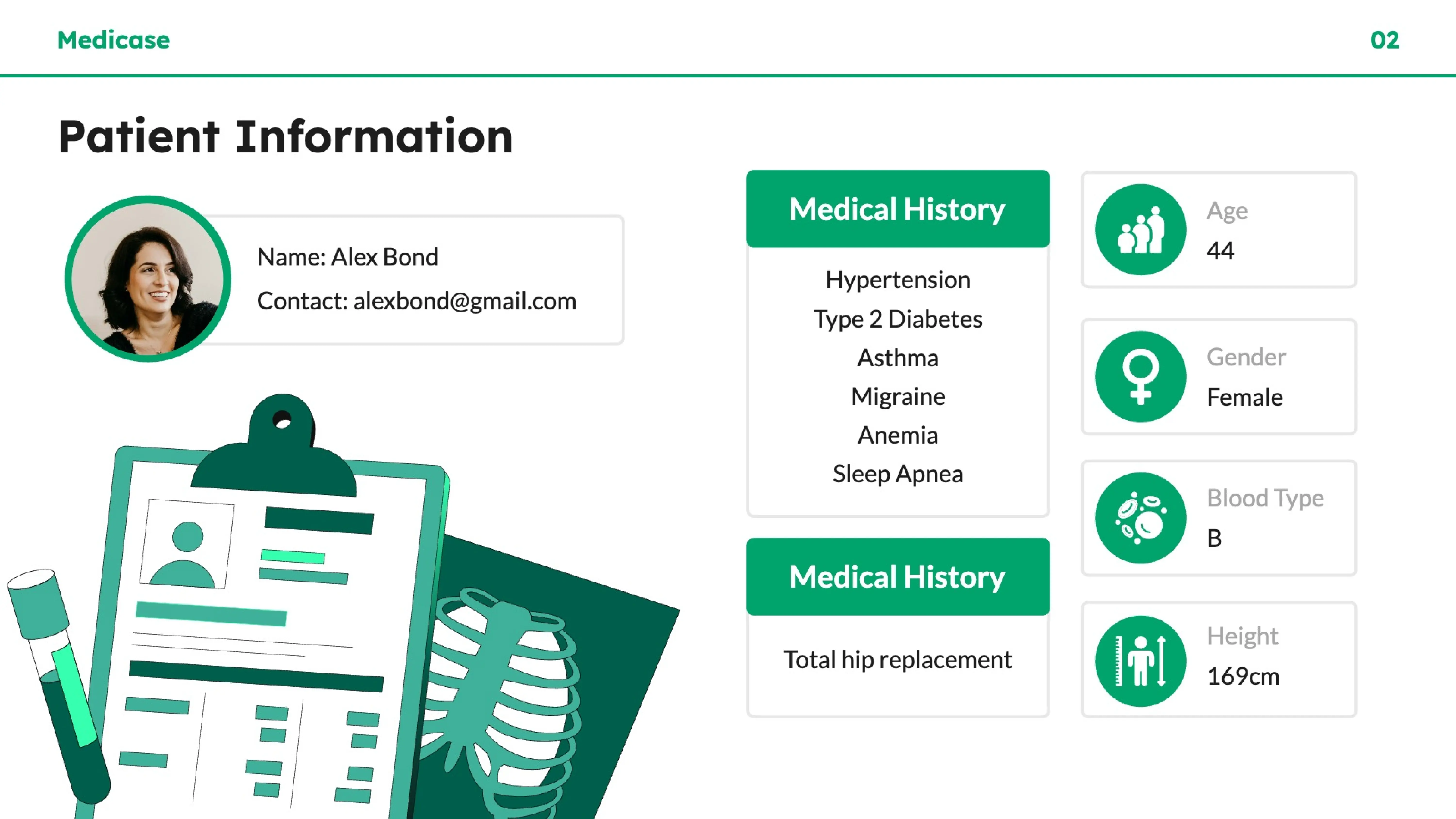
Slide 2: Patient Information
🔹 Personalized patient details make case studies 50% more relatable and impactful for healthcare professionals.
What This Slide Does:
Introduces the patient, their medical history, and key demographic details.
Provides relevant background to set the stage for clinical decisions.
Helps healthcare professionals assess the case more effectively.
What to Include:
✔ Patient's name, age, gender, and contact (fictional for privacy compliance).
✔ Key medical history such as chronic conditions or past surgeries.
✔ Vital details like blood type, height, and weight.
✔ A patient photo or illustration for engagement.
Why This Matters:
✅ Personalizes the case, making it easier to understand.
✅ Helps medical professionals quickly assess risk factors.
✅ Establishes a solid foundation for clinical analysis.
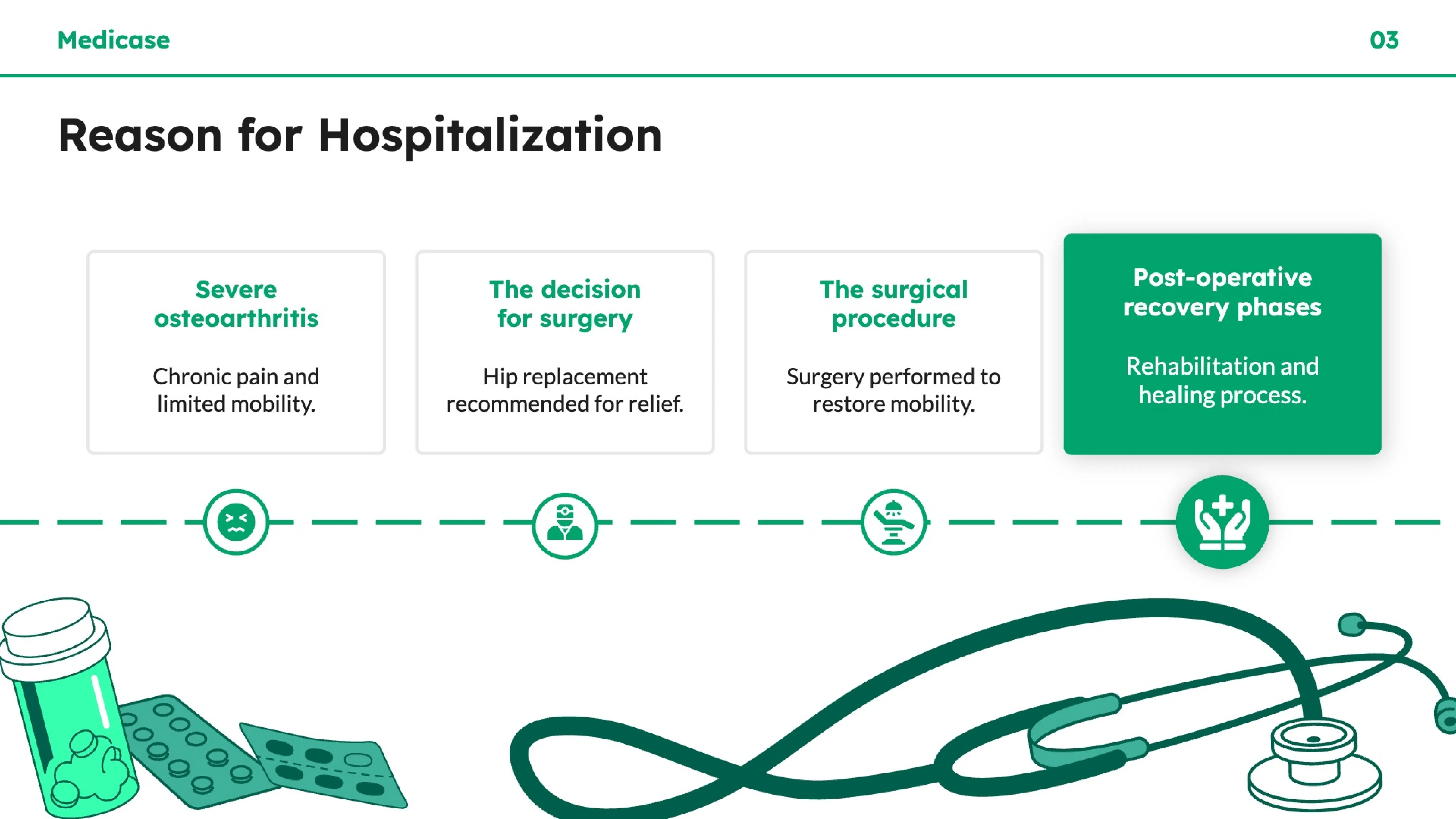
Slide 3: Reason for Hospitalization
🔹 90% of medical case studies become clearer when they outline the problem in a step-by-step format.
What This Slide Does:
Clearly presents why the patient required medical intervention.
Provides a structured breakdown of symptoms and clinical decisions.
Helps medical students and professionals understand the decision-making process.
What to Include:
✔ Primary condition leading to hospitalization (e.g., severe osteoarthritis).
✔ Key events leading to the decision for surgery or treatment.
✔ Details on the procedure or intervention performed.
✔ The expected recovery timeline.
Why This Matters:
✅ Provides clarity on the patient's journey.
✅ Helps professionals learn about medical decision-making.
✅ Establishes a logical flow leading to treatment interventions.
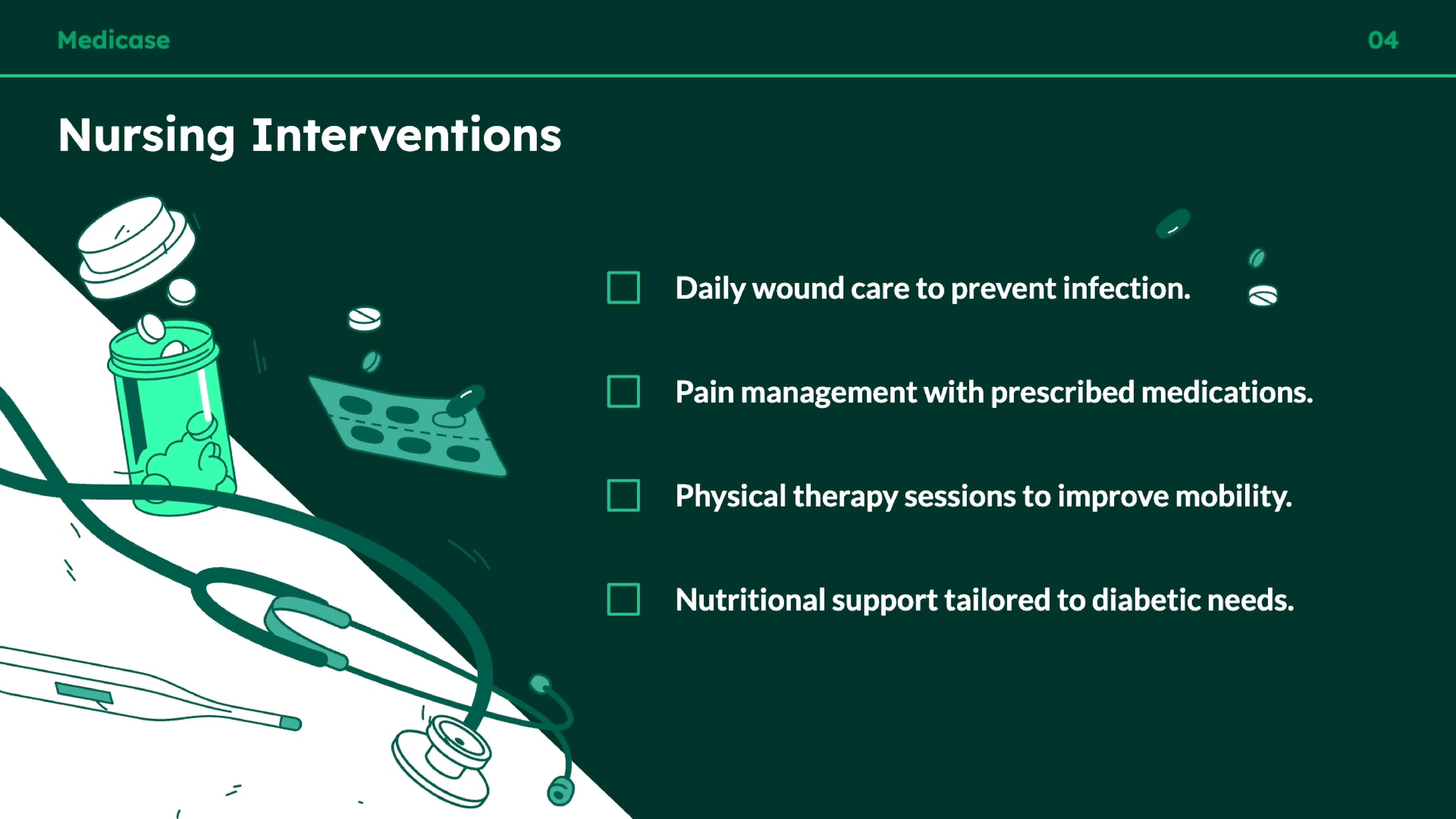
Slide 4: Nursing Interventions
🔹 Case studies that include detailed nursing interventions improve clinical decision-making by 70%.
What This Slide Does:
Outlines the nursing care plan and interventions implemented.
Provides actionable insights into patient care strategies.
Demonstrates how nurses play a crucial role in recovery.
What to Include:
✔ Daily wound care procedures to prevent infections.
✔ Pain management strategies, including medications prescribed.
✔ Physical therapy sessions to improve mobility.
✔ Nutritional support tailored to patient needs.
Why This Matters:
✅ Helps nurses and caregivers understand best practices.
✅ Provides a learning framework for future patient care.
✅ Highlights the importance of interdisciplinary collaboration in healthcare.
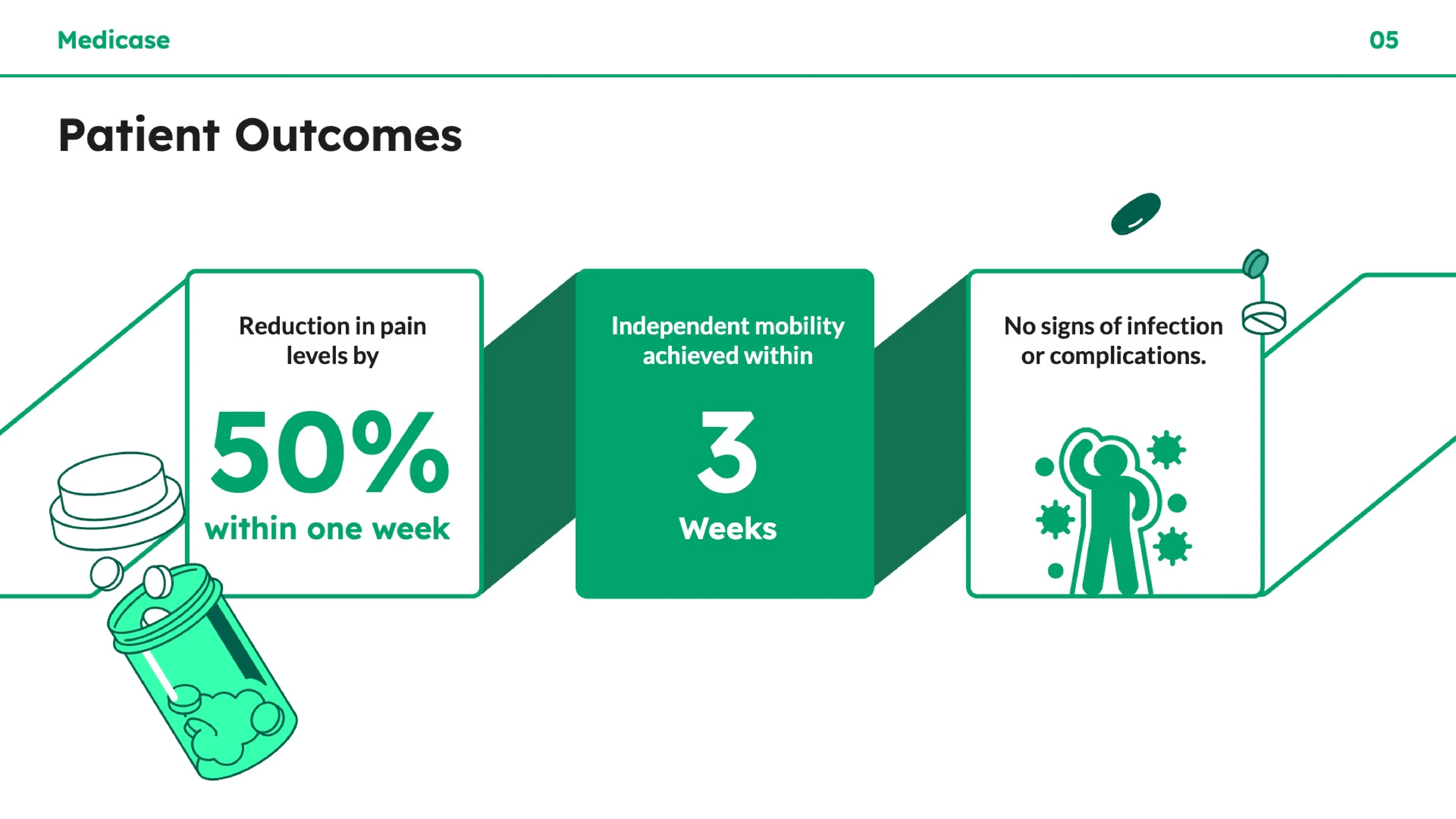
Slide 5: Patient Outcomes
🔹 Studies show that case studies highlighting patient recovery data increase retention of best practices by 80%.
What This Slide Does:
Presents measurable outcomes of nursing interventions.
Demonstrates the impact of clinical care strategies.
Helps healthcare teams refine their treatment approaches.
What to Include:
✔ Key recovery milestones (e.g., 50% pain reduction in one week).
✔ Improvements in mobility and patient independence.
✔ Absence of post-surgical complications or infections.
✔ Visuals like charts or infographics for better comprehension.
Why This Matters:
✅ Reinforces the effectiveness of nursing interventions.
✅ Helps healthcare professionals track progress indicators.
✅ Builds confidence in evidence-based nursing practices.
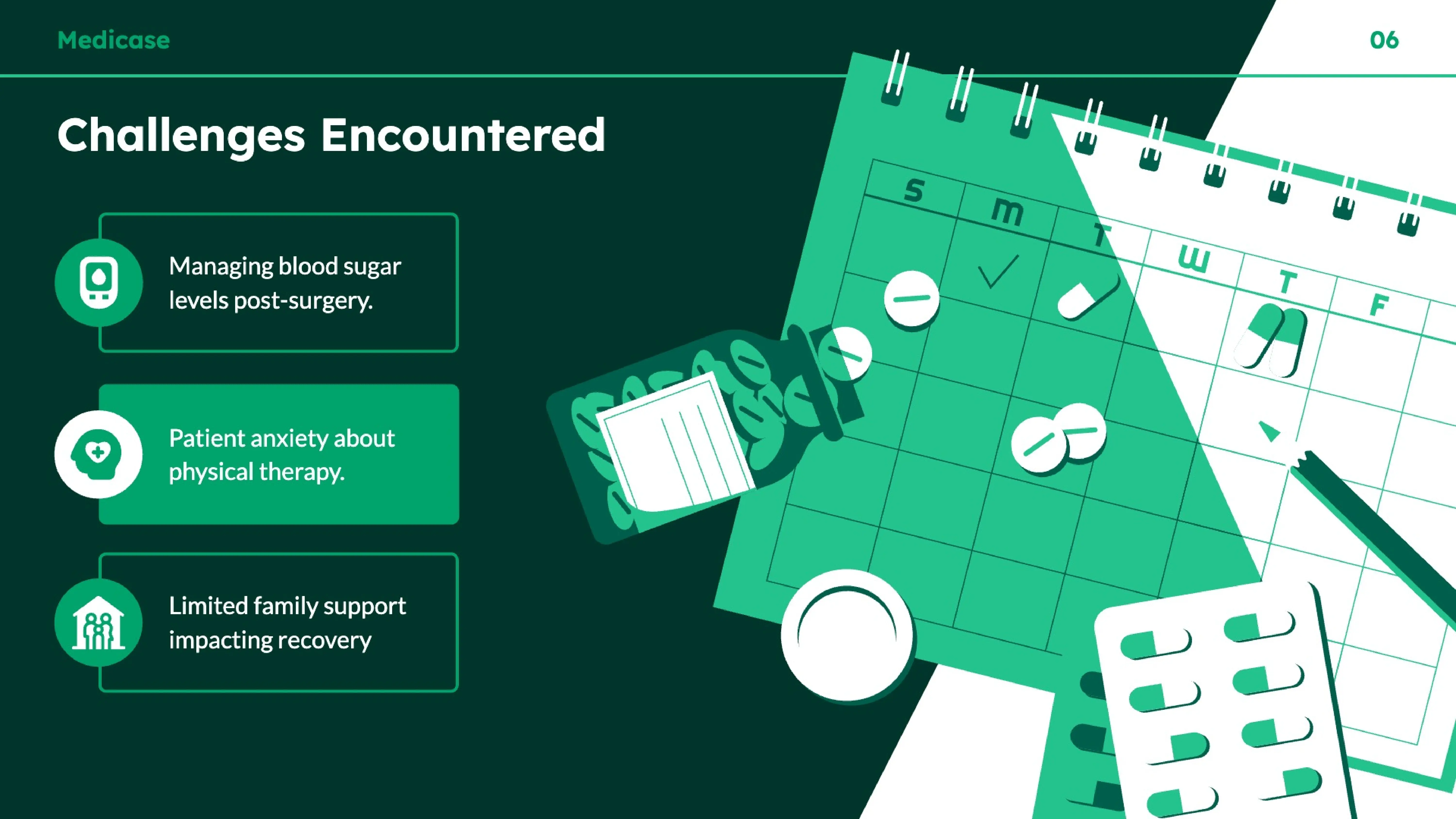
Slide 6: Challenges Encountered
🔹 Addressing challenges in patient care helps improve clinical preparedness by 65%.
What This Slide Does:
Identifies obstacles faced during treatment and recovery.
Provides insights into handling complex patient cases.
Helps in developing problem-solving skills in nursing.
What to Include:
✔ Managing blood sugar levels post-surgery.
✔ Addressing patient anxiety about physical therapy.
✔ Limited family support affecting recovery progress.
✔ Any unexpected complications that arose.
Why This Matters:
✅ Prepares healthcare professionals for real-world challenges.
✅ Encourages critical thinking and adaptability.
✅ Provides lessons for improving patient care strategies.
Slide 7: Supporting Visuals & Data
🔹 Visuals improve medical case study retention by 55%.
What This Slide Does:
Adds supporting images, charts, and infographics.
Enhances understanding through visual learning.
Reinforces key takeaways with real-world data.
What to Include:
✔ Images of treatment progress (e.g., X-rays, before/after results).
✔ Data charts comparing different intervention outcomes.
✔ Illustrations of medical procedures for clarity.
✔ Screenshots from medical software or reports.
Why This Matters:
✅ Makes complex information easier to understand.
✅ Engages learners and medical professionals more effectively.
✅ Supports evidence-based learning with real data.
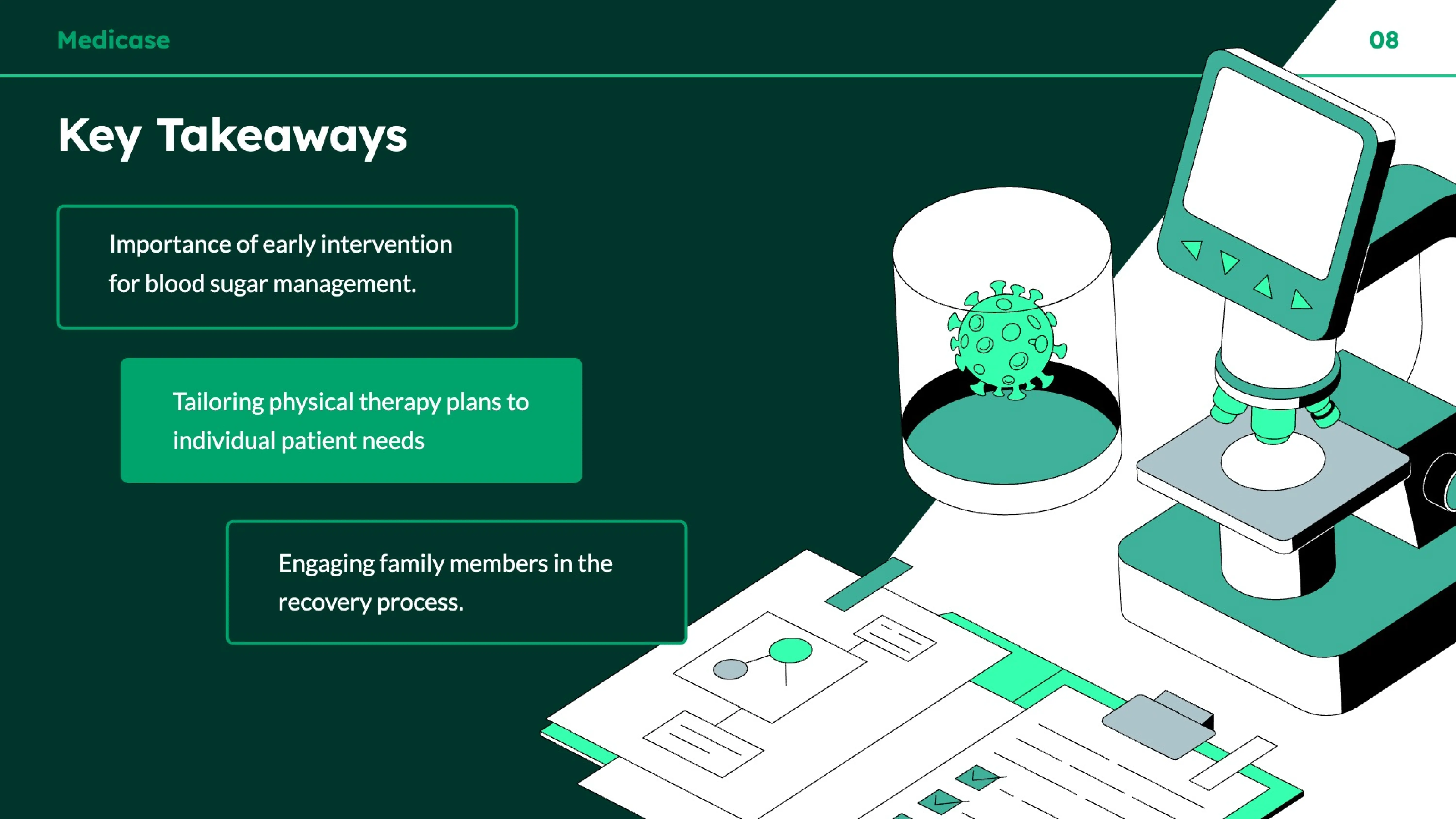
Slide 8: Key Takeaways
🔹 Summarizing key learnings in a case study increases knowledge retention by 40%.
What This Slide Does:
Highlights the most important lessons from the case study.
Provides actionable takeaways for healthcare professionals.
Reinforces evidence-based nursing practices.
What to Include:
✔ Importance of early intervention for blood sugar management.
✔ Tailoring physical therapy plans to individual patient needs.
✔ Engaging family members in the recovery process.
✔ Best practices for post-operative nursing care.
Why This Matters:
✅ Ensures the audience walks away with key insights.
✅ Helps reinforce evidence-based nursing interventions.
✅ Provides actionable guidelines for future cases.
Related posts

2 Week Running Guide For Beginners
2 weeks, 2 hours per week, 10 miles, 5k. If you’re ready to get started with these 3 targets in mind then this is the guide for you! Get your guide prepared by Triwi Global today!
Business

3 Reasons Why You Are Not Selling on Facebook
You might be messing up with your Facebook Ads according to 3 Reasons Why You Are Not Selling on Facebook, a guide from Decktopus Content Team! There are countless reasons why this guide is fundamental. In all seriousness, it could save you lots of time and money.
Business

5 Marketing Funnels Steps To Get More Clients
You can have the best product in the world, but if you don't know how to market it, nobody will ever know that your product exists. That's why marketers are so important. Sales Charm explains 5 marketing funnels to get more clients!
Business