AI & Tools
How Generative AI Is Reshaping Workplace Creativity and Decision-Making
Discover how generative AI is transforming workplace creativity, decision-making, and project management—enhancing human intelligence, not replacing it.


Decktopus Content Team
In a few years, generative AI has gone from a concept of science fiction to a tool for everyday applications in almost any workspace. Be it marketers writing campaign copy, designers testing new concepts, or senior managers working through strategic options, AI is fast-becoming an instant collaborator and analytical sounding board for decision makers. But its influence extends well beyond the acceleration of workflows-it’s also revolutionizing how we think, work with others, and come to conclusions.
Below is an overview of how generative AI is moving the modern workplace forward, why the technology develops human creativity and does not replace it, and how organizations can effectively make use of it responsibly.
The New Age of Creativity: Humans + Machines
Generative AI was once thought of skeptically: could a machine ever give rise to original ideas, artistic conceptions, or good writing? Today, it’s undeniable that AI does not compete with human creativity; instead, it enhances it.
1. Rapid Ideation and Brainstorming
Gone are the days where teams stared at a blank page. Today, teams lean on AI tools to spark their ideas: need 20 campaign angles, mood boards for a new brand identity, or fresh product description variations? AI gives creative output instantly that serves as starting, not finishing, points.

These first drafts enable teams to work at a quicker pace, iterate more, and develop ideas that perhaps would not have been possible in traditional brainstorming. AI broadens the creative landscape and allows workers to put their focus on refinement, directing, and making meaningful creative choices.
2. Breaking Cognitive Bias
Human creativity is powerful, but it’s also limited by experience, habits, and unconscious biases. AI introduces randomness, diversity, and unfamiliar combinations that often generate innovative concepts humans wouldn’t come up with on their own.
This blend of human intuition with machine-generated diversity creates what many describe as “augmented creativity,” whereby the resulting product is a collaboration of human judgment and machine-assisted exploration.
How Generative AI Supports Smarter Decision-Making
Apart from creativity, generative AI also plays a huge role in shaping decision-making at the workplace. Businesses are increasingly using AI to support choices that once were dependent on manual research, gut instinct, or time-consuming analysis. Many companies also integrate smart digital tools like QRNow to streamline data access and quick information retrieval, further enhancing the accuracy and speed of AI-supported decisions.
1. Quicker Data Interpretation
Rather than waiting for analysts to process data and prepare reports, teams can ask AI:
“What key trends appear in last quarter’s revenue?”
“Which audience segments have the highest conversion probability?”
“What are the biggest risks in this product launch?
Thus, generative AI can summarize patterns, underlie anomalies, and simplify datasets in real time-perform tasks that help leaders understand what’s happening.
2. Scenario Simulation and Predictive Insights
One of the most powerful AI capabilities is rapid scenario simulations on pricing changes, market shifts, product decisions, and everything else one may think of. It lets the decision-makers preview the outcome before committing to a strategy.
Executives no longer need to guess. They can ask the AI to:
Compare multiple strategic options
Predicting Customer Reactions
Analyze risk levels
Suggest optimized strategies
With the integration of historical data, real-time signals, and machine-generated scenarios, leaders can now make smarter, more informed decisions.
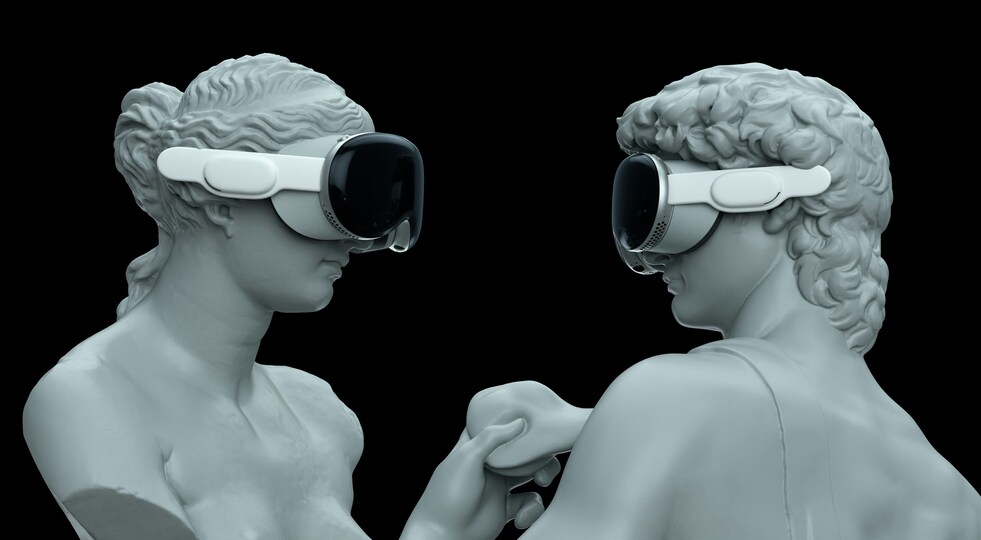
Human-Centric AI: Why Judgment Still Matters
Even with advanced generative models, successful organizations recognize one universal truth: AI assists decision-making—it does not replace it.
Where AI Excels
Handling large volumes of data
Identifying patterns
Automate repetitive tasks
Generating draft ideas
Offering different creative variations
Where Humans Excel
Understanding emotions
Interpreting cultural nuance
Making ethical choices
Applying strategic judgment
Empathy and creativity supplied. The innovation really happens with the blending of both. Tools like an AI humanizer can even help teams modify AI-generated content to feel and sound more organic, aligned with brand voice, thereby reinforcing how important human oversight will continue to be.
Generative AI in Project Management: A Quiet Revolution
Project management may not immediately come to mind when thinking about generative AI, but it’s actually one of the fastest-growing areas of its application.
Here’s how:
1. Smarter Task Planning
AI helps the project manager estimate timelines, allocate resources, and identify task dependencies. Instead of spending time creating detailed project schedules, a team can quickly develop structured plans that may be revised later.
2. Real-Time Risk Detection
Project managers often struggle to detect risks early. Generative AI analyzes progress, communication patterns, and historical performance to indicate possible delays or bottlenecks before they become serious.
3. Automating Communication
Status updates, meeting summaries, and stakeholder reports can be written instantly. This frees project managers to focus more on strategic decisions and team alignment—not endless documentation.
4. Improved Collaboration
Generative AI also helps improve collaboration by ensuring clarity, reducing misunderstandings, and offering shared visibility. Teams get instant insights, clear instructions, and automated reminders, making projects smoother and more predictable.
Put differently, AI complements and does not replace the human touch in project management by reducing administrative tasks and allowing leaders to focus on leading the team.
AI as a Creative Partner, Not a Threat
Some workers still fear that generative AI will replace their roles. Yet the evidence so far suggests that AI eliminates repetitive rather than creative or relational work.
Jobs Are Evolving, Not Disappearing
Writers, marketers, designers, and analysts are learning to work alongside AI—not in competition with it. They’re becoming:
Prompt designers
Strategy managers
Creative directors
AI-assisted professionals
This shift is similar to previous technological revolutions; for example, computers didn’t replace office workers, they empowered them to do more meaningful work.
AI Boosts Confidence and Experimentation
When teams are able to create faster, fail faster, and iterate faster, they become more confident and experimental. That confidence feeds creativity.
Workers formerly hesitant-such as those who thought they “weren’t creative”-now have tools to explore ideas free from fear and judgment.
Responsible Use: Ethical and Practical Considerations
With generative AI on the rise, ethical use is becoming an equally important factor as innovation.
Important Considerations for Organizations
Data Privacy: AI tools need to follow strict privacy practices.
Accuracy: AI can hallucinate; hence, outputs require verification by a human.
Bias Mitigation: Teams should actively check for biased responses.
Transparency of Use: Workers must be aware of when and how AI is used, and what kinds of data are being processed.
Employee Training: AI literacy is becoming a workplace essential.
Organizations that implement AI responsibly will reap the benefits while avoiding any compromise on trust or compliance.
The Future of Work-AI as an Invisible Co-worker
As generative AI continues to evolve, it will move deeper into everyday workflows - often invisibly. Instead of actively prompting AI for everything, many tools will operate in the background:
Auto-summarizing meetings
Suggest creative enhancements.
Flagging risks in plans
Predicting customer behavior
Improving workplace communication
AI will be woven into every application, every workflow, and every system.
Workers may not even realize that they’re using AI; they’ll simply feel that everything is more intuitive, supportive, and efficient.
Conclusion
Generative AI is not only uprooting how we work, but it’s also uprooting how we think: pushing teams to be both more creative and more analytical in helping organisations navigate complexity with greater clarity.
The companies that thrive in this new era will be the ones that:
Embrace AI as a creative partner
Use data-driven insights for smarter decisions
Empower employees with AI literacy
Keep a human-first approach.
Human intelligence and machine capabilities, blended together, make workplaces more innovative, collaborative, and future-ready.
Generative AI is revolutionizing ways of thinking about creativity and decision-making, but that is just the start.
Related posts

8 AI Startups That Nailed Their Branding with a .AI Domain
Artificial intelligence continues to reshape the way we live and work. As an essential tool now powering a great number of industries, it’s no surprise that AI is driving a new era of search, too.
AI & Tools

5 Best AI Audio Enhancement Tools in 2026
AI Audio Enhancement Tools: Elevating Your Sound Experience
AI & Tools

AI Checker 2026: Unveiling the Latest in AI Detection Technology - ChatGPT, GPT-3, and Beyond
Explore the power of AI content checkers with our comprehensive guide. Discover how these intelligent tools enhance accuracy and efficiency in various applications. Stay ahead in 2026 with insights on the latest advancements and practical tips for leveraging AI checkers and chatgpt detectors effectively.
AI & Tools